Building Enclosure logo
search
cart
facebook twitter linkedin youtube instagram Spotify Podcasts Apple Podcasts Spotify Podcasts Apple Podcasts
  • Sign In
  • Create Account
  • Sign Out
  • My Account
Building Enclosure logo
  • NEWS
    • Breaking News
  • SECTIONS
    • Columns
    • Project Profiles
    • Trade Shows
    • Sponsor Insights
  • SYSTEM DESIGNS
    • Low-Slope Roofs
    • Pitched Roofs
    • Metal Roofing Materials
    • Waterproofing
    • Sustainability
    • Insulation
    • Exterior Claddings
    • Wall Systems
    • Building Envelope
  • BLOG
    • The BE Blog
  • MEDIA
    • Podcasts
    • Webinars
    • Quiz
    • Videos
    • Polls
    • Interactive Spotlights
    • Newsletter
    • Photo Galleries
  • DIRECTORIES
    • Directory: Blue Book
    • Directory: Roofing Resource
  • PRODUCTS
  • TECHNICAL
    • Codes
      • Waterproofing
      • Roofing
    • Details
      • Waterproofing
      • Roofing
  • CONTINUING ED
  • ABOUT
    • Advertise
      • Editorial Calendar
    • Contact
    • eMag Archive Issues
  • SIGN UP!
Exterior Claddings

Reducing Crazing in Anodized Aluminum
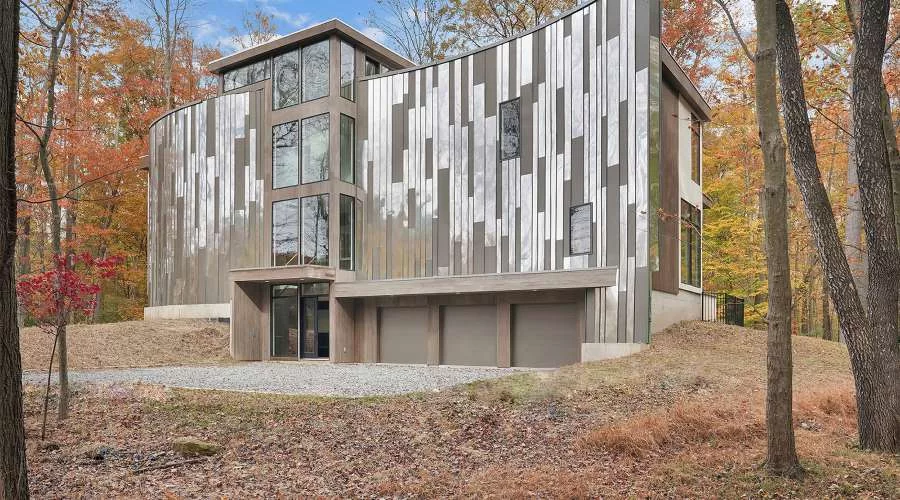
11-10.jpg

Photo courtesy of Lorin Industries, Inc.

November 2, 2022

Anodized aluminum can be formed to minimize crazing – different from cracking – of the protective oxide layer. Anodized aluminum can be used in a variety of applications when proper precautions are taken, in consultation with forming experts or manufacturing partners such as Lorin Industries, Inc.

All anodized aluminum, in fact all metals, can experience crazing if subjected to extreme temperatures, or if the metal sheets or rolls are formed at severe angles. “Crazing” is a term that describes micro fracturing of the anodic layer after anodized aluminum has been subjected to forming, fabrication, or extreme heat or cold. Crazing can sometimes be confused with "cracking" of the aluminum, but the two are not the same.

Anodize crazing does not break through the protective oxide layer and into the base aluminum. Cracking, on the other hand, is considered to have occurred when the oxide layer has been compromised to such an extent that the base aluminum is not only exposed, but also cracked and damaged itself. When this occurs, the oxide layer has been separated from the base aluminum and no longer acts as a protective layer along the crack. Unlike other coatings, with anodized aluminum the corrosion will not creep beyond the point where the cracking occurs. Cracking is less common, but more concerning, than crazing.

Crazing from forming stress, known as “mechanical” crazing, appears frosted or dull in appearance. Crazing from extreme temperature changes, known as “thermal” crazing, resembles a spider web. In either of these cases, crazing viewed through a microscope will show hairline surface cracks on the top of the oxide layer only, with no breakthrough to the base aluminum.

While mechanical crazing at the microscopic level can never be eliminated entirely (not even with pre-painted), visual mechanical crazing can be if the fabricated part or sheet is not subjected to any additional forming or extreme temperatures after anodizing.

In a cost-effective, low labor coil anodizing process where parts are formed after the aluminum is anodized, mechanical crazing can be minimized by decreasing the radius of aluminum bends, decreasing the anodize film thickness, or using a colored anodize finish to make crazing less visible.

Given that thermal crazing occurs when temperatures exceed 320° Fahrenheit, the anodized aluminum experts at Lorin suggest that the anodized aluminum part or sheet not exceed 320F and also does not come in contact with other materials at high temperatures that allow the anodized aluminum to reach 320F in order to avoid and/or minimize thermal crazing. This is because aluminum undergoes more rapid thermal expansion than its anodic layer, causing thermal stresses large enough to cause crazing at any temperature above 320F. 

Although not roll forming experts per se, Lorin’s experience in working with successful customers can help offer guidance for customers to determine which potential solutions to reduce visible crazing are right for any given application; even though the protective anodic layer is unharmed by crazing, minimizing its visual impact can improve the visual quality of final parts.

KEYWORDS: aluminum

Share This Story

Recent Comments

These are actually very helpful tips. It is...

This is the most beneficial blog for all...

This blog is a great resource for anyone...

Thank you for sharing this important information. I...

This is a very interesting subject of the...

Manage My Account
  • Sign up for the Newsletter
  • Online Registration
  • Manage My Preferences
  • Registration Customer Service

More Videos

Sponsored Content

Sponsored Content is a special paid section where industry companies provide high quality, objective, non-commercial content around topics of interest to the Building Enclosure audience. All Sponsored Content is supplied by the advertising company and any opinions expressed in this article are those of the author and not necessarily reflect the views of Building Enclosure or its parent company, BNP Media. Interested in participating in our Sponsored Content section? Contact your local rep!

close
  • HITT Construction headquarters
    Sponsored byBuilding Composites® LLC

    Pushing the Envelope

  • 2 construction workers and a DEXcell panel
    Sponsored byDEXcell Roof Boards

    Designing Low-Slope Roofs for Resilience

  • Bell Bank headquarters in Fargo, North Dakota
    Sponsored bySto Corp.

    Drained and Back-Ventilated Rainscreens vs Pressurized-Equalized Rainscreens

Popular Stories

graphic shows white arrows pointing to the right on a light green background

A Breakdown of Air Leakage Testing in LEED v5 BD+C

graphic shows a building destoryed by tornados with information on the amount of torandos in 2026 in the US

Record-Breaking Tornado Activity in Illinois Signals New Challenges for Architects

HITT Construction headquarters

Pushing the Envelope

Building Enclosure Newsletter

BE Poll

Events

April 9, 2026

Strategies for High-Performance Below-Grade Waterproofing

Credits: 1 AIA LU/HSW ; 1 IIBEC CEH; 0.1 IACET CEU

On-Demand Designing a high-performance building enclosure requires more than just surface-level protection; it demands a rigorous, performance-based mastery of below-grade water and gas mitigation. This discussion will provide an expert-level analysis of below-grade waterproofing within the comprehensive framework of the high-performance building enclosure.

April 28, 2026

Roof Design Considerations That Prevent Installation Failures and Change Orders

Credit: 1 AIA LU/HSW; 1 IIBEC CEH; 0.1 ICC CEU

On-Demand This course provides visual examples of actual field conditions. Some good, some not so good; along with design suggestions that can cut installation costs and reduce construction change orders. Upon completion of this course, you will have a better understanding of the requirements the roofing contractor must meet to provide the specified roofing system warranty, and long-term value to the owner.

View All Submit An Event

Products

Plaster and Drywall Assemblies Manual

Plaster and Drywall Assemblies Manual

This is a comprehensive manual that goes beyond codes and standards, providing expert guidance in design, detailing, material selection and troubleshooting for plaster and drywall.

See More Products
×

Enhance your expertise with unparalleled insights.

Join thousands of building professionals today. Shouldn’t you know what they know?

SUBSCRIBE TODAY!
  • RESOURCES
    • Advertise
    • Contact Us
    • Store
    • Want More
  • SIGN UP TODAY
    • Create Account
    • Newsletter
    • Customer Service
    • Manage Preferences
  • SERVICES
    • Marketing Services
    • Reprints
    • Market Research
    • List Rental
    • Survey/Respondent Access
  • STAY CONNECTED
    • LinkedIn
    • Facebook
    • Instagram
    • YouTube
    • X
  • PRIVACY
    • PRIVACY POLICY
    • TERMS & CONDITIONS
    • DO NOT SELL MY PERSONAL INFORMATION
    • PRIVACY REQUEST
    • ACCESSIBILITY

Copyright ©2026. All Rights Reserved BNP Media, Inc. and BNP Media II, LLC.

Design, CMS, Hosting & Web Development :: ePublishing