Can Today’s Brick Veneer Assembly Have a Lifespan of 100 Years in Our Current Environment?
There is movement within the industry toward high-performance, wall-mounted brick cladding assemblies
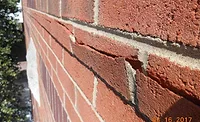
Most construction professionals are quick to say brick will certainly last 100 years, and it’s completely possible. In the end, though, it’s not the brick that’s the issue; it’s how the bricks are placed and the setting in which they are placed that determines the life of overall façade. Water entry, too, is always an issue for brick veneer and all other facades. We know water gets past the brick/mortar layer. Relieving angles rust. Lintels rust. Ties will also deteriorate. Over time, all these components, typically galvanized steel, will deteriorate, particularly when too much water/moisture is present. In many cases they can and have rusted away to nothing. Improperly installed flashings can fail. Freeze/thaw cycles, with enough water entry, will take their toll on the supporting elements.
Typical brick veneers today consist of multiple components beyond bricks and mortar, all of which must work together for a long-lasting durable facade. One of the consequences of deterioration that is seldom discussed is the loss of thermal performance with the onset of water; when the insulation becomes wet or saturated it can defeat all the efforts and care in the pursuit of thermal performance and economic impact
To combat this, there is movement within the industry toward high-performance, wall-mounted brick cladding assemblies. To begin with, these systems move stridently away from the cafeteria-style approach to materials: many components, multiple sources, and decisions made by the installer, many of which are driven by price. High performers specify components from start to finish to create a fully engineered system that is backed up with customized shop drawings that lay out every component, exact spacing, and dimensions. Then they follow with an independent review by a third-party engineering firm.
These new brick cladding systems are now available with a design life of 75 years and are expected to last 100 years or as long as the wall is standing. Better still, they have minimized, if not eliminated scheduled maintenance over the life of the brick assembly.
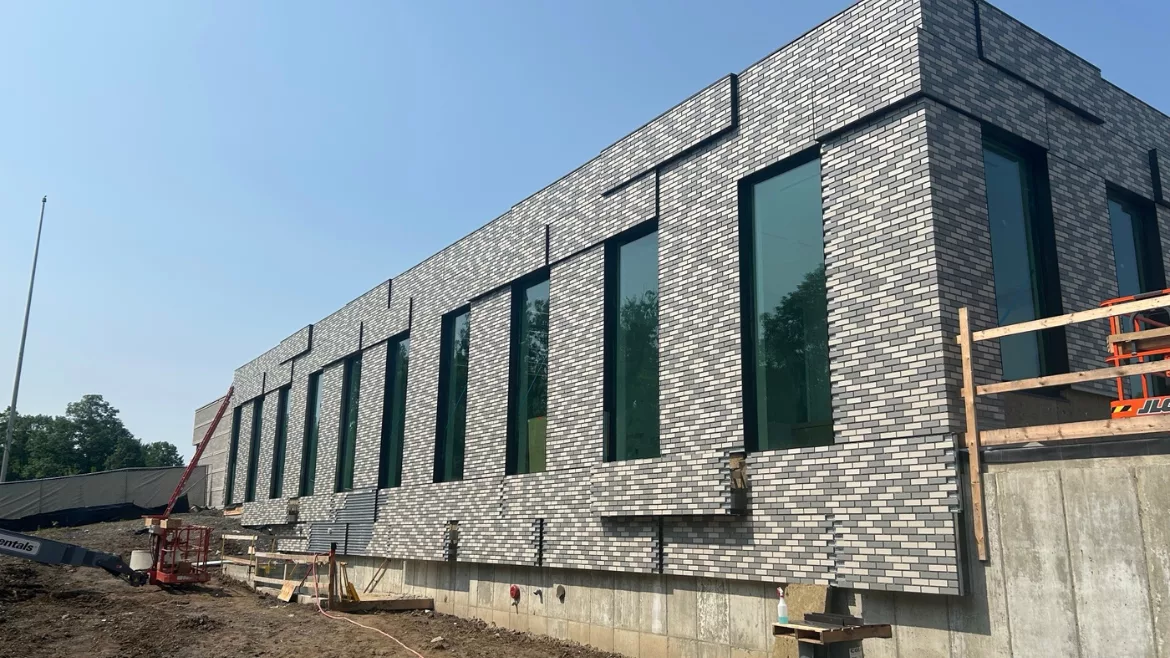
These wall-mounted cladding systems are born from the rainscreen principle of water management. They are installed over an aluminum (marine-grade) subframing assembly comprising brackets and vertical profiles secured together with stainless steel fasteners. This assembly creates a fully engineered rainscreen system with rear ventilation, meeting all the latest standards of the American Architectural Manufactures Association (AAMA). Additionally, the subframing components create open cavities with dimensions from two to 12 inches deep (measured from face of sheathing to backside of trays). Massive thicknesses of continuous insulation can be used and still allow for two inches of open cavity for ventilation, drainage, and an element of pressure equalization.
Suppliers of the of the highest-performing systems have worked to reduce the number of materials and components to only the best stainless steel trays, aluminum subframing, and bricks. Each of these materials have demonstrated their performance over lifetimes, proving both dependability and predictability. There is nothing to rust, corrode, wear out, or be replaced. Test results on the high performers allow for installations of up to 500-600 ft, depending on the nature of the project, load requirements, and the surrounding conditions. With structural stability like this, these systems pave the way for brick to return to high-rise construction.
Directly addressing the question of brick stability and placement security, particularly with taller structures, suppliers have added a clip assembly for each brick, which adds further mechanical security for every brick and assures long-term safety and permanent holding power.
Additionally, mortar in brick assemblies has come under scrutiny in recent years regarding pointing, maintenance, CO2 emissions, discoloration, etc. It is widely acknowledged that mortar is a key element in hand-laid full brick. However, in wall-mounted systems with stainless steel trays locking-in the brick and stainless steel clips and providing additional holding power, the role and necessity of mortar is greatly diminished. It is actually the weakest component in the system. Factory color-coated trays and clips match the presumed mortar color. In most cases, the aesthetic is similar to a recessed joint and shadow line. So the appearance of the bricks is clean and precise. Gone are the indistinct lines and residue from the mortar; the bricks look the same as they did on the original brick boards.
Accepting that mortar is the weakest component, the advantages of mortarless systems to all stakeholders begin to add up. These include:
- No costs associated with mortar
- Lower cost of installation
- No pointing, acid wash
- No efflorescence
- Far fewer CO2 emissions
- Far less (or no) scheduled maintenance
- No weather restrictions, or protection, or tenting
- No wet work, water, hoses, barrel mixers, etc.
Installations can be performed by carpenters in addition to masons. These modern systems have taken the skill out of the labor and put it into the materials. If a project team is building and drawing a new project, they may want to explore brick once again. Today’s brick systems offer much more for the money than ever before.
Looking for a reprint of this article?
From high-res PDFs to custom plaques, order your copy today!

.webp?height=740&t=1767036885&width=auto "Header - BE 1170x658 (002).png")

.webp?height=740&t=1755781744&width=auto "KEE(2).png")