Building Enclosure logo
search
cart
facebook twitter linkedin youtube instagram Spotify Podcasts Apple Podcasts Spotify Podcasts Apple Podcasts
  • Sign In
  • Create Account
  • Sign Out
  • My Account
Building Enclosure logo
  • NEWS
    • Breaking News
  • SECTIONS
    • Columns
    • Project Profiles
    • Trade Shows
    • Sponsor Insights
  • SYSTEM DESIGNS
    • Low-Slope Roofs
    • Pitched Roofs
    • Metal Roofing Materials
    • Waterproofing
    • Sustainability
    • Insulation
    • Exterior Claddings
    • Wall Systems
    • Building Envelope
  • BLOG
    • The BE Blog
  • MEDIA
    • Podcasts
    • Webinars
    • Quiz
    • Videos
    • Polls
    • Interactive Spotlights
    • Newsletter
    • Photo Galleries
  • DIRECTORIES
    • Directory: Blue Book
    • Directory: Roofing Resource
  • PRODUCTS
  • TECHNICAL
    • Codes
      • Waterproofing
      • Roofing
    • Details
      • Waterproofing
      • Roofing
  • CONTINUING ED
  • ABOUT
    • Advertise
      • Editorial Calendar
    • Contact
    • eMag Archive Issues
  • SIGN UP!
Columns

How the “Big, Beautiful Bill” Will Reshape the Bottom Line for Architects

Architects and design professionals quietly emerged as one of the biggest beneficiaries of the law

By Lindsay Lewis
“Big, Beautiful Bill” and it's impact on architects

Canva | Elements: Elnur; Lindsay Lewis for Building Enclosure

July 7, 2025

When President Donald Trump touted his “big, beautiful tax bill” in 2017—the Tax Cuts and Jobs Act (TCJA)—most of the attention went to corporate giants and Wall Street winners. But beneath the headlines, architects and design professionals quietly emerged as one of the biggest beneficiaries of the law.

At the heart of this tax overhaul lies a provision that dramatically changed the way small businesses, including architecture firms, are taxed: the Section 199A Qualified Business Income (QBI) deduction. This allows eligible owners of pass-through entities—sole proprietorships, partnerships, S corporations—to deduct up to 20% of their qualified income before calculating their federal tax liability.

Critically, architects were among the few "service professionals" not excluded from this benefit. Professions like law, medicine, and accounting saw limitations or exclusions if income crossed certain thresholds. But architects and engineers were carved out of that restriction, thanks to industry lobbying and perhaps a broader recognition of the vital, infrastructure-adjacent role they play in economic development.

The result? A firm that earned $200,000 in net income could deduct $40,000 under the QBI rule—paying federal tax on just $160,000. For small to mid-sized architecture firms, this translated to real money that could be reinvested in staff, software, or new projects. It’s one of the few times in recent memory that tax reform explicitly favored creative professionals in the built environment.

The TCJA also dropped the corporate tax rate from 35% to 21%, a huge win for architecture firms that operate as C corporations. While most small firms aren’t structured this way, larger firms—and those looking to grow or attract outside investors—saw an incentive to consider C corp status more seriously.

However, not all changes were beneficial. The 2017 bill capped the state and local tax (SALT) deduction at $10,000, hurting architects in high-tax states like California, New York, and New Jersey. That move effectively raised the federal tax bill for many professionals and firm owners living in cities where the cost of doing business is already steep. The new legislation temporarily raises the SALT deduction limit to $40,000 starting in 2025. That benefit will start to decrease, for consumers who earn more than $500,000 of income. Both figures will increase by 1% yearly through 2029 and the higher limit will revert to $10,000 in 2030.

W-2 architects—those employed by firms rather than owning them—were another group left behind. The TCJA eliminated miscellaneous itemized deductions, meaning employees could no longer write off unreimbursed work expenses like professional licenses, home office setups, or continuing education. This shift subtly encouraged more professionals to consider self-employment or independent contracting, adding complexity to the industry's workforce landscape.

And while generous bonus depreciation rules now allow design firms to write off the full cost of equipment and software upfront, that benefit is only useful to firms actively investing in technology or expansion. For lean practices focused on labor over assets, this provision offers little.

As the QBI deduction is set to sunset after 2025, architects face uncertainty. Whether Congress renews the provision—or lets it expire—could reshape firm strategy, compensation, and structure once again.

In short, Trump’s “big, beautiful bill” was more than just campaign rhetoric. For architects and design firms, it provided real, tangible tax savings—and a rare policy nod to the profession’s economic importance. But like all architecture, its true value will depend on whether it stands the test of time.

KEYWORDS: architecture firms design firm economic analysis legislation President Donald Trump taxes

Share This Story

Looking for a reprint of this article?
From high-res PDFs to custom plaques, order your copy today!


Lindsaylewis

Lindsay Lewis is the Editor for Building Enclosure magazine. She has been with the publication since 2013 and is a graduate of Central Michigan University. She can be reached at lewisl@bnpmedia.com.

Recommended Content

JOIN TODAY
to unlock your recommendations.

Already have an account? Sign In

  • bar graph shows LEED v4/LEED v5/LEED v6 in various colors

    When Will LEED v4 / v4.1 and LEED v5 Expire?

    The latest version of the LEED rating system, LEED v5, is...
    Sustainability
    By: Daniel Overbey
  • Celebrating Women In AEC-2026

    Celebrating Women in The AEC Industry Part 1

    A round-up of women in the design, engineering and...
    Building Envelope
    By: Lindsay Lewis
  • KEE membrane application on a roof

    A Beginner’s Guide to Single-Ply Roofing Membranes

    While PVC and TPO appear extremely similar, the chemistry...
    Low-Slope Roofs
    By: Peter Gross
Manage My Account
  • Sign up for the Newsletter
  • Online Registration
  • Manage My Preferences
  • Registration Customer Service

More Videos

Sponsored Content

Sponsored Content is a special paid section where industry companies provide high quality, objective, non-commercial content around topics of interest to the Building Enclosure audience. All Sponsored Content is supplied by the advertising company and any opinions expressed in this article are those of the author and not necessarily reflect the views of Building Enclosure or its parent company, BNP Media. Interested in participating in our Sponsored Content section? Contact your local rep!

close
  • 2 construction workers and a DEXcell panel
    Sponsored byDEXcell Roof Boards

    Designing Low-Slope Roofs for Resilience

  • Bell Bank headquarters in Fargo, North Dakota
    Sponsored bySto Corp.

    Drained and Back-Ventilated Rainscreens vs Pressurized-Equalized Rainscreens

  • A construction worker using DEXcell roof boards
    Sponsored byDEXcell Roof Boards

    The Hidden Strength of Low-Slope Roof Systems: Why Roof Cover Boards Matter

Popular Stories

construction industry workers in hard hats stand around a city scape

Construction Industry Revolts Over New CSI Licensing Plan

graph shows green, orange and red dot lines going up

LEED v5 and the Cost Impacts of ASHRAE Standard 90.1-2019

2 construction workers and a DEXcell panel

Designing Low-Slope Roofs for Resilience

Building Enclosure Newsletter

BE Poll

Events

June 17, 2025

Addressing Condensation in Low-Slope Roof Assemblies

Credits: 1 AIA LU/HSW; 0.1 ICC CEU; 1 IIBEC CEH; 0.1 IACET CEU

On Demand In modern roofing systems, vapor retarders and air barriers do more than just minimize air leakage—they’re essential to maximizing performance and longevity. This engaging course dives into the next generation of moisture control: permeable vapor retarders and air barriers. Discover how these cutting-edge technologies are transforming low-slope roofing assemblies by improving energy efficiency, managing moisture, and boosting wind uplift resistance.

April 9, 2026

Strategies for High-Performance Below-Grade Waterproofing

Credits: 1 AIA LU/HSW ; 1 IIBEC CEH; 0.1 IACET CEU

On-Demand Designing a high-performance building enclosure requires more than just surface-level protection; it demands a rigorous, performance-based mastery of below-grade water and gas mitigation. This discussion will provide an expert-level analysis of below-grade waterproofing within the comprehensive framework of the high-performance building enclosure.

View All Submit An Event

Products

Plaster and Drywall Assemblies Manual

Plaster and Drywall Assemblies Manual

This is a comprehensive manual that goes beyond codes and standards, providing expert guidance in design, detailing, material selection and troubleshooting for plaster and drywall.

See More Products

Related Articles

  • image shows tax paperwork with the word TAXES on top of them

    10 Tax Changes for Construction Under the Big, Beautiful Bill

    See More
  • The 60-Minute MBA for Architects

    PODCAST: The 60-Minute MBA for Architects

    See More
  • The Big Build Logo

    THE BIG BUILD Returns to the National Building Museum

    See More

Related Products

See More Products
  • interior design.jpg

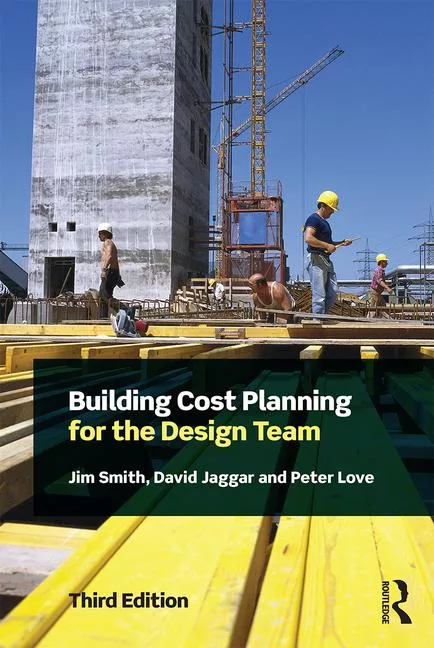
    Building Cost Planning for the Design Team

  • 41G-JcZWT+L._SX342_SY445_.jpg

    The Architect's Studio Companion: Rules of Thumb for Preliminary Design, 7th Edition

See More Products

Events

View AllSubmit An Event
  • September 9, 2025

    The 60-Minute MBA for Architects

    Credits: 1 AIA LU/Elective; 0.1 ICC CEU; 0.1 IACET CEUOn-Demand In this session, we will learn the fundamentals of all successful AE firms and provide the basis for making well-grounded business decisions. We will learn how firms can transition from being professionals providing services, to highly tuned businesses that can identify the needs of the marketplace and create services and products that are appropriately priced and yield consistent and greater profits.
  • September 11, 2024

    Building Science for Architects

    Credits: 1 AIA LU/HSW; 1 IIBEC CEH; 0.1 IACET CEUOn-Demand The science of buildings and how they perform is not often a focus during school, but can become a specialty in practice. Topics such as vapor movement, a robust thermal envelope and condensation prevention are ones that cause issues in many buildings.
View AllSubmit An Event
×

Enhance your expertise with unparalleled insights.

Join thousands of building professionals today. Shouldn’t you know what they know?

SUBSCRIBE TODAY!
  • RESOURCES
    • Advertise
    • Contact Us
    • Store
    • Want More
  • SIGN UP TODAY
    • Create Account
    • Newsletter
    • Customer Service
    • Manage Preferences
  • SERVICES
    • Marketing Services
    • Reprints
    • Market Research
    • List Rental
    • Survey/Respondent Access
  • STAY CONNECTED
    • LinkedIn
    • Facebook
    • Instagram
    • YouTube
    • X
  • PRIVACY
    • PRIVACY POLICY
    • TERMS & CONDITIONS
    • DO NOT SELL MY PERSONAL INFORMATION
    • PRIVACY REQUEST
    • ACCESSIBILITY

Copyright ©2026. All Rights Reserved BNP Media, Inc. and BNP Media II, LLC.

Design, CMS, Hosting & Web Development :: ePublishing