Building Enclosure logo
search
cart
facebook twitter linkedin youtube instagram Spotify Podcasts Apple Podcasts Spotify Podcasts Apple Podcasts
  • Sign In
  • Create Account
  • Sign Out
  • My Account
Building Enclosure logo
  • NEWS
    • Breaking News
  • SECTIONS
    • Columns
    • Project Profiles
    • Trade Shows
    • Sponsor Insights
  • SYSTEM DESIGNS
    • Low-Slope Roofs
    • Pitched Roofs
    • Metal Roofing Materials
    • Waterproofing
    • Sustainability
    • Insulation
    • Exterior Claddings
    • Wall Systems
    • Building Envelope
  • BLOG
    • The BE Blog
  • MEDIA
    • Podcasts
    • Webinars
    • Quiz
    • Videos
    • Polls
    • Interactive Spotlights
    • Newsletter
    • Photo Galleries
  • DIRECTORIES
    • Directory: Blue Book
    • Directory: Roofing Resource
  • PRODUCTS
  • TECHNICAL
    • Codes
      • Waterproofing
      • Roofing
    • Details
      • Waterproofing
      • Roofing
  • CONTINUING ED
  • ABOUT
    • Advertise
      • Editorial Calendar
    • Contact
    • eMag Archive Issues
  • SIGN UP!
Breaking News

Sessions at FGIA Virtual Summer Summit Share Ways to Learn Improvement through Quality Control

Designing for the Future | Architectural Coatings

FGIA Logo
June 25, 2025

The Fenestration and Glazing Industry Alliance (FGIA) hosted two speakers who shared their knowledge about new research in the fields of Property Resilience Assessment (PRA) and architectural weathering. In a session sponsored by Intertek Building and Construction, presenter Alan Scott spoke about “Designing for the Future | Understanding Resilience in the Built Environment.” This was followed by a presentation by Sean Fowler (Q-Lab), who shared the findings of a recently concluded five-year weathering study conducted by the Society for Protective Coatings (SSPC) Subcommittee C.1.8 on fluoropolymers.


Designing for the Future | Understanding Resilience in the Built Environment

Scott focused on two pieces of news this week: the update to Leadership in Energy and Environmental Design (LEED) as well as a new ASTM guide. First, he defined a disaster as “something that is unexpected.” Scott explained, “A hazard can be assessed and planned for to prevent it from becoming a disaster. A disaster is a hazard we didn’t prepare for.” Due to extreme weather and climate changes, the trend is clear, said Scott. “We are in an upward spiral, and we cannot ignore that trend. Major hurricanes have caused damage not just in coastal areas, but also inland.”
 

Built Environment Resilience

There are three parts of built environment resilience, said Scott.
 1. Safety and security (the ability to keep occupants safe)
 2. Integrity (the ability to resist damage)
 3. Functionality (the ability to continue functioning during and after a hazard event)
 
 “Sustainability and resilience are two sides of one coin,” said Scott. “We need to improve both.”
 
 There are now many resilience regulations and voluntary disclosures, including:
 • The EU’s Corporate Sustainability Reporting Directive regulation
 • California SB 261 focused on climate-related financial risk reporting
 • ASTM E3429-24, a new guide about Property Resilience Assessment (PRA)
 • The LEED v5 resilience assessment released in April
 • Codes such as ICC 2027 flood standards
 
In terms of LEED v5, Scott said there is a requirement to conduct a resilience assessment: a comprehensive assessment for climate resilience, aiming to increase awareness of reduced vulnerability, while striving to ensure long term safety and sustainability. “There is a credit in LEED v5 for having an enhanced resilient site design and a credit for having a resilient space,” he said.
 

Three stages of PRA

As for the ASTM standard for PRA, this guide was developed with a number of objectives, said Scott, noting its three stages.
• Stage 1: Hazard – screening and identifying hazards (also verifying them): Which natural hazards and future climate hazards present the greatest risk? Use national, state, local and tribal data, said Scott. Risk Footprint is a resource one can use in this process.
• Stage 2: Risk – vulnerability and sensitivity evaluation: How vulnerable is the asset and its occupants to the greatest identified hazards? Vulnerability is a factor of exposure, sensitivity and adaptive capacity. Weigh these to assess one’s hazard impact risk.
• Stage 3: Resilience Measures – making recommendations: For the given hazards and vulnerabilities, what feasible physical and operational resilience measures can reduce risks?
 
 “PRA can be used for new development, but also for risk analysis, like capital improvement planning, operation and maintenance planning,” said Scott. “Also considered is adaptive use or renovation, and assessing those risks upfront.”


Architectural Coatings | Results of Weathering Testing for Preliminary Verified Components Listing (VCL)

The weathering study Fowler discussed was originally conducted to support a new paint specification, but “I thought FGIA [members] would benefit from the study’s findings, as well,” he said. The data validated a 4,000-hour screening test and was a five-year study that concluded in 2024. It involved 13 topcoats from 10 manufacturers. The committee requested a range of durability performance. Each system was tested in four standard colors: white, red, blue and gray. “Around 1,000 coated specimens were collected at our laboratory, anonymized using letter codes,” said Fowler.
 
The study looked at the correlation between natural and accelerated weathering of industrial maintenance coatings. “It was a fairly substantial study,” said Fowler. Samples were tested via natural outdoor weathering and accelerated outdoor weathering using a series of mirrors. “There was a lot of airflow there to keep them from getting too hot,” said Fowler of the outdoor samples. “We looked at color change and glass loss.” Measurements were taken every 500 hours in the lab and every six months for the outdoor tests in Florida.
 

Conclusions of the Study

 • Three accelerated methods exhibited good correlation to three years of Florida weathering for both color and gloss.
 • White specimen results suggest dirt pickup and microbial degradation are significant in Florida, and this may be applied to colored specimens in some cases.
 • In general, total UV dosage in accelerated testing needs to be comparable to outdoor dosage for good correlation. The five year Florida results show many false positive results from accelerated tests at lower dosages.
 
 “The white samples that didn’t fare well after three years certainly didn’t get better after an additional two years of exposure,” said Fowler.
 
 
For more coverage about the FGIA Virtual Summer Summit, visit FGIAonline.org/news. 

KEYWORDS: coatings fenestration FGIA (Fenestration and Glazing Industry Alliance) glazing resiliency testing

Share This Story

Looking for a reprint of this article?
From high-res PDFs to custom plaques, order your copy today!


Recommended Content

JOIN TODAY
to unlock your recommendations.

Already have an account? Sign In

  • bar graph shows LEED v4/LEED v5/LEED v6 in various colors

    When Will LEED v4 / v4.1 and LEED v5 Expire?

    The latest version of the LEED rating system, LEED v5, is...
    Sustainability
    By: Daniel Overbey
  • Celebrating Women In AEC-2026

    Celebrating Women in The AEC Industry Part 1

    A round-up of women in the design, engineering and...
    Building Envelope
    By: Lindsay Lewis
  • KEE membrane application on a roof

    A Beginner’s Guide to Single-Ply Roofing Membranes

    While PVC and TPO appear extremely similar, the chemistry...
    Low-Slope Roofs
    By: Peter Gross
Manage My Account
  • Sign up for the Newsletter
  • Online Registration
  • Manage My Preferences
  • Registration Customer Service

More Videos

Sponsored Content

Sponsored Content is a special paid section where industry companies provide high quality, objective, non-commercial content around topics of interest to the Building Enclosure audience. All Sponsored Content is supplied by the advertising company and any opinions expressed in this article are those of the author and not necessarily reflect the views of Building Enclosure or its parent company, BNP Media. Interested in participating in our Sponsored Content section? Contact your local rep!

close
  • 2 construction workers and a DEXcell panel
    Sponsored byDEXcell Roof Boards

    Designing Low-Slope Roofs for Resilience

  • Bell Bank headquarters in Fargo, North Dakota
    Sponsored bySto Corp.

    Drained and Back-Ventilated Rainscreens vs Pressurized-Equalized Rainscreens

  • A construction worker using DEXcell roof boards
    Sponsored byDEXcell Roof Boards

    The Hidden Strength of Low-Slope Roof Systems: Why Roof Cover Boards Matter

Popular Stories

construction industry workers in hard hats stand around a city scape

Construction Industry Revolts Over New CSI Licensing Plan

a man wearing a mask installs insulation into a wall system

Quiet Rooms and Healthier Air: A Second Look at What Goes Inside the Wall Cavity

Canalino Elementary School and Canalino Family School exterior

Daylighting Design to Support Rapidly Growing Trend in Modular Building Construction

Building Enclosure Newsletter

BE Poll

Events

June 17, 2025

Addressing Condensation in Low-Slope Roof Assemblies

Credits: 1 AIA LU/HSW; 0.1 ICC CEU; 1 IIBEC CEH; 0.1 IACET CEU

On Demand In modern roofing systems, vapor retarders and air barriers do more than just minimize air leakage—they’re essential to maximizing performance and longevity. This engaging course dives into the next generation of moisture control: permeable vapor retarders and air barriers. Discover how these cutting-edge technologies are transforming low-slope roofing assemblies by improving energy efficiency, managing moisture, and boosting wind uplift resistance.

April 9, 2026

Strategies for High-Performance Below-Grade Waterproofing

Credits: 1 AIA LU/HSW ; 1 IIBEC CEH; 0.1 IACET CEU

On-Demand Designing a high-performance building enclosure requires more than just surface-level protection; it demands a rigorous, performance-based mastery of below-grade water and gas mitigation. This discussion will provide an expert-level analysis of below-grade waterproofing within the comprehensive framework of the high-performance building enclosure.

View All Submit An Event

Products

Plaster and Drywall Assemblies Manual

Plaster and Drywall Assemblies Manual

This is a comprehensive manual that goes beyond codes and standards, providing expert guidance in design, detailing, material selection and troubleshooting for plaster and drywall.

See More Products

Related Articles

  • FGIA Logo

    Legal Guidance Offered on Sustainability Topics Like PFAS, "Green" Claims at FGIA Virtual Summer Summit

    See More
  • the word tariffs with a canadian and american flag

    State of the Industry for Canada, U.S. Assessed at FGIA Virtual Summer Summit

    See More
  • FGIA Logo

    FGIA Virtual Summer Summit Schedule Centers Around Sustainability

    See More

Related Products

See More Products
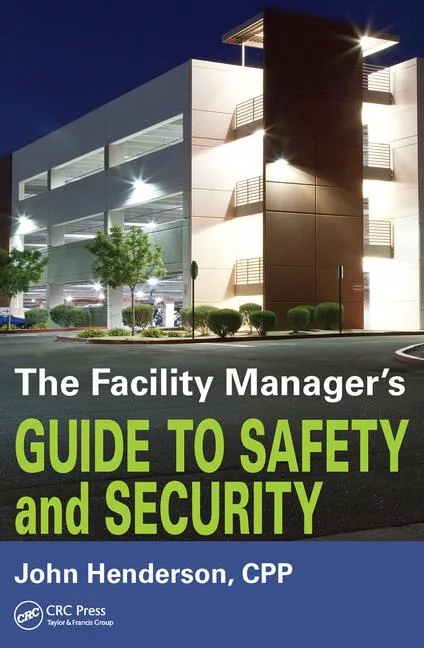
  • facility.jpg

    The Facility Manager's Guide to Safety and Security

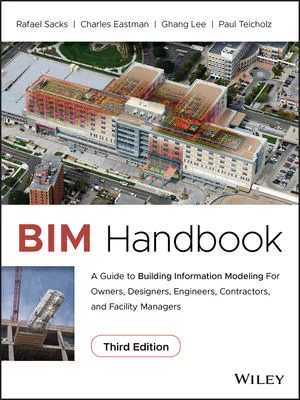
  • bim-3e.jpg

    BIM Handbook: A Guide to Building Information Modeling for Owners, Designers, Engineers, Contractors, and Facility Managers, 3rd Edition

  • building codes illustated.jpg

    Building Codes Illustrated: A Guide to Understanding the 2021 International Building Code, 7th Edition

See More Products
×

Enhance your expertise with unparalleled insights.

Join thousands of building professionals today. Shouldn’t you know what they know?

SUBSCRIBE TODAY!
  • RESOURCES
    • Advertise
    • Contact Us
    • Store
    • Want More
  • SIGN UP TODAY
    • Create Account
    • Newsletter
    • Customer Service
    • Manage Preferences
  • SERVICES
    • Marketing Services
    • Reprints
    • Market Research
    • List Rental
    • Survey/Respondent Access
  • STAY CONNECTED
    • LinkedIn
    • Facebook
    • Instagram
    • YouTube
    • X
  • PRIVACY
    • PRIVACY POLICY
    • TERMS & CONDITIONS
    • DO NOT SELL MY PERSONAL INFORMATION
    • PRIVACY REQUEST
    • ACCESSIBILITY

Copyright ©2026. All Rights Reserved BNP Media, Inc. and BNP Media II, LLC.

Design, CMS, Hosting & Web Development :: ePublishing