Building Enclosure logo
search
cart
facebook twitter linkedin youtube instagram Spotify Podcasts Apple Podcasts Spotify Podcasts Apple Podcasts
  • Sign In
  • Create Account
  • Sign Out
  • My Account
Building Enclosure logo
  • NEWS
    • Breaking News
  • SECTIONS
    • Columns
    • Project Profiles
    • Trade Shows
    • Sponsor Insights
  • SYSTEM DESIGNS
    • Low-Slope Roofs
    • Pitched Roofs
    • Metal Roofing Materials
    • Waterproofing
    • Sustainability
    • Insulation
    • Exterior Claddings
    • Wall Systems
    • Building Envelope
  • BLOG
    • The BE Blog
  • MEDIA
    • Podcasts
    • Webinars
    • Quiz
    • Videos
    • Polls
    • Interactive Spotlights
    • Newsletter
    • Photo Galleries
  • DIRECTORIES
    • Directory: Blue Book
    • Directory: Roofing Resource
  • PRODUCTS
  • TECHNICAL
    • Codes
      • Waterproofing
      • Roofing
    • Details
      • Waterproofing
      • Roofing
  • CONTINUING ED
  • ABOUT
    • Advertise
      • Editorial Calendar
    • Contact
    • eMag Archive Issues
  • SIGN UP!
ColumnsLow-Slope Roofs

Next-Generation Plastics for High-Performance Roofing Membranes
By Joanna Giovanoli, Greg Li
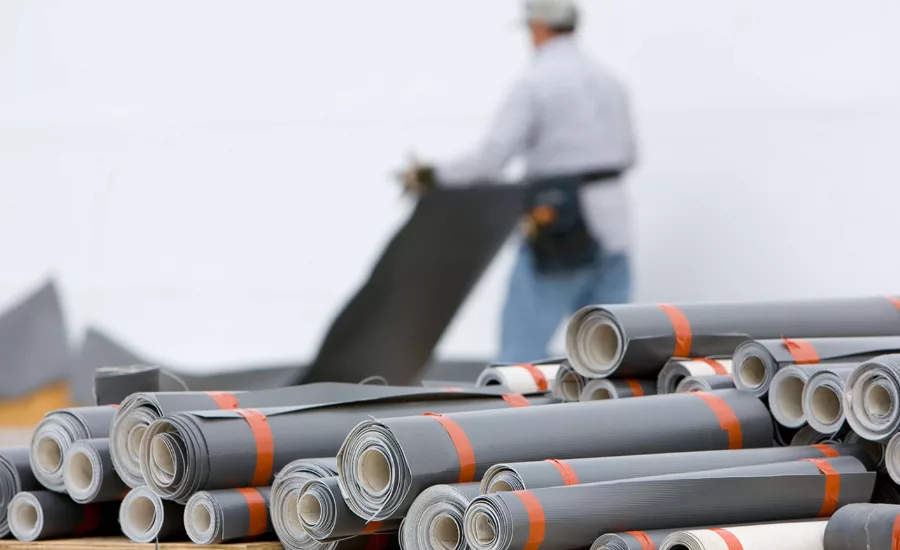
Sika Recycles PVC Roofing Membranes

Photo courtesy of Sika Corporation.

February 14, 2025

As the built environment reaches new heights of innovation, roofing systems must evolve to meet new challenges. Roofing membranes, the unsung heroes safeguarding structures from the elements, have transformed to become the first line of defense against water leaks, moisture and chemical damage. Thanks to breakthroughs in materials science, today's roofing membranes are designed for remarkable durability and performance.


Fundamentals of Roofing Membranes

At its core, a roofing membrane serves as a crucial barrier against leaks, ponding water and energy loss – ultimately enhancing building operations. That means less safety hazards due to standing water from leaks, reduced infestations from moisture and lower energy costs.

However, commercial and industrial buildings often encounter distinct environmental hazards that demand more than just basic protection. As a result, chemical-resistance, fire-resistance, durability and longevity are vital for the overall protection that roofing materials offer. In recent decades, innovations in roofing membrane technology have advanced significantly to address these stringent requirements.


Single-Ply Possibilities of Polymeric Materials

As the roofing industry evolves, durability, cost-efficiency and weatherability have become paramount in the development of single-ply roofing membranes. Materials like EPDM (ethylene propylene diene terpolymer) and PVC (polyvinyl chloride) offer roofing manufacturers the flexibility to create custom formulations tailored to specific designs, production processes and end-use requirements.

EPDM, for instance, can be formulated with varying molecular architectures that offer longevity, weather resistance, flexibility and low temperature toughness. Recent advancements in EPDM product design have also led to improved mechanical performance, increased filler loading (the addition of inexpensive mineral fillers to offset the system costs of EPDM membranes) and better processability. 

While high filler loading in compound formulations can lead to inefficient mixing and poor dispersion of additives, potentially impacting the physical properties of the end-use product, the EPDM product designs have addressed these challenges with more homogenous filler incorporation and dispersion. With a unique molecular structure design, next-generation EPDM products can offer higher tensile strength for the membrane and maintain increased performance levels even as more filler is added in the compound formulation. 


When More is Needed in a Membrane

Another development in roofing technology is the use of ketone ethylene ester (KEE) as a polymeric plasticizer in PVC roofing membranes. This innovation marks a significant advancement in chemical resistance, weatherability and overall resiliency.

PVC-based systems require a plasticizer to maintain long-term flexibility and durability. Traditionally, liquid plasticizers have been used, but they tend to migrate out of the roofing membrane over time, which can lead to membrane drying and cracking. KEE, however, is a solid and non-migrating polymeric PVC plasticizer, which means the roofing material is less likely to crack due to plasticizer loss over time. 

PVC roofing membranes with KEE offer excellent resistance to fire, water intrusion and chemical degradation which can help safeguard valuable equipment, making it suitable for critical infrastructure such as data centers and airports. Its durability translates to longer lifespans and reduced maintenance costs, making KEE a compelling choice for long-term performance.

As societal needs evolve, so does roofing technology. Continuous advancements in materials science are extending the lifespans and durability of roofs, which is increasingly important as severe weather events become more frequent and the pressure to limit waste grows. The longer a roof remains intact and functional, the fewer repairs and replacements are needed, which can be economically and environmentally beneficial. With less need to for replacements, there is a reduction in material usage, total ownership costs and industrial waste. The future of roofing is bright, driven by innovation and a relentless pursuit of durability.

KEYWORDS: EPDM (Ethylene Propylene Diene Monomer) membranes PVC (Polyvinyl Chloride) roofing membranes

Share This Story

Looking for a reprint of this article?
From high-res PDFs to custom plaques, order your copy today!


Joanna Giovanoli is the Dow Senior Marketing Manager.

Greg Li is a Dow Senior TS&D Scientist

Recommended Content

JOIN TODAY
to unlock your recommendations.

Already have an account? Sign In

  • bar graph shows LEED v4/LEED v5/LEED v6 in various colors

    When Will LEED v4 / v4.1 and LEED v5 Expire?

    The latest version of the LEED rating system, LEED v5, is...
    Sustainability
    By: Daniel Overbey
  • Celebrating Women In AEC-2026

    Celebrating Women in The AEC Industry Part 1

    A round-up of women in the design, engineering and...
    Sustainability
    By: Lindsay Lewis
  • KEE membrane application on a roof

    A Beginner’s Guide to Single-Ply Roofing Membranes

    While PVC and TPO appear extremely similar, the chemistry...
    Low-Slope Roofs
    By: Peter Gross
Manage My Account
  • Sign up for the Newsletter
  • Online Registration
  • Manage My Preferences
  • Registration Customer Service

More Videos

Sponsored Content

Sponsored Content is a special paid section where industry companies provide high quality, objective, non-commercial content around topics of interest to the Building Enclosure audience. All Sponsored Content is supplied by the advertising company and any opinions expressed in this article are those of the author and not necessarily reflect the views of Building Enclosure or its parent company, BNP Media. Interested in participating in our Sponsored Content section? Contact your local rep!

close
  • HITT Construction headquarters
    Sponsored byBuilding Composites® LLC

    Pushing the Envelope

  • 2 construction workers and a DEXcell panel
    Sponsored byDEXcell Roof Boards

    Designing Low-Slope Roofs for Resilience

  • Bell Bank headquarters in Fargo, North Dakota
    Sponsored bySto Corp.

    Drained and Back-Ventilated Rainscreens vs Pressurized-Equalized Rainscreens

Popular Stories

graphic shows white arrows pointing to the right on a light green background

A Breakdown of Air Leakage Testing in LEED v5 BD+C

graphic shows a building destoryed by tornados with information on the amount of torandos in 2026 in the US

Record-Breaking Tornado Activity in Illinois Signals New Challenges for Architects

HITT Construction headquarters

Pushing the Envelope

Building Enclosure Newsletter

BE Poll

Events

April 9, 2026

Strategies for High-Performance Below-Grade Waterproofing

Credits: 1 AIA LU/HSW ; 1 IIBEC CEH; 0.1 IACET CEU

On-Demand Designing a high-performance building enclosure requires more than just surface-level protection; it demands a rigorous, performance-based mastery of below-grade water and gas mitigation. This discussion will provide an expert-level analysis of below-grade waterproofing within the comprehensive framework of the high-performance building enclosure.

April 28, 2026

Roof Design Considerations That Prevent Installation Failures and Change Orders

Credit: 1 AIA LU/HSW; 1 IIBEC CEH; 0.1 ICC CEU

On-Demand This course provides visual examples of actual field conditions. Some good, some not so good; along with design suggestions that can cut installation costs and reduce construction change orders. Upon completion of this course, you will have a better understanding of the requirements the roofing contractor must meet to provide the specified roofing system warranty, and long-term value to the owner.

View All Submit An Event

Products

Plaster and Drywall Assemblies Manual

Plaster and Drywall Assemblies Manual

This is a comprehensive manual that goes beyond codes and standards, providing expert guidance in design, detailing, material selection and troubleshooting for plaster and drywall.

See More Products

Related Articles

  • Sika logo and the NSF logo

    Sika Achieves Platinum Certification Again for NSF/ANSI 347: Sustainability Assessment for Single-Ply Roofing Membranes

    See More
  • KEE membrane application on a roof

    A Beginner’s Guide to Single-Ply Roofing Membranes

    See More
  • Polyfresko

    Self-Adhered Mod Bit Roofing Membranes

    See More

Related Products

See More Products
  • 1118458605.jpg

    Sustainable Facades: Design Methods for High-Performance Building Envelopes

  • studentguidebook.jpg

    Integrating Building Performance with Design: An Architecture Student’s Guidebook

See More Products

Events

View AllSubmit An Event
  • April 9, 2026

    Strategies for High-Performance Below-Grade Waterproofing

    Credits: 1 AIA LU/HSW ; 1 IIBEC CEH; 0.1 IACET CEUOn-Demand Designing a high-performance building enclosure requires more than just surface-level protection; it demands a rigorous, performance-based mastery of below-grade water and gas mitigation. This discussion will provide an expert-level analysis of below-grade waterproofing within the comprehensive framework of the high-performance building enclosure.
  • June 30, 2026

    Next-Generation Firestopping for Building Joints

    Credits 1 AIA LU/HSW; 1 IIBEC CEH; 0.1 ICC CEUOn-Demand This course will detail the progression of early building joint firestop methods to today's best practices, such as preformed firestopping and fire rated drywall accessories. Architects, engineers and specifiers will gain new perspective from this presentation, discovering more modern approaches to joint firestop methodology.
View AllSubmit An Event
×

Enhance your expertise with unparalleled insights.

Join thousands of building professionals today. Shouldn’t you know what they know?

SUBSCRIBE TODAY!
  • RESOURCES
    • Advertise
    • Contact Us
    • Store
    • Want More
  • SIGN UP TODAY
    • Create Account
    • Newsletter
    • Customer Service
    • Manage Preferences
  • SERVICES
    • Marketing Services
    • Reprints
    • Market Research
    • List Rental
    • Survey/Respondent Access
  • STAY CONNECTED
    • LinkedIn
    • Facebook
    • Instagram
    • YouTube
    • X
  • PRIVACY
    • PRIVACY POLICY
    • TERMS & CONDITIONS
    • DO NOT SELL MY PERSONAL INFORMATION
    • PRIVACY REQUEST
    • ACCESSIBILITY

Copyright ©2026. All Rights Reserved BNP Media, Inc. and BNP Media II, LLC.

Design, CMS, Hosting & Web Development :: ePublishing