Building Enclosure logo
search
cart
facebook twitter linkedin youtube instagram Spotify Podcasts Apple Podcasts Spotify Podcasts Apple Podcasts
  • Sign In
  • Create Account
  • Sign Out
  • My Account
Building Enclosure logo
  • NEWS
    • Breaking News
  • SECTIONS
    • Columns
    • Project Profiles
    • Trade Shows
    • Sponsor Insights
  • SYSTEM DESIGNS
    • Low-Slope Roofs
    • Pitched Roofs
    • Metal Roofing Materials
    • Waterproofing
    • Sustainability
    • Insulation
    • Exterior Claddings
    • Wall Systems
    • Building Envelope
  • BLOG
    • The BE Blog
  • MEDIA
    • Podcasts
    • Webinars
    • Quiz
    • Videos
    • Polls
    • Interactive Spotlights
    • Newsletter
    • Photo Galleries
  • DIRECTORIES
    • Directory: Blue Book
    • Directory: Roofing Resource
  • PRODUCTS
  • TECHNICAL
    • Codes
      • Waterproofing
      • Roofing
    • Details
      • Waterproofing
      • Roofing
  • CONTINUING ED
  • ABOUT
    • Advertise
      • Editorial Calendar
    • Contact
    • eMag Archive Issues
  • SIGN UP!
Breaking News

Industry Partners Use ORNL Software to Trim Carbon Footprint of Buildings
ORNL.jpg
September 22, 2022

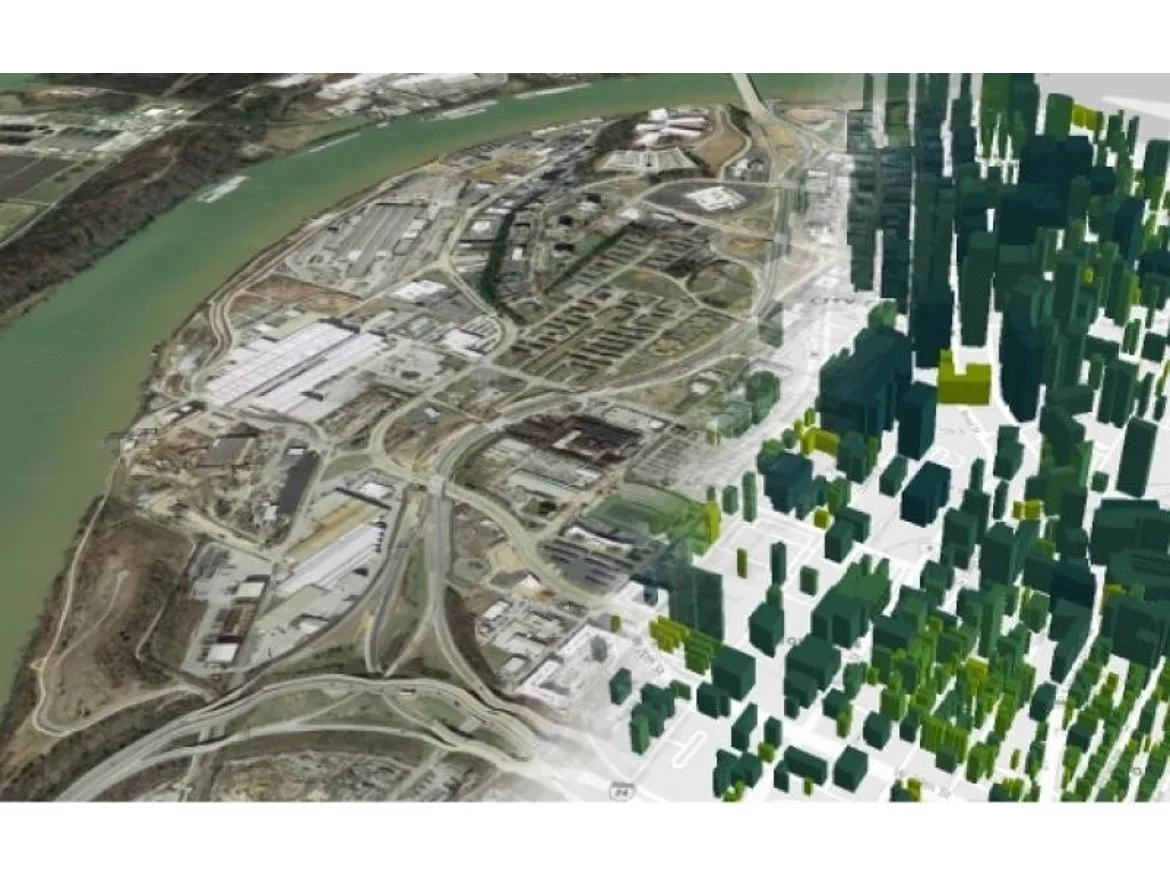
Two years after the U.S. Department of Energy’s Oak Ridge National Laboratory provided a model of nearly every building in America, commercial partners are using the tool for tasks ranging from designing energy-efficient buildings and cities to linking energy efficiency to real estate value and risk. International companies like Google and SmithGroup are sharing the benefits by making the resulting data publicly available. Since the buildings sector accounts for 40% of American energy consumption, increasing its efficiency is vital to national decarbonization goals.

Dozens of companies have requested data from ORNL’s Automatic Building Energy Modeling software suite, or AutoBEM, said project leader Joshua New. He and his team developed AutoBEM using high-performance computing to process layers of imaging data with information about individual buildings, such as their size, use, construction materials and heating and cooling technologies. 

“The unifying theme is to create a digital twin of our nation’s buildings,” New said. “We can simulate market-relevant ways to reduce energy use and offset with renewable sources.” 

The software has simulated energy use for 123 million structures, representing 98% of U.S. buildings. New’s team is updating the software this year for even greater building detail and accuracy.

Google is using AutoBEM to improve its free Environmental Insights Explorer tool, which launched in 2018 to help cities worldwide recognize sources of greenhouse gas and reduction opportunities. Saleem Van Groenou, product manager for Environmental Insights Explorer, said Google wants to incorporate more precise energy efficiency simulations for buildings. 

“Oak Ridge has much deeper expertise in building energy systems and modeling management and action than we do,” Van Groenou said. “We can now help cities focus more on what changes should be made, then track the impact of those changes over time.”

Google is combining its trove of building data with ORNL’s ability to scale up energy models and develop machine-learning algorithms, Van Groenou said. 

Google is one of five major companies contributing data, staff time and equipment to AutoBEM partnerships. 

Most users of AutoBEM focus on existing buildings, but SmithGroup, an international architecture and engineering firm, takes the approach of incorporating efficiency from the first blueprint. 

“Our interest in AutoBEM and working with the lab stems from a dramatic need to scale the work we’re doing in response to climate change,” said Stet Sanborn, who oversees the ORNL collaboration for SmithGroup. “The number of buildings we need to touch, and the pace we need to do it, exceeds what an individual could do in their lifetime. And we need to do that in the next five years.” He pointed out that AutoBEM’s ability to run 200,000 energy models in less than an hour equals the output of one employee working full time for 365 years. 

For SmithGroup, ORNL simulated every possible combination of design parameters, building types and U.S. climate zones. This information was used to train an artificial intelligence tool, essentially allowing the company to pre-simulate the energy impact of every design possibility for any building. 

AutoBEM also incorporates climate change scenarios identified by the Intergovernmental Panel on Climate Change, modeled by the Climate Change Science Institute at ORNL. This feature attracted the attention of partner LightBox, which offers a platform for mapping and analyzing real estate information. 

“As a leader in the commercial real estate and location intelligence industries, we offer new data sets that are critical for understanding new risks,” said Zach Wade, LightBox vice president for data science. “LightBox plans to use AutoBEM to model the long-term energy and operation costs of buildings and to support understanding and reporting greenhouse gas emissions, providing valuable information to real estate investors, brokers, lenders and banks, appraisers, engineers and environmental consulting firms.” 

LightBox and other partners will provide benefits to AutoBEM in turn by contributing data sets like building footprints, interior details, property parcel boundaries and financial information to improve future simulations. 

In addition, partners such as SmithGroup and Google have committed to sharing data sets created using AutoBEM. “The entire market needs to shift, and that's where the relationship with AutoBEM becomes incredibly important,” said Sanborn. “We don't want to hold a secret sauce or limit everyone’s ability to drive efficiency in response to what is really a climate emergency.”

Other AutoBEM partners include glass manufacturer Cardinal Glass Industries and Bentley Systems, an infrastructure engineering software company. Cardinal Glass, which supplies window manufacturers, is using the tool to understand the energy performance of various window types in different regions and climate scenarios when compared to other efficiency upgrades. Bentley Systems is researching how to leverage city-scale digital twins and building energy models to optimize building design and decarbonization.

"The biggest surprise has been the amount of interest from companies and the array of data modeling or analysis they request,” New said. 

AutoBEM’s development, expansion and collaborations are funded by DOE’s Office of Electricity, the Energy Efficiency and Renewable Energy’s Building Technologies Office and the National Nuclear Security Administration. The research team leveraged supercomputing resources from Argonne National Laboratory.

UT-Battelle manages Oak Ridge National Laboratory for the U.S. Department of Energy’s Office of Science. The single largest supporter of basic research in the physical sciences in the United States, the Office of Science is working to address some of the most pressing challenges of our time. For more information, please visit energy.gov/science.

KEYWORDS: apps and software BIM (Building Information Modeling) carbon reduction ORNL (Oak Ridge National Labs)

Share This Story

Looking for a reprint of this article?
From high-res PDFs to custom plaques, order your copy today!


Recommended Content

JOIN TODAY
to unlock your recommendations.

Already have an account? Sign In

  • bar graph shows LEED v4/LEED v5/LEED v6 in various colors

    When Will LEED v4 / v4.1 and LEED v5 Expire?

    The latest version of the LEED rating system, LEED v5, is...
    Sustainability
    By: Daniel Overbey
  • Celebrating Women In AEC-2026

    Celebrating Women in The AEC Industry Part 1

    A round-up of women in the design, engineering and...
    Building Envelope
    By: Lindsay Lewis
  • KEE membrane application on a roof

    A Beginner’s Guide to Single-Ply Roofing Membranes

    While PVC and TPO appear extremely similar, the chemistry...
    Low-Slope Roofs
    By: Peter Gross
Manage My Account
  • Sign up for the Newsletter
  • Online Registration
  • Manage My Preferences
  • Registration Customer Service

More Videos

Sponsored Content

Sponsored Content is a special paid section where industry companies provide high quality, objective, non-commercial content around topics of interest to the Building Enclosure audience. All Sponsored Content is supplied by the advertising company and any opinions expressed in this article are those of the author and not necessarily reflect the views of Building Enclosure or its parent company, BNP Media. Interested in participating in our Sponsored Content section? Contact your local rep!

close
  • 2 construction workers and a DEXcell panel
    Sponsored byDEXcell Roof Boards

    Designing Low-Slope Roofs for Resilience

  • Bell Bank headquarters in Fargo, North Dakota
    Sponsored bySto Corp.

    Drained and Back-Ventilated Rainscreens vs Pressurized-Equalized Rainscreens

  • A construction worker using DEXcell roof boards
    Sponsored byDEXcell Roof Boards

    The Hidden Strength of Low-Slope Roof Systems: Why Roof Cover Boards Matter

Popular Stories

construction industry workers in hard hats stand around a city scape

Construction Industry Revolts Over New CSI Licensing Plan

a man wearing a mask installs insulation into a wall system

Quiet Rooms and Healthier Air: A Second Look at What Goes Inside the Wall Cavity

Canalino Elementary School and Canalino Family School exterior

Daylighting Design to Support Rapidly Growing Trend in Modular Building Construction

Building Enclosure Newsletter

BE Poll

Events

June 17, 2025

Addressing Condensation in Low-Slope Roof Assemblies

Credits: 1 AIA LU/HSW; 0.1 ICC CEU; 1 IIBEC CEH; 0.1 IACET CEU

On Demand In modern roofing systems, vapor retarders and air barriers do more than just minimize air leakage—they’re essential to maximizing performance and longevity. This engaging course dives into the next generation of moisture control: permeable vapor retarders and air barriers. Discover how these cutting-edge technologies are transforming low-slope roofing assemblies by improving energy efficiency, managing moisture, and boosting wind uplift resistance.

April 9, 2026

Strategies for High-Performance Below-Grade Waterproofing

Credits: 1 AIA LU/HSW ; 1 IIBEC CEH; 0.1 IACET CEU

On-Demand Designing a high-performance building enclosure requires more than just surface-level protection; it demands a rigorous, performance-based mastery of below-grade water and gas mitigation. This discussion will provide an expert-level analysis of below-grade waterproofing within the comprehensive framework of the high-performance building enclosure.

View All Submit An Event

Products

Plaster and Drywall Assemblies Manual

Plaster and Drywall Assemblies Manual

This is a comprehensive manual that goes beyond codes and standards, providing expert guidance in design, detailing, material selection and troubleshooting for plaster and drywall.

See More Products

Related Articles

  • industry case study on powder coatings cover

    Arkema, AkzoNobel, and BASF Team Up to Lower Carbon Footprint of Architectural Coatings

    See More
  • pexels-sevenstormphotography-439416.jpg

    Can Using Carbon Footprint Calculators in Preconstruction Planning Lower On-Site Emissions?

    See More
  • AECOM Logo

    AECOM Unveils Target for Reducing Carbon Footprint

    See More

Related Products

See More Products
  • buildings.jpg

    Mechanical and Electrical Equipment for Buildings, 13th Edition

  • 9780128207918.jpg

    Eco-efficient Materials for Reducing Cooling Needs in Buildings and Construction 1st Edition

  • 41G-JcZWT+L._SX342_SY445_.jpg

    The Architect's Studio Companion: Rules of Thumb for Preliminary Design, 7th Edition

See More Products
×

Enhance your expertise with unparalleled insights.

Join thousands of building professionals today. Shouldn’t you know what they know?

SUBSCRIBE TODAY!
  • RESOURCES
    • Advertise
    • Contact Us
    • Store
    • Want More
  • SIGN UP TODAY
    • Create Account
    • Newsletter
    • Customer Service
    • Manage Preferences
  • SERVICES
    • Marketing Services
    • Reprints
    • Market Research
    • List Rental
    • Survey/Respondent Access
  • STAY CONNECTED
    • LinkedIn
    • Facebook
    • Instagram
    • YouTube
    • X
  • PRIVACY
    • PRIVACY POLICY
    • TERMS & CONDITIONS
    • DO NOT SELL MY PERSONAL INFORMATION
    • PRIVACY REQUEST
    • ACCESSIBILITY

Copyright ©2026. All Rights Reserved BNP Media, Inc. and BNP Media II, LLC.

Design, CMS, Hosting & Web Development :: ePublishing