Building Enclosure logo
search
cart
facebook twitter linkedin youtube instagram Spotify Podcasts Apple Podcasts Spotify Podcasts Apple Podcasts
  • Sign In
  • Create Account
  • Sign Out
  • My Account
Building Enclosure logo
  • NEWS
    • Breaking News
  • SECTIONS
    • Columns
    • Project Profiles
    • Trade Shows
    • Sponsor Insights
  • SYSTEM DESIGNS
    • Low-Slope Roofs
    • Pitched Roofs
    • Metal Roofing Materials
    • Waterproofing
    • Sustainability
    • Insulation
    • Exterior Claddings
    • Wall Systems
    • Building Envelope
  • BLOG
    • The BE Blog
  • MEDIA
    • Podcasts
    • Webinars
    • Quiz
    • Videos
    • Polls
    • Interactive Spotlights
    • Newsletter
    • Photo Galleries
  • DIRECTORIES
    • Directory: Blue Book
    • Directory: Roofing Resource
  • PRODUCTS
  • TECHNICAL
    • Codes
      • Waterproofing
      • Roofing
    • Details
      • Waterproofing
      • Roofing
  • CONTINUING ED
  • ABOUT
    • Advertise
      • Editorial Calendar
    • Contact
    • eMag Archive Issues
  • SIGN UP!
Products

Engineering A Better Felt
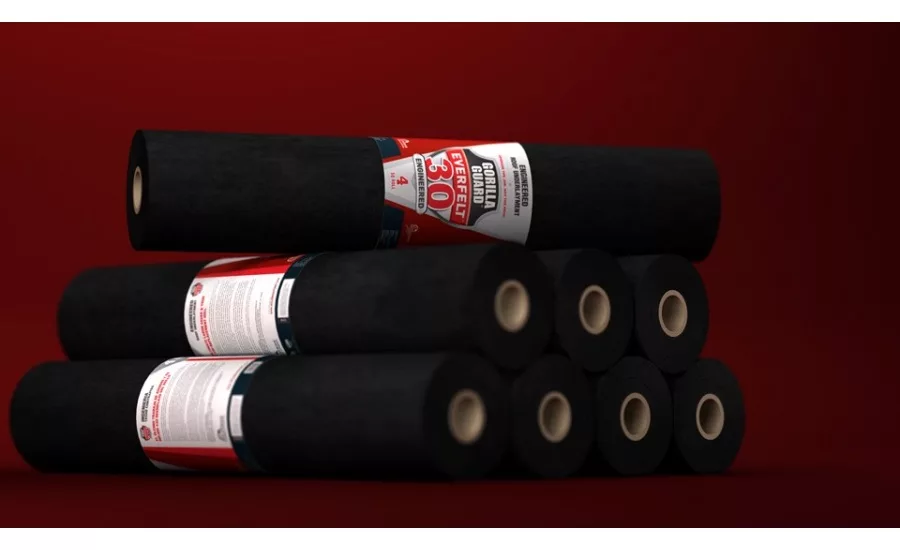
Gorilla Guard
April 14, 2016

Underlayment is the last line of defense for a roof to withstand the elements and helps protect a home's interior. It’s a water-resistant membrane and is the first component to be installed on a roof deck.

For decades, asphalt-saturated felt was the most common underlayment used on steep-slope residential roofs and continues to be the industry standard. However, innovative roofing technology has helped produce engineered underlayment, which offers additional protection for a roof compared to traditional felt.


Old Problems, New Solutions

Felt underlayment can fail for a number of reasons. Under certain conditions, basic felt can develop wrinkles, which leads to buckling shingles. Traditional felt also tears easily. These failings weaken the effectiveness of the roof to protect against water and leave a home exposed to damaging elements.

To help roofers and provide a true alternative to felt underlayment, Atlas Roofing developed a way to infuse felt with a cellulose base and fiberglass. The company applied its extensive product knowledge and industry expertise to create the Gorilla Guard line of engineered felt underlayment. The advanced substrates added to the Gorilla Guard line allow it to lay flatter, resist wrinkling and reduce slippage. It’s tougher, yet easy to handle for a smooth application. Gorilla Guard is also more resistant to UV degradation than traditional felt.

In third party independent testing, Gorilla Guard was proven to have stronger tear resistance and yet is still lighter when compared to conventional felt. Gorilla Guard is 36 percent lighter than traditional organic #30 felt and its substrate is 28 percent stronger. That means no more re-work before applying shingles. Because it’s packaged in a four square roll allows handling and installation time to be cut by as much as 50 percent, Gorilla Guard provides better performance for the same price per square.

Gorilla Guard SPEC 30 offers remarkable statistics too when compared to conventional felt. Atlas had several stress trials conducted on Gorilla Guard SPEC 30 and found it to be 142 percent stronger in a pull-through test, 207 percent higher in tear strength and 280 percent stronger in a peel resistance test. All of this durability and yet Gorilla Guard SPEC 30 is 40 percent lighter than felt.


Benefits For Roofers And Homeowners

The labor cost and time saved by installing Gorilla Guard encourages contractors to offer it to customers as an installation standard, rather than an upgrade.

Gorilla Guard is also a qualifying component of an Atlas Signature Select roofing system. Atlas will upgrade its Premium Protection Period warranty when a roof is installed with Atlas products specifically chosen to work together.

Install the lighter, stronger and smoother underlayment that actually lives up to its name. Gorilla Guard has the toughness needed to guard a home from the elements.

KEYWORDS: membranes roofing systems underlayment water management

Share This Story

Looking for a reprint of this article?
From high-res PDFs to custom plaques, order your copy today!


Recommended Content

JOIN TODAY
to unlock your recommendations.

Already have an account? Sign In

  • bar graph shows LEED v4/LEED v5/LEED v6 in various colors

    When Will LEED v4 / v4.1 and LEED v5 Expire?

    The latest version of the LEED rating system, LEED v5, is...
    Sustainability
    By: Daniel Overbey
  • Celebrating Women In AEC-2026

    Celebrating Women in The AEC Industry Part 1

    A round-up of women in the design, engineering and...
    Sustainability
    By: Lindsay Lewis
  • KEE membrane application on a roof

    A Beginner’s Guide to Single-Ply Roofing Membranes

    While PVC and TPO appear extremely similar, the chemistry...
    Low-Slope Roofs
    By: Peter Gross
Manage My Account
  • Sign up for the Newsletter
  • Online Registration
  • Manage My Preferences
  • Registration Customer Service

More Videos

Sponsored Content

Sponsored Content is a special paid section where industry companies provide high quality, objective, non-commercial content around topics of interest to the Building Enclosure audience. All Sponsored Content is supplied by the advertising company and any opinions expressed in this article are those of the author and not necessarily reflect the views of Building Enclosure or its parent company, BNP Media. Interested in participating in our Sponsored Content section? Contact your local rep!

close
  • 2 construction workers and a DEXcell panel
    Sponsored byDEXcell Roof Boards

    Designing Low-Slope Roofs for Resilience

  • Bell Bank headquarters in Fargo, North Dakota
    Sponsored bySto Corp.

    Drained and Back-Ventilated Rainscreens vs Pressurized-Equalized Rainscreens

  • A construction worker using DEXcell roof boards
    Sponsored byDEXcell Roof Boards

    The Hidden Strength of Low-Slope Roof Systems: Why Roof Cover Boards Matter

Popular Stories

a man wearing a mask installs insulation into a wall system

Quiet Rooms and Healthier Air: A Second Look at What Goes Inside the Wall Cavity

Canalino Elementary School and Canalino Family School exterior

Daylighting Design to Support Rapidly Growing Trend in Modular Building Construction

construction workers on a roof, plane flies in background

Why Specifications Are Becoming the Next Critical Layer of Construction Compliance

Building Enclosure Newsletter

BE Poll

Events

June 17, 2025

Addressing Condensation in Low-Slope Roof Assemblies

Credits: 1 AIA LU/HSW; 0.1 ICC CEU; 1 IIBEC CEH; 0.1 IACET CEU

On Demand In modern roofing systems, vapor retarders and air barriers do more than just minimize air leakage—they’re essential to maximizing performance and longevity. This engaging course dives into the next generation of moisture control: permeable vapor retarders and air barriers. Discover how these cutting-edge technologies are transforming low-slope roofing assemblies by improving energy efficiency, managing moisture, and boosting wind uplift resistance.

April 9, 2026

Strategies for High-Performance Below-Grade Waterproofing

Credits: 1 AIA LU/HSW ; 1 IIBEC CEH; 0.1 IACET CEU

On-Demand Designing a high-performance building enclosure requires more than just surface-level protection; it demands a rigorous, performance-based mastery of below-grade water and gas mitigation. This discussion will provide an expert-level analysis of below-grade waterproofing within the comprehensive framework of the high-performance building enclosure.

View All Submit An Event

Products

Plaster and Drywall Assemblies Manual

Plaster and Drywall Assemblies Manual

This is a comprehensive manual that goes beyond codes and standards, providing expert guidance in design, detailing, material selection and troubleshooting for plaster and drywall.

See More Products

Related Articles

  • smith group

    Rebranded SmithGroup Debuts Mission to Design a Better Future

    See More
  • BE_Podcast_new.jpg

    BE Podcast: A Better Approach to Planning and Installing Perimeter Shade Pockets

    See More
  • international spy museum

    Blending Acoustics and Color to Capture a Better Experience

    See More

Related Products

See More Products
  • bim-3e.jpg

    BIM Handbook: A Guide to Building Information Modeling for Owners, Designers, Engineers, Contractors, and Facility Managers, 3rd Edition

  • building codes illustated.jpg

    Building Codes Illustrated: A Guide to Understanding the 2021 International Building Code, 7th Edition

  • revisited.png

    Markup & Profit: A Contractor's Guide Revisited

See More Products
×

Enhance your expertise with unparalleled insights.

Join thousands of building professionals today. Shouldn’t you know what they know?

SUBSCRIBE TODAY!
  • RESOURCES
    • Advertise
    • Contact Us
    • Store
    • Want More
  • SIGN UP TODAY
    • Create Account
    • Newsletter
    • Customer Service
    • Manage Preferences
  • SERVICES
    • Marketing Services
    • Reprints
    • Market Research
    • List Rental
    • Survey/Respondent Access
  • STAY CONNECTED
    • LinkedIn
    • Facebook
    • Instagram
    • YouTube
    • X
  • PRIVACY
    • PRIVACY POLICY
    • TERMS & CONDITIONS
    • DO NOT SELL MY PERSONAL INFORMATION
    • PRIVACY REQUEST
    • ACCESSIBILITY

Copyright ©2026. All Rights Reserved BNP Media, Inc. and BNP Media II, LLC.

Design, CMS, Hosting & Web Development :: ePublishing