Runaway Modeling?
Collaboration is key to the future of BIM.
Over the past 15 years, building information modeling has developed into the undeniable future of the architecture and design industry. It is already difficult to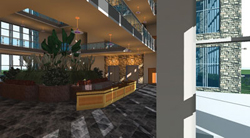 imagine a time when design happened strictly with pencils and t-squares, endless stacks of blueprints and painstaking miniature models.
Technology has forever altered the design process and we are now operating in a brave new world of limitless possibilities. The industry now moves with greater speed, cost-effectiveness and intelligence. But alongside all of this new technology, we are also experiencing growing pains.
With each new benefit we get from BIM, we are faced with new obstacles: Data-laden models produce unwieldy files. Huge, digital product libraries are a filing fiasco. Complex models are difficult for laymen stakeholders to understand. The list goes on.
The question we must ask ourselves is how can we use BIM better? What can we do to eliminate some of these issues and improve the way we are using the technology we already have available?
Let’s look at two of the critical issues tied to BIM use: collaboration and client interfacing.
COLLABORATION
While modeling technology has made it easier to eliminate design errors among the architects using the software, it has opened up many new loopholes for inefficiency—mostly due to lack of communication.
Architects are often hesitant to share their Revit files simply because there is no function to lock them down. Whoever gains access to the file is able to alter the design without the architect’s control. At best this results in a complicated maze of duplicate files. At worst, the architect loses control over his design vision.
CLIENT INTERFACING
Autodesk, Revit, and Google’s SketchUp all create designs using BIM models and 3-D interface to form a clearer representation of the space and design. However, both require a certain degree of expertise and skill to navigate and can leave key stakeholders, such as the owner, contractors and even occupants with a vague impression of what their final product will actually look like.
For the stakeholder to have a true understanding of how the design translates, architects must do in-person walkthroughs, navigating on behalf of them. In an industry where it is not uncommon for key players on the design, client, and build side to live in different parts of the world, this has become increasingly difficult.
OLD SOLUTIONS
Designers have turned to renderings to resolve both of these issues, but this is not a perfect fix. While this technology has become immensely popular and increasingly lifelike, there are still some constraints to the process. Rendering videos remains expensive and time consuming to create.
Stakeholders are left waiting days or weeks for an architectural rendering to give them a better sense of what might actually be built. Even then, these rendering videos are stagnant, giving users no control over where they can look within a project. Pre-determined video tours often leave users with only a semblance of the whole picture.
Other designers and contractors are unable to stop and analyze the design. They cannot explore options or make suggested changes critical to the editing process. They cannot see what is going on behind the walls, or under the floor. If any changes do need to be made, the Revit file must be re-worked and the rendering process must start all over again, prolonging an already tedious process.
Rendering a building several times over is a costly endeavor, out of the realm of most project budgets. So how are stakeholders expected to see what is really happening on a project? Often times they can’t until too close to the end, when design has progressed to a point where making large changes can severely delay the project timeline.
 NEW SOLUTIONS
There is an opening in the industry for a tool that can finally balance rendering quality, speed, and file size. But this tool also requires the kind of efficiency that can get data-rich BIM models back in the hands of stakeholders in time for efficient design, specification, and build process contributions. This is where visual information modeling enters the picture.
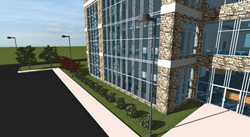
Moving beyond simple BIM modeling, VIMtrek software converts Autodesk Revit files into a VIM file within minutes. These VIM files create an interactive and collaborative environment to work in, much like in a first-person video game (think popular first video games, such as Call of Duty, Halo or World of Warcraft). VIM environments put multiple users into the project and allow them to easily navigate the space for themselves, view the potential built environment, change key build factors such as daylighting, and do design checks.
Because VIM files are separate from Revit, stakeholders can come in and make design changes while keeping the original file intact. It frees up more room for experimentation and collaboration, and only after this process, once all parties agree on the changes, does the architect merge the data back into the original Revit model for implementation.
Users can examine and evaluate a virtual project rendering by clicking on objects and reviewing the BIM data, or even analyze environmental data through apps or plug-ins. Users now have the ability to move through a project freely and multiple users can navigate through this immersive 3-D environment simultaneously, organize a meeting, or even set up a Skype session.
Perhaps most exciting is the way it improves the reveal process. With instant rendering, an architect can now show the building owner the most up-to-date design version without getting bogged down by lengthy explanations of how to read a Revit model. Instead, the architect can take his or her stakeholders on an exciting virtual tour, allowing them to walk through the space as though it was already built.
In a recent project, the owners were hesitant about physically standing on the 40th floor of a building site in order to approve crucial decisions. Rather than delaying the process, VIMtrek was utilized to take them through a virtual navigation of the top floors and skyline view.
And so in the true spirit of innovation, two of the largest obstacles facing the design industry today—collaboration and client interfacing—are solved.
Looking for a reprint of this article?
From high-res PDFs to custom plaques, order your copy today!
.webp?height=740&t=1767036885&width=auto "Header - BE 1170x658 (002).png")

.webp?height=740&t=1755781744&width=auto "KEE(2).png")