On Target
The Target Center in downtown Minneapolis, home of the Minnesota Timberwolves NBA team, is now also home to the largest vegetated roof in the state.
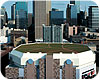
The Target Center in downtown Minneapolis, home of the Minnesota Timberwolves NBA team, is now also home to the largest vegetated roof in the state.
At nearly 2.5 acres - the size of almost three football fields - this extensive vegetated roof is the fifth largest in the country, the 10th largest in the world and the first to be built on an arena in North America. The vegetated roof was built as part of a $5.2 million upgrade for the Target Center, undertaken by the City of Minneapolis, which included replacing 29 conventional roofs on five levels and the installation of lightning protection.
The city’s design team for the vegetated roof was led by LEO A DALY, an international architecture, planning, engineering, interior design and program management firm, along with Kestrel Design Group, a Minneapolis-based sustainable landscape architecture firm, and Inspec Inc., an engineering/architectural firm specializing in building envelope design. Stock Roofing, a Tecta America company, installed the vegetated roof using local resources and labor.
 “Installing
a vegetated roof makes good environmental and financial sense,” said Frank
Anderson, a senior associate at LEO A DALY’s Minneapolis office. “Vegetated roofs can have
two to three times the lifespan of a traditional roof. They also reduce
stormwater runoff, improve air quality, mitigate heat island effects and
decrease energy costs.”
“Installing
a vegetated roof makes good environmental and financial sense,” said Frank
Anderson, a senior associate at LEO A DALY’s Minneapolis office. “Vegetated roofs can have
two to three times the lifespan of a traditional roof. They also reduce
stormwater runoff, improve air quality, mitigate heat island effects and
decrease energy costs.”
The 113,000-square-foot vegetated roof features a 2.75-inch thick growing zone in the center of the main arena roof structure and a deeper 3.5-inch thick growing zone around the perimeter, where the structural capacity is greater to withstand higher wind uplift forces.
“This vegetated roof can handle up to 0.9 inches of rainfall without runoff, capturing 1 million gallons of stormwater annually that would otherwise drain into the Mississippi River,” said Peter MacDonagh, Kestrel’s director of design and science. “This is critical to Minneapolis, a city that prides itself on its legendary water bodies.”
Pre-grown mats create the base of the vegetated roof system. The mats contain a variety of sedum and local prairie plants, including columbine, lanceleaf coreopsis, wild strawberry, dotted blazing-star and lupine. A drip irrigation system will provide water to the plants during plant establishment and droughts. The mats were laid on a state-of-the-art waterproofing membrane that helps withstand constant dampness, high alkalinity, and exposure to plant roots, fungi and bacterial organisms, as well as varying hydrostatic pressures. A leak-detection system, called Electric Field Vector Mapping (EFVM), pinpoints leaks in the waterproofing membrane.
 “EFVM
testing introduces low-voltage electrical pulses onto the wet membrane,” said
Gary Patrick, vice president of Inspec. “At any point where the membrane is not
watertight, the electricity makes a ground connection with an embedded
conductive screen, which pinpoints the leak source. Using this test,
imperfections even as small as a pinhole can be detected.”
“EFVM
testing introduces low-voltage electrical pulses onto the wet membrane,” said
Gary Patrick, vice president of Inspec. “At any point where the membrane is not
watertight, the electricity makes a ground connection with an embedded
conductive screen, which pinpoints the leak source. Using this test,
imperfections even as small as a pinhole can be detected.”
While the project called for 50 percent recycling of materials, the Tecta team recycled more than 95 percent of the old roof, resulting in an estimated 450 tons of rock and 590 tons of pavers, 140 tons of roofing membrane and more than 60 truckloads of roof insulation.
The construction of the vegetated roof was completed in September 2009. The vegetated roof, which has a 20-year warranty and maintenance agreement, is expected to last for 40 years.
An
aerial view of the Target Center’s vegetated roof shows the magnitude of the
project. Photo ©2009 Bergerson Photography.
The Target Center in downtown Minneapolis, home of the Minnesota Timberwolves NBA team, is now also home to the largest vegetated roof in the state.
At nearly 2.5 acres - the size of almost three football fields - this extensive vegetated roof is the fifth largest in the country, the 10th largest in the world and the first to be built on an arena in North America. The vegetated roof was built as part of a $5.2 million upgrade for the Target Center, undertaken by the City of Minneapolis, which included replacing 29 conventional roofs on five levels and the installation of lightning protection.
The city’s design team for the vegetated roof was led by LEO A DALY, an international architecture, planning, engineering, interior design and program management firm, along with Kestrel Design Group, a Minneapolis-based sustainable landscape architecture firm, and Inspec Inc., an engineering/architectural firm specializing in building envelope design. Stock Roofing, a Tecta America company, installed the vegetated roof using local resources and labor.
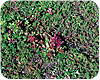
Sedums
and succulents. Photo courtesy of LEO A DALY, Kestrel Design Group and Inspec,
Inc.
The 113,000-square-foot vegetated roof features a 2.75-inch thick growing zone in the center of the main arena roof structure and a deeper 3.5-inch thick growing zone around the perimeter, where the structural capacity is greater to withstand higher wind uplift forces.
“This vegetated roof can handle up to 0.9 inches of rainfall without runoff, capturing 1 million gallons of stormwater annually that would otherwise drain into the Mississippi River,” said Peter MacDonagh, Kestrel’s director of design and science. “This is critical to Minneapolis, a city that prides itself on its legendary water bodies.”
Pre-grown mats create the base of the vegetated roof system. The mats contain a variety of sedum and local prairie plants, including columbine, lanceleaf coreopsis, wild strawberry, dotted blazing-star and lupine. A drip irrigation system will provide water to the plants during plant establishment and droughts. The mats were laid on a state-of-the-art waterproofing membrane that helps withstand constant dampness, high alkalinity, and exposure to plant roots, fungi and bacterial organisms, as well as varying hydrostatic pressures. A leak-detection system, called Electric Field Vector Mapping (EFVM), pinpoints leaks in the waterproofing membrane.
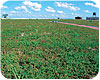
Acres
of urban habitat. Photo courtesy of LEO A DALY, Kestrel Design Group and INSPEC
INC.
While the project called for 50 percent recycling of materials, the Tecta team recycled more than 95 percent of the old roof, resulting in an estimated 450 tons of rock and 590 tons of pavers, 140 tons of roofing membrane and more than 60 truckloads of roof insulation.
The construction of the vegetated roof was completed in September 2009. The vegetated roof, which has a 20-year warranty and maintenance agreement, is expected to last for 40 years.
Looking for a reprint of this article?
From high-res PDFs to custom plaques, order your copy today!
.webp?height=740&t=1767036885&width=auto "Header - BE 1170x658 (002).png")

.webp?height=740&t=1755781744&width=auto "KEE(2).png")

.webp?height=200&t=1664296841&width=200 "IMG_0070(1).jpg")