Building Enclosure logo
search
cart
facebook twitter linkedin youtube instagram Spotify Podcasts Apple Podcasts Spotify Podcasts Apple Podcasts
  • Sign In
  • Create Account
  • Sign Out
  • My Account
Building Enclosure logo
  • NEWS
    • Breaking News
  • SECTIONS
    • Columns
    • Project Profiles
    • Trade Shows
    • Sponsor Insights
  • SYSTEM DESIGNS
    • Low-Slope Roofs
    • Pitched Roofs
    • Metal Roofing Materials
    • Waterproofing
    • Sustainability
    • Insulation
    • Exterior Claddings
    • Wall Systems
    • Building Envelope
  • BLOG
    • The BE Blog
  • MEDIA
    • Podcasts
    • Webinars
    • Quiz
    • Videos
    • Polls
    • Interactive Spotlights
    • Newsletter
    • Photo Galleries
  • DIRECTORIES
    • Directory: Blue Book
    • Directory: Roofing Resource
  • PRODUCTS
  • TECHNICAL
    • Codes
      • Waterproofing
      • Roofing
    • Details
      • Waterproofing
      • Roofing
  • CONTINUING ED
  • ABOUT
    • Advertise
      • Editorial Calendar
    • Contact
    • eMag Archive Issues
  • SIGN UP!
Sustainability

Carbon Dioxide Levels and Indoor Environmental Quality
By Daniel Overbey
May Header - BE 1170x658.jpg
May 3, 2023

Is this a story that you can relate to? 

A public health inspector flagged an issue at an older library facility. A worker complaint process resulted in an investigation into carbon dioxide (CO2) levels in various spaces. The readings were varied: 416 parts per million (ppm) in an unused office space; 1,222 ppm in the primary study area; and 1,563 ppm in a frequently utilized meeting room. Staff is now concerned. Does this range of CO2 concentration pose a human health hazard? 


CO2 concentrations and ventilation requirements

Carbon dioxide is a natural constituent of the air we breathe everyday. It is a colorless, odorless, non-flammable gas produced by the combustion of fossil fuels and through metabolic processes (such as the breathing you are doing right now). 

CO2 concentrations are frequently a point of concern in the context of indoor air quality. It is relatively easy to measure and is commonly included in indoor air quality monitoring procedures.


CO2 concentrations as a proxy for occupancy levels 

Carbon dioxide concentrations can serve as a proxy for occupant density in a space. The more people in a space, the higher the CO2 concentration. As such, CO2 monitors are frequently tied to demand-controlled ventilation (DCV) systems that adjust the amount of outdoor air brought into a space based on the occupancy. The concentration setpoint for DCV systems can vary based on specific applicable codes, standards, or rating systems being adhered to. However, the most common CO2 setpoint for DCV systems is 1,000 ppm.

Why 1,000 ppm?


Nonproblem buildings frequently exhibit CO2 concentrations over 1,000 ppm 

A number of studies have revealed that even in nonproblem buildings, CO2 concentrations can drift up around 1,500 ppm - and it would not be uncommon to achieve roughly double this concentration.

Carbon dioxide is usually not found at hazardous levels in indoor environments and is not considered a toxic gas at typical indoor concentrations. However, the U.S. Environmental Protection Agency (EPA) warns that prolonged elevated concentrations of CO2 in indoor air can cause discomfort, drowsiness, and decreased cognitive function.


A frame of reference for CO2 concentrations

How much is too much when it comes to CO2 levels in a building? Consider the following ranges.


300 - 500 ppm

According to ANSI/ASHRAE Standard 62.1-2022, Ventilation and Acceptable Indoor Air Quality, the CO2 concentrations in acceptable outdoor air typically range from 300 to 500 ppm. 


1,000 - 1,200 ppm

Indoor levels are usually higher than 500 ppm, due to the CO2 exhaled by building occupants. Thus, ASHRAE Standard 62.1-2022 recommends maintaining a steady-state CO2 concentration in an indoor space no greater than 700 ppm above the outdoor air levels - a recommendation long-maintained by Standard 62.1. This spots acceptable indoor CO2 limits around 1,000 to 1,200 ppm.


3,000 ppm

According to the National Collaboration Centre for Environmental Health, human metabolism alone can lead to CO2 levels in excess of 3,000 ppm, especially in poorly ventilated rooms. Indoor combustion appliances, in particular gas stoves, can also increase CO2 levels. 


5,000 ppm and beyond

The Occupational Safety and Health Administration (OSHA) has established a Permissible Exposure Limit (PEL) for CO2 of 5,000 ppm averaged over an 8-hour work day (time-weighted average or TWA). 

Similarly, the Centers for Disease Control and Prevention (CDC) cites an American Conference of Governmental Industrial Hygienists (ACGIH) recommendation of an 8-hour TWA Threshold Limit Value (TLV).  

Arguably, sustained and limited exposure to CO2 concentrations at or below 5,000 ppm should be considered the upper limit of regular "safe" exposure. The U.S. Department of Agriculture (USDA) acknowledges the increasingly severe physiological effects of prolonged exposure of CO2 concentrations beyond 5,000 ppm up to 80,000 ppm.


Setting a better CO2 concentration target

Data suggest many of us dwell in buildings that fail to meet acceptable ventilation rates by today's best practices. If your project team is meeting the minimum ASHRAE standard, you should expect CO2 levels under 1,000 ppm. However, the recent Harvard COGfx Study suggests that increasing ventilation in our buildings such that carbon dioxide levels are kept at / under 600 ppm may result in significantly improved cognitive function.

The emerging scientific evidence is compelling: lower CO2 concentrations support our general health and improve our cognitive function.


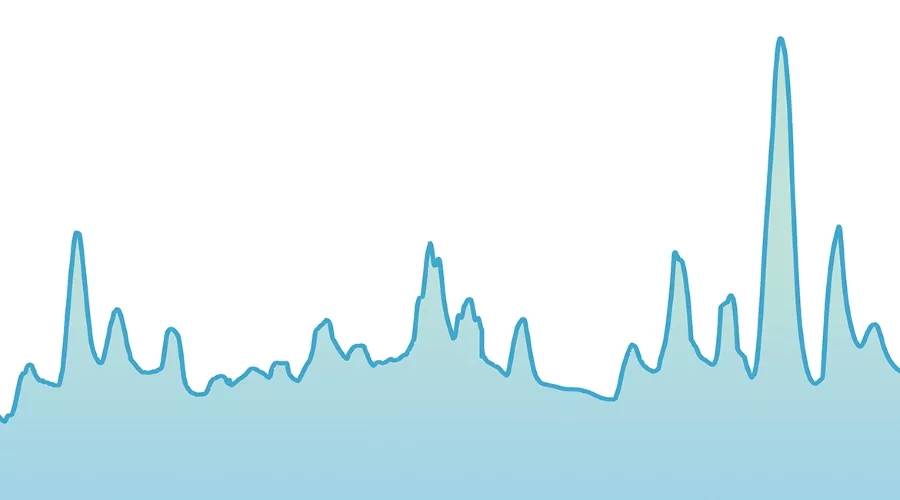
Figure: Continuous carbon dioxide (CO2) monitorization over a 21-day period in a newly-constructed high-performance home. The spike in CO2 concentration levels during the third week coincided with a series of open-house events. Figure by Daniel Overbey.

KEYWORDS: ASHRAE carbon reduction IAQ (indoor air quality)

Share This Story

Overbey   head shot 2020 3

Daniel Overbey, AIA, NCARB, LEED Fellow (LEED AP BD+C, ID+C, O+M), WELL AP is an Assistant Professor of Architecture at Ball State University and the Director of Sustainability for Browning Day in Indianapolis, Ind. His work focuses on high-performance building design and construction, environmental systems research, green building certification services, energy/life-cycle assessment modeling, and resilient design. He can be reached at djoverbey@bsu.edu.

Recent Comments

These are actually very helpful tips. It is...

This is the most beneficial blog for all...

This blog is a great resource for anyone...

Thank you for sharing this important information. I...

This is a very interesting subject of the...

Manage My Account
  • Sign up for the Newsletter
  • Online Registration
  • Manage My Preferences
  • Registration Customer Service

More Videos

Sponsored Content

Sponsored Content is a special paid section where industry companies provide high quality, objective, non-commercial content around topics of interest to the Building Enclosure audience. All Sponsored Content is supplied by the advertising company and any opinions expressed in this article are those of the author and not necessarily reflect the views of Building Enclosure or its parent company, BNP Media. Interested in participating in our Sponsored Content section? Contact your local rep!

close
  • 2 construction workers and a DEXcell panel
    Sponsored byDEXcell Roof Boards

    Designing Low-Slope Roofs for Resilience

  • Bell Bank headquarters in Fargo, North Dakota
    Sponsored bySto Corp.

    Drained and Back-Ventilated Rainscreens vs Pressurized-Equalized Rainscreens

  • A construction worker using DEXcell roof boards
    Sponsored byDEXcell Roof Boards

    The Hidden Strength of Low-Slope Roof Systems: Why Roof Cover Boards Matter

Popular Stories

construction industry workers in hard hats stand around a city scape

Construction Industry Revolts Over New CSI Licensing Plan

graph shows green, orange and red dot lines going up

LEED v5 and the Cost Impacts of ASHRAE Standard 90.1-2019

2 construction workers and a DEXcell panel

Designing Low-Slope Roofs for Resilience

Building Enclosure Newsletter

BE Poll

Events

April 9, 2026

Strategies for High-Performance Below-Grade Waterproofing

Credits: 1 AIA LU/HSW ; 1 IIBEC CEH; 0.1 IACET CEU

On-Demand Designing a high-performance building enclosure requires more than just surface-level protection; it demands a rigorous, performance-based mastery of below-grade water and gas mitigation. This discussion will provide an expert-level analysis of below-grade waterproofing within the comprehensive framework of the high-performance building enclosure.

April 28, 2026

Roof Design Considerations That Prevent Installation Failures and Change Orders

Credit: 1 AIA LU/HSW; 1 IIBEC CEH; 0.1 ICC CEU

On-Demand This course provides visual examples of actual field conditions. Some good, some not so good; along with design suggestions that can cut installation costs and reduce construction change orders. Upon completion of this course, you will have a better understanding of the requirements the roofing contractor must meet to provide the specified roofing system warranty, and long-term value to the owner.

View All Submit An Event

Products

Plaster and Drywall Assemblies Manual

Plaster and Drywall Assemblies Manual

This is a comprehensive manual that goes beyond codes and standards, providing expert guidance in design, detailing, material selection and troubleshooting for plaster and drywall.

See More Products
×

Enhance your expertise with unparalleled insights.

Join thousands of building professionals today. Shouldn’t you know what they know?

SUBSCRIBE TODAY!
  • RESOURCES
    • Advertise
    • Contact Us
    • Store
    • Want More
  • SIGN UP TODAY
    • Create Account
    • Newsletter
    • Customer Service
    • Manage Preferences
  • SERVICES
    • Marketing Services
    • Reprints
    • Market Research
    • List Rental
    • Survey/Respondent Access
  • STAY CONNECTED
    • LinkedIn
    • Facebook
    • Instagram
    • YouTube
    • X
  • PRIVACY
    • PRIVACY POLICY
    • TERMS & CONDITIONS
    • DO NOT SELL MY PERSONAL INFORMATION
    • PRIVACY REQUEST
    • ACCESSIBILITY

Copyright ©2026. All Rights Reserved BNP Media, Inc. and BNP Media II, LLC.

Design, CMS, Hosting & Web Development :: ePublishing