Building Enclosure logo
search
cart
facebook twitter linkedin youtube instagram Spotify Podcasts Apple Podcasts Spotify Podcasts Apple Podcasts
  • Sign In
  • Create Account
  • Sign Out
  • My Account
Building Enclosure logo
  • NEWS
    • Breaking News
  • SECTIONS
    • Columns
    • Project Profiles
    • Trade Shows
    • Sponsor Insights
  • SYSTEM DESIGNS
    • Low-Slope Roofs
    • Pitched Roofs
    • Metal Roofing Materials
    • Waterproofing
    • Sustainability
    • Insulation
    • Exterior Claddings
    • Wall Systems
    • Building Envelope
  • BLOG
    • The BE Blog
  • MEDIA
    • Podcasts
    • Webinars
    • Quiz
    • Videos
    • Polls
    • Interactive Spotlights
    • Newsletter
    • Photo Galleries
  • DIRECTORIES
    • Directory: Blue Book
    • Directory: Roofing Resource
  • PRODUCTS
  • TECHNICAL
    • Codes
      • Waterproofing
      • Roofing
    • Details
      • Waterproofing
      • Roofing
  • CONTINUING ED
  • ABOUT
    • Advertise
      • Editorial Calendar
    • Contact
    • eMag Archive Issues
  • SIGN UP!

All You Need to Know About Studying Architecture
By Ellie Coverdale
studying architecture
October 1, 2019

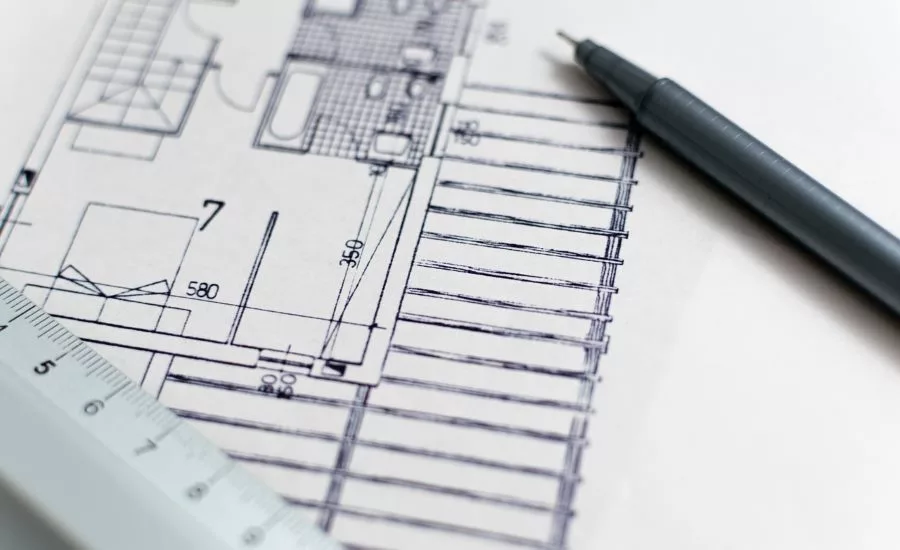
Look around you, and the chances are that you are surrounded by man-made structures. How those buildings are designed and ultimately constructed is down to one particular human discipline: architecture. As long as there are people there will be structures designed by man, so, if you are looking to study a subject that will never go out of fashion, then architecture could just be the course for you. Here’s what it is all about.

Architecture: What does it involve, and why should I study it?

Architecture is the design of structures. As well as the design aspect, it also involves the practicalities of the construction process and the materials used in the building. Every time we look around us we will see the realization of an architect’s vision, and for as long as there will be buildings, there will be a need for architects.

The means by which buildings are designed may have evolved over the years, but the fundamental objective will always remain the same: to create a building that delivers the purpose for which is required. And there is a creative aspect to the job that is not often found in many roles. “Combining creativity and practicality is the essence of what architecture really is, and is the reason why so many are drawn to a career in this immensely rewarding profession. It is a romantic notion, but also deeply functional,” states Charles Curtis, an urban planner at Paper Fellows and Boom Essays.

If that is not enough to entice you, then there is the prospect of a highly-paid position at the end of your studies—freshly-qualified architects are usually in high demand and the role itself is well remunerated. Then there is the opportunity to work on a real variety of projects, always doing something different and meeting a host of people, often in different locations—the chance to travel is a real enticement of working an architect. Finally, it’s rewarding—a chance to see your vision realized in bricks and mortar…or glass, aluminium etc etc.


What assessments and exams will I have to take?

On the vast majority of architecture courses, assessments involve practical project work which for many students is a fairer reflection on hard work and ability than a final exam. Although the course, and some modules in particular, will involve some exams and essays, coursework is weighted much more heavily than in a lot of other disciplines.


How difficult is the course?

The course is challenging in the variety of disciplines that you will learn: an architect is a multi-faceted professional who has knowledge and ability in a number of fields. However, with hard work and discipline, as well as a passion for what you are doing, a good qualification in architecture can be achieved.

“There is no one perfect person for the role of an architect: creativity is as important as practicality, and usually these are seen to be two different skillsets. This truly is a profession which draws individuals from all walks of life and backgrounds, with imagination the core principle. If you are imaginative, and curious, the chances are you will be a great architect,” says Natalie Pooran, a drafter at Revieweal and OX Essays.


What are the pre-requisites to enter an architecture course?

As well as the aforementioned imagination, common sense and an enthusiasm for the activity are essential. Academically speaking, although high marks are generally required to enter the course, there are also a number of foundation courses which you can complete after school in order to prepare you to be accepted on to a college degree program. Although math is a core subject (including trigonometry and calculus), other subjects such as design and physics can be considered relevant. Check your local college’s entry requirements for a more detailed list of the pre-requisite requirements for students wishing to enroll on an architecture course


What opportunities will I have open to me after the course?

As well as becoming an architect, that are a number of great roles that are open to individuals who have an architectural degree under their belts. Town planners, landscapers, surveyors, set designers and environmental officers all commonly enter their roles from an architectural background, and then there are teaching and lecturing opportunities too.

KEYWORDS: architects architecture students

Share This Story

Ellie Coverdale is a technical writer at Australian Reviewer and Write My Australia. She is involved in a big tech and recruitment research, and teaches writing at Academized service.

Recent Comments

These are actually very helpful tips. It is...

This is the most beneficial blog for all...

This blog is a great resource for anyone...

Thank you for sharing this important information. I...

This is a very interesting subject of the...

Manage My Account
  • Sign up for the Newsletter
  • Online Registration
  • Manage My Preferences
  • Registration Customer Service

More Videos

Sponsored Content

Sponsored Content is a special paid section where industry companies provide high quality, objective, non-commercial content around topics of interest to the Building Enclosure audience. All Sponsored Content is supplied by the advertising company and any opinions expressed in this article are those of the author and not necessarily reflect the views of Building Enclosure or its parent company, BNP Media. Interested in participating in our Sponsored Content section? Contact your local rep!

close
  • 2 construction workers and a DEXcell panel
    Sponsored byDEXcell Roof Boards

    Designing Low-Slope Roofs for Resilience

  • Bell Bank headquarters in Fargo, North Dakota
    Sponsored bySto Corp.

    Drained and Back-Ventilated Rainscreens vs Pressurized-Equalized Rainscreens

  • A construction worker using DEXcell roof boards
    Sponsored byDEXcell Roof Boards

    The Hidden Strength of Low-Slope Roof Systems: Why Roof Cover Boards Matter

Popular Stories

construction industry workers in hard hats stand around a city scape

Construction Industry Revolts Over New CSI Licensing Plan

a man wearing a mask installs insulation into a wall system

Quiet Rooms and Healthier Air: A Second Look at What Goes Inside the Wall Cavity

Canalino Elementary School and Canalino Family School exterior

Daylighting Design to Support Rapidly Growing Trend in Modular Building Construction

Building Enclosure Newsletter

BE Poll

Events

June 17, 2025

Addressing Condensation in Low-Slope Roof Assemblies

Credits: 1 AIA LU/HSW; 0.1 ICC CEU; 1 IIBEC CEH; 0.1 IACET CEU

On Demand In modern roofing systems, vapor retarders and air barriers do more than just minimize air leakage—they’re essential to maximizing performance and longevity. This engaging course dives into the next generation of moisture control: permeable vapor retarders and air barriers. Discover how these cutting-edge technologies are transforming low-slope roofing assemblies by improving energy efficiency, managing moisture, and boosting wind uplift resistance.

April 9, 2026

Strategies for High-Performance Below-Grade Waterproofing

Credits: 1 AIA LU/HSW ; 1 IIBEC CEH; 0.1 IACET CEU

On-Demand Designing a high-performance building enclosure requires more than just surface-level protection; it demands a rigorous, performance-based mastery of below-grade water and gas mitigation. This discussion will provide an expert-level analysis of below-grade waterproofing within the comprehensive framework of the high-performance building enclosure.

View All Submit An Event

Products

Plaster and Drywall Assemblies Manual

Plaster and Drywall Assemblies Manual

This is a comprehensive manual that goes beyond codes and standards, providing expert guidance in design, detailing, material selection and troubleshooting for plaster and drywall.

See More Products
×

Enhance your expertise with unparalleled insights.

Join thousands of building professionals today. Shouldn’t you know what they know?

SUBSCRIBE TODAY!
  • RESOURCES
    • Advertise
    • Contact Us
    • Store
    • Want More
  • SIGN UP TODAY
    • Create Account
    • Newsletter
    • Customer Service
    • Manage Preferences
  • SERVICES
    • Marketing Services
    • Reprints
    • Market Research
    • List Rental
    • Survey/Respondent Access
  • STAY CONNECTED
    • LinkedIn
    • Facebook
    • Instagram
    • YouTube
    • X
  • PRIVACY
    • PRIVACY POLICY
    • TERMS & CONDITIONS
    • DO NOT SELL MY PERSONAL INFORMATION
    • PRIVACY REQUEST
    • ACCESSIBILITY

Copyright ©2026. All Rights Reserved BNP Media, Inc. and BNP Media II, LLC.

Design, CMS, Hosting & Web Development :: ePublishing