Building Enclosure logo
search
cart
facebook twitter linkedin youtube instagram Spotify Podcasts Apple Podcasts Spotify Podcasts Apple Podcasts
  • Sign In
  • Create Account
  • Sign Out
  • My Account
Building Enclosure logo
  • NEWS
    • Breaking News
  • SECTIONS
    • Columns
    • Project Profiles
    • Trade Shows
    • Sponsor Insights
  • SYSTEM DESIGNS
    • Low-Slope Roofs
    • Pitched Roofs
    • Metal Roofing Materials
    • Waterproofing
    • Sustainability
    • Insulation
    • Exterior Claddings
    • Wall Systems
    • Building Envelope
  • BLOG
    • The BE Blog
  • MEDIA
    • Podcasts
    • Webinars
    • Quiz
    • Videos
    • Polls
    • Interactive Spotlights
    • Newsletter
    • Photo Galleries
  • DIRECTORIES
    • Directory: Blue Book
    • Directory: Roofing Resource
  • PRODUCTS
  • TECHNICAL
    • Codes
      • Waterproofing
      • Roofing
    • Details
      • Waterproofing
      • Roofing
  • CONTINUING ED
  • ABOUT
    • Advertise
      • Editorial Calendar
    • Contact
    • eMag Archive Issues
  • SIGN UP!
Breaking News

DIGroup Architecture Expands FQHC and Community Health Center Reach

DIGroup(1).png

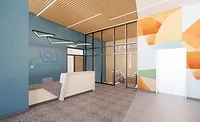
Premium Health Women’s Clinic Lobby. Photo courtesy of DIGroup Architecture.

November 18, 2024

At a time when national drug-store-chain closures are creating pharmacy deserts that widen medication and healthcare-access disparities, DIGroup Architecture (DIG) is expanding its community health center reach to Philadelphia, where the MBE/DBE/SBE-certified firm established an office five years ago. According to the National Association of Community Health Centers (NACHC), more than 31 million Americans relied on FQHCs for their care in 2022.

Recognizing the city's unique healthcare challenges and the increasing need for Federally Qualified Health Centers (FQHCs) to provide targeted services, DIG is leveraging its extensive expertise in this niche healthcare space to create innovative and sustainable facilities for improving primary and preventive care across Philadelphia's underserved communities. The firm is proficient in navigating the entire FQHC project life cycle, from pre-planning and design to bid, construction and overall project management. 

Over the course of the past 10 years, DIG has completed 13 FQHCs across New Jersey and New York City. The firm has a wide range of experience working with public agencies, non- and for-profit organizations and community leaders to address the growing healthcare needs of underrepresented communities. 

“FQHCs play a crucial role in providing primary care, specialty treatment and preventive care to low-income and uninsured individuals. Designing facilities to house these services warrants special considerations such as creating multi-use spaces, careful attention to patient navigation and thoughtful planning around provider workflow and circulation,” said Vince Myers, DIG president. 

“Efficient, functional and patient-centered facilities have become increasingly important and demand is surging,” he said. “At DIG, we’ve been at the forefront of designing FQHCs that have become beacons of health and hope for their communities and are excited to bring our Architecture for Change approach to Greater Philadelphia.”

DIG’s axiom Architecture for Change is rooted in its founding principle to deliver world-class designs to underserved and under-represented communities in which its projects are located. Through the power of architecture as an equalizer, DIG is committed to revitalizing neighborhoods.  

The firm’s community health center projects serve as a tangible manifestation of this vision, from ground-up new development to gut renovations with targeted aesthetic and functional updates. 

Recent and past examples include serving as project manager/project architect for a custom-designed telemedicine office hub for Zufall Health in Morristown, NJ, and a total of nine FQHC assignments for Urban Health Plan, Inc., a not-for-profit system of 12 health centers, one mental health center, 12 school-based centers and three part-time clinics in New York City’s South Bronx, Corona, Queens, Brooklyn and Central Harlem communities. 

In Philadelphia specifically, the city’s FQHC infrastructure has been the focus of expansion efforts in recent years. Serving a significant percentage of the city's population, approximately 40 of these essential centers offer much-needed primary care, dental services, mental health support and preventive screenings to people of all ages.

“While the primary purpose of FQHCs is to be a lifeline for those without or limited health insurance or access to traditional care, they also treat their patients as a whole person. As such, these health centers serve as a community focal point for hope and contribute toward the economic health of the community-at-large by creating local jobs, generating economic activity and contributing a cost savings to the health system annually,” explained Myers.  

To address healthcare disparities, the firm’s approach emphasizes collaboration with community partners to ensure that each facility is not only functional, but also sustainable and responsive to the ever-evolving needs of the community. With a keen awareness of the social determinants of health, DIG’s design process results in FQHCs that are truly integrated into the fabric of the community.

In addition to its FQHC and community-health design portfolio, DIG’s dedicated Healthcare Studio spearheads a wide range of health, wellness, life science and hospital projects across New Jersey, Philadelphia and New York City. The award-winning architecture, interior and environmental graphic design firm also specializes in education, civic and senior living spaces. 

KEYWORDS: design firm

Share This Story

Looking for a reprint of this article?
From high-res PDFs to custom plaques, order your copy today!


Recommended Content

JOIN TODAY
to unlock your recommendations.

Already have an account? Sign In

  • bar graph shows LEED v4/LEED v5/LEED v6 in various colors

    When Will LEED v4 / v4.1 and LEED v5 Expire?

    The latest version of the LEED rating system, LEED v5, is...
    Sustainability
    By: Daniel Overbey
  • Celebrating Women In AEC-2026

    Celebrating Women in The AEC Industry Part 1

    A round-up of women in the design, engineering and...
    Building Envelope
    By: Lindsay Lewis
  • KEE membrane application on a roof

    A Beginner’s Guide to Single-Ply Roofing Membranes

    While PVC and TPO appear extremely similar, the chemistry...
    Low-Slope Roofs
    By: Peter Gross
Manage My Account
  • Sign up for the Newsletter
  • Online Registration
  • Manage My Preferences
  • Registration Customer Service

More Videos

Sponsored Content

Sponsored Content is a special paid section where industry companies provide high quality, objective, non-commercial content around topics of interest to the Building Enclosure audience. All Sponsored Content is supplied by the advertising company and any opinions expressed in this article are those of the author and not necessarily reflect the views of Building Enclosure or its parent company, BNP Media. Interested in participating in our Sponsored Content section? Contact your local rep!

close
  • 2 construction workers and a DEXcell panel
    Sponsored byDEXcell Roof Boards

    Designing Low-Slope Roofs for Resilience

  • Bell Bank headquarters in Fargo, North Dakota
    Sponsored bySto Corp.

    Drained and Back-Ventilated Rainscreens vs Pressurized-Equalized Rainscreens

  • A construction worker using DEXcell roof boards
    Sponsored byDEXcell Roof Boards

    The Hidden Strength of Low-Slope Roof Systems: Why Roof Cover Boards Matter

Popular Stories

construction industry workers in hard hats stand around a city scape

Construction Industry Revolts Over New CSI Licensing Plan

graph shows green, orange and red dot lines going up

LEED v5 and the Cost Impacts of ASHRAE Standard 90.1-2019

2 construction workers and a DEXcell panel

Designing Low-Slope Roofs for Resilience

Building Enclosure Newsletter

BE Poll

Events

June 17, 2025

Addressing Condensation in Low-Slope Roof Assemblies

Credits: 1 AIA LU/HSW; 0.1 ICC CEU; 1 IIBEC CEH; 0.1 IACET CEU

On Demand In modern roofing systems, vapor retarders and air barriers do more than just minimize air leakage—they’re essential to maximizing performance and longevity. This engaging course dives into the next generation of moisture control: permeable vapor retarders and air barriers. Discover how these cutting-edge technologies are transforming low-slope roofing assemblies by improving energy efficiency, managing moisture, and boosting wind uplift resistance.

April 9, 2026

Strategies for High-Performance Below-Grade Waterproofing

Credits: 1 AIA LU/HSW ; 1 IIBEC CEH; 0.1 IACET CEU

On-Demand Designing a high-performance building enclosure requires more than just surface-level protection; it demands a rigorous, performance-based mastery of below-grade water and gas mitigation. This discussion will provide an expert-level analysis of below-grade waterproofing within the comprehensive framework of the high-performance building enclosure.

View All Submit An Event

Products

Plaster and Drywall Assemblies Manual

Plaster and Drywall Assemblies Manual

This is a comprehensive manual that goes beyond codes and standards, providing expert guidance in design, detailing, material selection and troubleshooting for plaster and drywall.

See More Products

Related Articles

  • Allentown School District's Family & Community Resource Center interior design

    DIGroup Architecture Celebrates Groundbreaking of Allentown School District’s Family & Community Resource Center

    See More
  • Groundbreaking ceremony for the new Ewing Township Senior & Community Center

    Ewing Township Breaks Ground on New DIGroup Architecture-Designed Senior & Community Center

    See More
  • Bob Ryan headshot

    Bob Ryan of DIGroup Architecture Named among NJBIZ’s 2025 People to Watch in Health Care

    See More

Related Products

See More Products
  • heating cooling.jpg

    Heating, Cooling, Lighting: Sustainable Design Strategies Towards Net Zero Architecture, 5th Edition

  • 71lmKx8brKL._SY385_.jpg

    A Visual Dictionary of Architecture, 2nd Edition

  • ecology.jpg

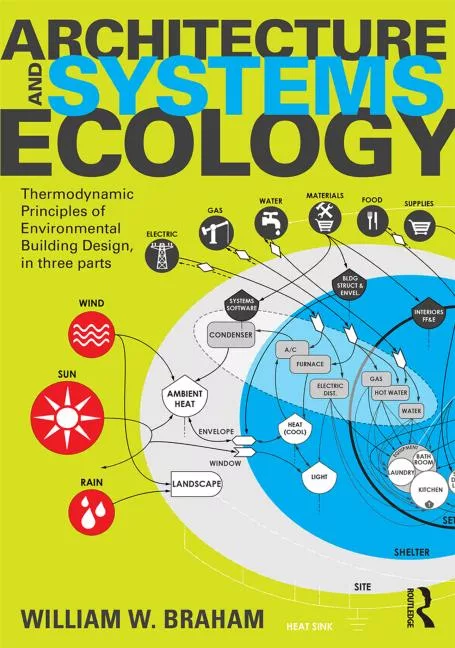
    Architecture and Systems Ecology: Thermodynamic Principles of Environmental Building Design, in three parts

See More Products
×

Enhance your expertise with unparalleled insights.

Join thousands of building professionals today. Shouldn’t you know what they know?

SUBSCRIBE TODAY!
  • RESOURCES
    • Advertise
    • Contact Us
    • Store
    • Want More
  • SIGN UP TODAY
    • Create Account
    • Newsletter
    • Customer Service
    • Manage Preferences
  • SERVICES
    • Marketing Services
    • Reprints
    • Market Research
    • List Rental
    • Survey/Respondent Access
  • STAY CONNECTED
    • LinkedIn
    • Facebook
    • Instagram
    • YouTube
    • X
  • PRIVACY
    • PRIVACY POLICY
    • TERMS & CONDITIONS
    • DO NOT SELL MY PERSONAL INFORMATION
    • PRIVACY REQUEST
    • ACCESSIBILITY

Copyright ©2026. All Rights Reserved BNP Media, Inc. and BNP Media II, LLC.

Design, CMS, Hosting & Web Development :: ePublishing