Operational Efficiency in Architectural Insulation
In business, there is no substitute for efficiency. Defined as the ability to do or produce something without wasting materials, time, or energy, in today’s commercial architecture, a building’s long-term operational efficiency is far more impactful than any efficiency achieved in design or construction.
Building Envelope
John Calacci of Calacci Construction in Iowa City, Iowa is keen on efficiency achieved through a hands-on approach to managing his business.
“Self-performing as much as we do increases control over everything—quality, safety, schedule, cost and profit,” says Calacci, whose firm builds commercial buildings across multiple sectors - Industrial, Healthcare, Municipal, and Commercial. When it came to constructing his own new 15,800-square-foot office building, Calacci’s appreciation for operational efficiency drove decision-making.
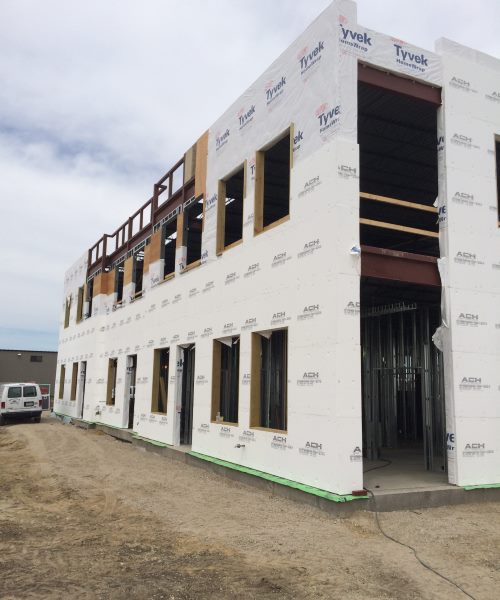 “We wanted a good tight seal on the building. We used locally sourced materials and recycled materials like concrete and such. However, for us, it is more about efficiency than being particularly green,” says Calacci. Because the building’s design combined a glass curtain wall with punched window masonry, a tight seal required precision in materials and workmanship. To meet the International Building Code (IBC) exterior walls must have a complete thermal break and Calacci selected molded polystyrene rigid foam insulation from Atlas Molded Products for several reasons.
“Atlas is local, about 30 miles from here,” continued Calacci. “More importantly, their products come in a wide range of thicknesses, which really helped us fill in around some complex architectural detailing.”
Calacci explains that some cavity sections in his undulating walls were as much as 6 inches of void space, while other sections were just 2 inches of space. Working with their local White Cap representative, Calacci purchased 19,200 board-feet of Atlas Molded Products’ ThermalStar Wall Insulation Board, which achieves an R-value in the mid-20s according to Calacci’s estimates. ThermalStar insulations provide the required strength, energy efficiency, and moisture resistance at a cost-conscious price. Pre-scored ThermalStar Wall Insulation Board allows installers to easily create custom width by bending the insulation board along perforations and snapping it into pieces.
Roofing
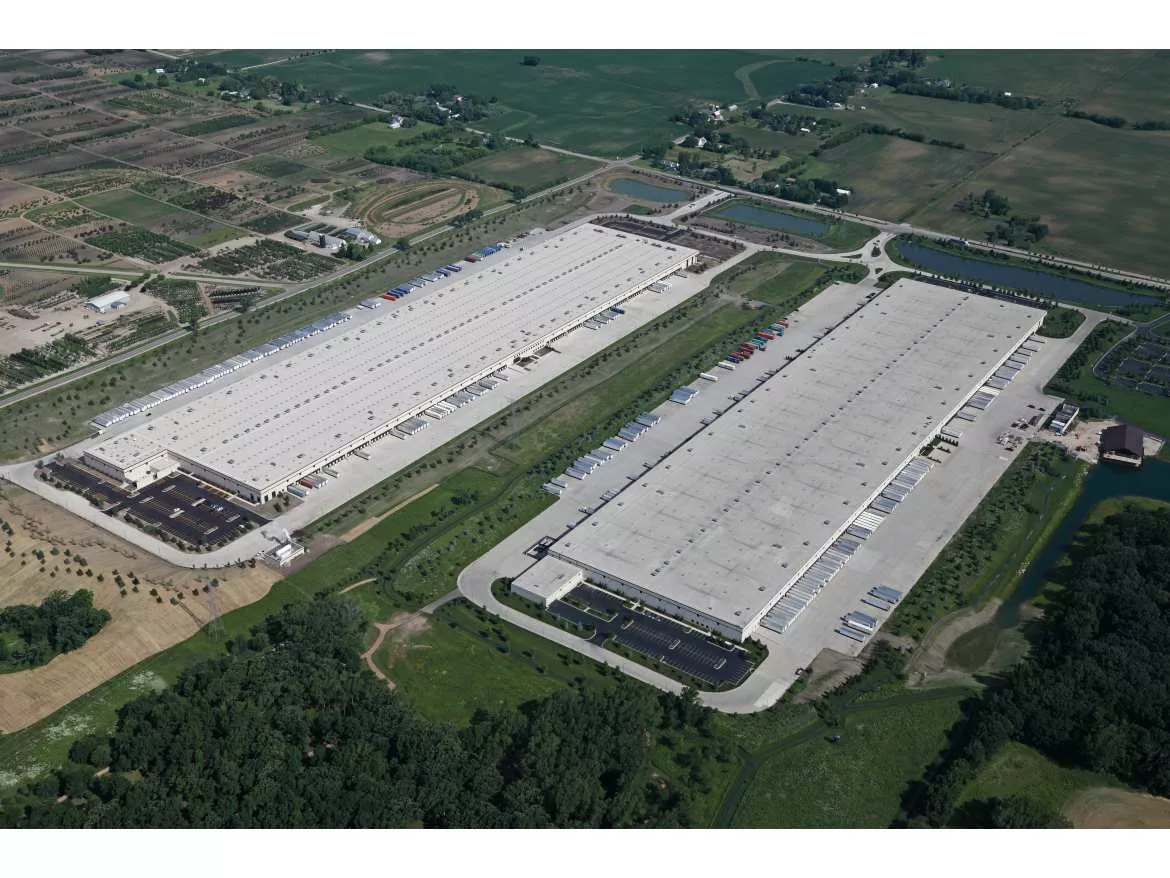
For Uline, North America’s largest distributor of shipping and industrial packaging materials, efficiency involves an interconnected web of people, parts, and processes. Established in 1980, Uline has grown to more than 4,000 employees supplying more than 31,000 packaging, cleaning, industrial, and general use products. When it comes to facility design and construction, operational efficiency is central to decision-making. While ThermalStar insulations compare favorably to XPS materials in terms of durability, first-term vs long term costs, and lifetime R-value, on the Uline project efficient installation was also a critical consideration.
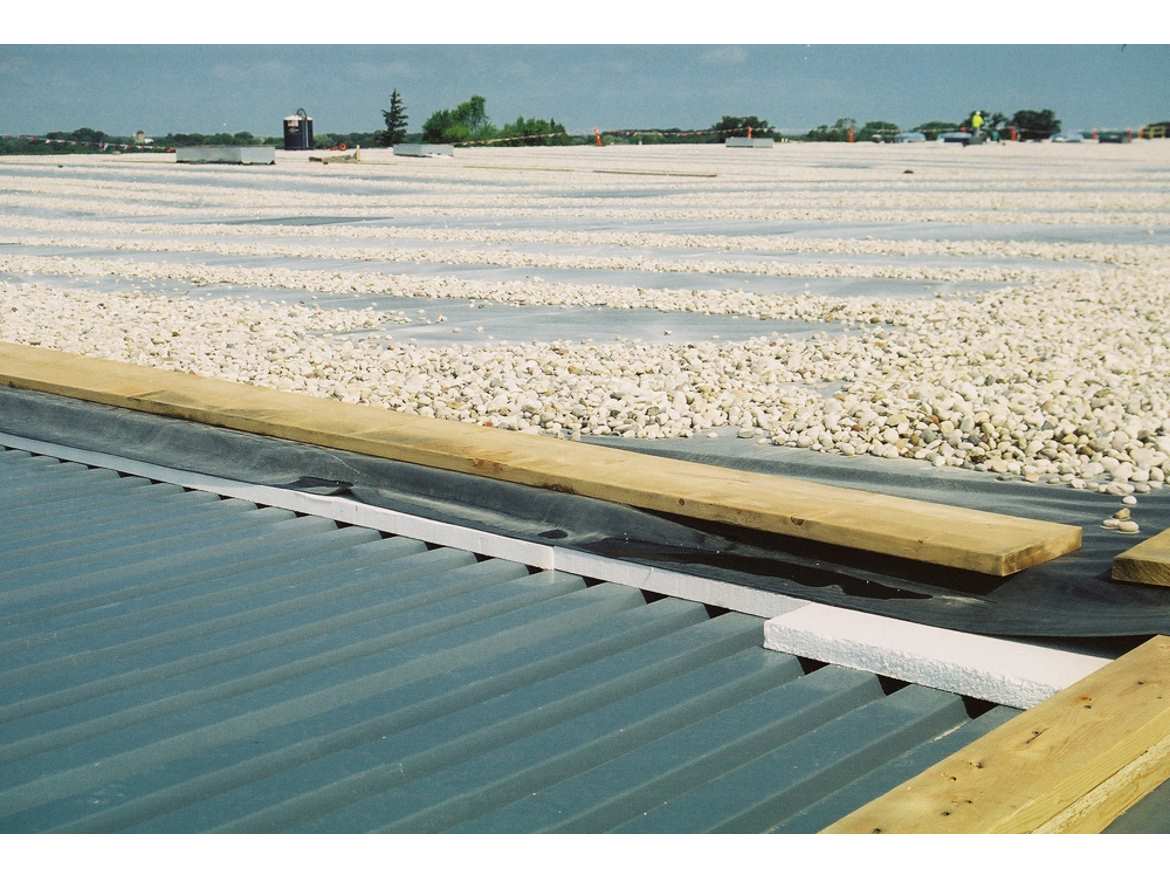
Uline’s massive 1,000,000-square-foot distribution center at the Wisconsin Headquarters has a roof the length of four football fields, which required high-quality insulation that could be reliably installed and would not have to be revisited for a long, long time. While other types of rigid foam insultations may claim higher initial R-values, third-party testing has shown that over time off-gassing in XPS insulations reduces thermal effectiveness. ThermalStar insulations from Atlas Molded Products come with a limited lifetime warranty for both the material’s thermal and physical properties that guarantee their performance for the life of the building.
“SRS installed more than 1,000,000 square feet of roofing and received a perfect inspection score,” declares Tom Bechtel, a Commercial Estimator at SRS Roofing and Sheet Metal of Waterford, Wis. Bechtel admits that at the time the prospect of taking on the largest job in firm history in a low-bid environment caused some trepidation.
“You have to streamline crew efficiency to achieve the required production rates, while at the same time making certain that the quality is maintained,” continues Bechtel. Determining the right amount of insulation to keep crews moving as quickly as possible was a challenge because there wasn’t any room on site to store a large volume of insulation prior to installation. Fortunately for SRS, through an existing relationship with Atlas Molded Products, they were able to coordinate a steady flow of insulation to the site with a just-in-time delivery process. Atlas supplied insulation to the Uline jobsite from both Fond du Lac, Wis., and Washington, Iowa, which are just two of Atlas’ sixteen North American manufacturing locations.
Underslab
As a Quality Assurance Construction Representative for the U.S. Army Corps of Engineers (USACE), Daniel Morak enjoys overseeing projects of many scales and complexities.
“Seeing a team transform a piece of ground from nothing into a building is thrilling,” says Morak. The USACE is a federal agency under the Department of Defense often tasked with building facilities where U.S. armed forces train, work, and live. Among the many projects, USACE has completed at Fort Carson, in Colorado Springs, CO, the new state-of-the-art Attack Hangar at Butts Airfield has been one of the most exciting in recent years.
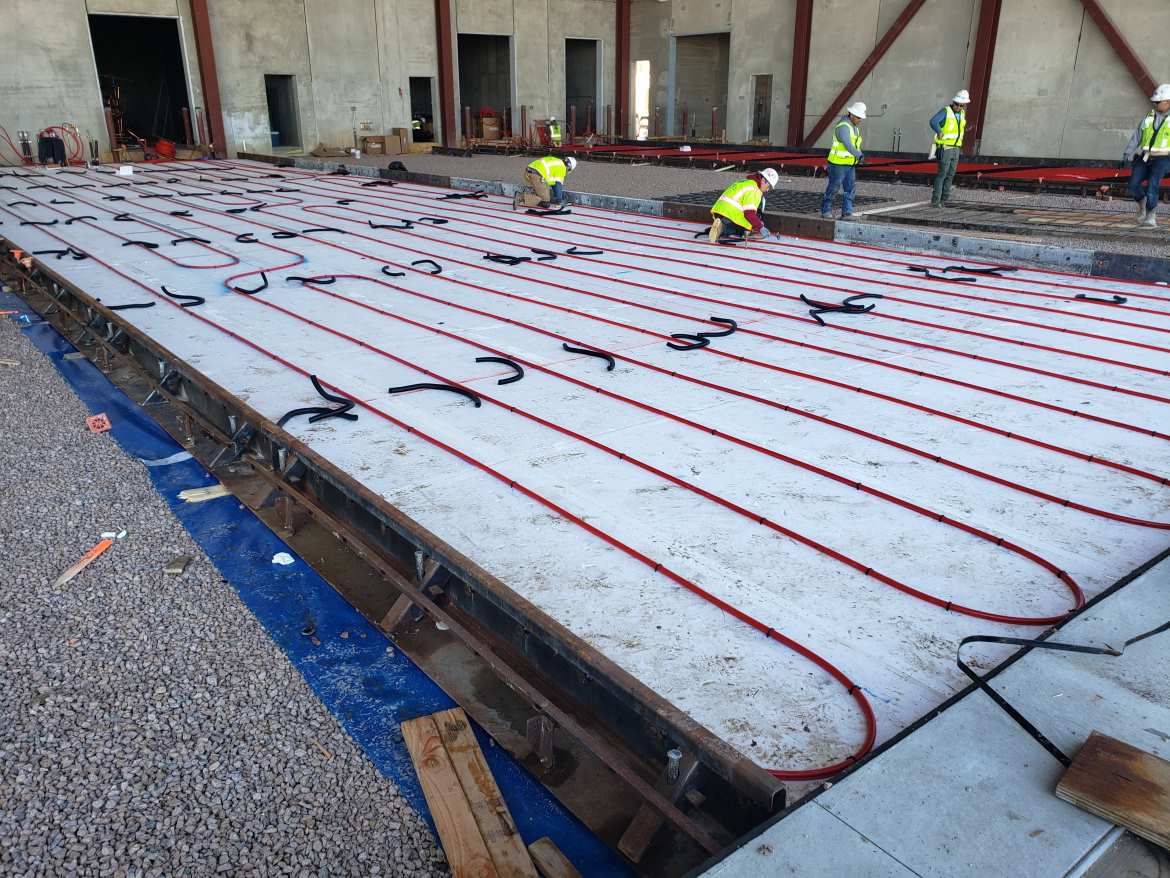
Designed to hold six AH-64 Apache attack helicopters, the 142,000-square-foot hangar is an open-span pre-cast concrete building where aircraft maintenance personnel need to work comfortably even with the massive hangar doors wide open on Colorado’s coldest day.
“Radiant heating built into the hangar’s concrete floor will maintain thermal comfort during the colder months of the year,” says Morak. Placed beneath the slab, a radiant heat system circulates a hot liquid beneath the concrete that radiates up and is released via convection. As much as 50 percent of a building’s heat loss occurs at the perimeter and slab of the foundation, making a below-grade thermal barrier vital to efficient thermal comfort in the large, high-ceiling hangar. The USACE’s design specification called for rigid insulation beneath the tubes and 60 PSI high-strength, rigid insulation from Atlas Molded Products was ultimately selected.
Atlas’ line of architectural insulations provides owners and builders with stable R-values between 4.2 and 4.7 per inch and high compressive strengths ranging from 15 to 60 psi. Molded polystyrene’s ability to quickly dry after wetting conditions facilitates its ability to maintain R-values for the life of the building, which translates to more efficient operations.
“The molded polystyrene foam insulation was really easy to work with,” says Morak. The soil was compacted, covered with 1-inch rock, and the rigid foam was laid flat on top of it. The installation team was able to cut penetrations, notch around pipes, and easily fit around every angle.
Cost is always a driver in any material selection process. Savvy builders and owners like Calacci, Uline, and the USACE understand the necessity of calculating not only first costs but long-term operations costs into decision making.
Looking for a reprint of this article?
From high-res PDFs to custom plaques, order your copy today!
.webp?height=740&t=1767036885&width=auto "Header - BE 1170x658 (002).png")

.webp?height=740&t=1755781744&width=auto "KEE(2).png")