The Benefits of Sunshades for the Building Enclosure
At the time of inception, sunshades were created and installed to provide an added dimension to the flat surface of a building, enhancing its overall aesthetic. However, over the years, more valuable benefits for sunshades have been discovered. Specifically, sunshades are an integral factor in enhancing not only the aesthetic of a building, but also its efficiency and sustainability.
One of the most beneficial features of sunshades is their ability to contribute to improved energy efficiency for businesses. Their presence blocks direct sunlight from entering through windows and doorways, which can help better regulate the temperature of the building. Not only does this keep the tenants cool inside the building, but it can also lower regular air conditioning costs.
Due to its flexibility when fabricated, metal is the ideal material for perforated sunscreens and sunshades, and it offers greater durability than many other building materials. Metal is also easy to maintain and available in a variety of colors and finishes, which can help the aesthetic look of the building.
Customized perforated sunshades and sunscreens create a one-of-a-kind look for the building, providing unique features to every project. They can be formed into specific shapes in both horizontal and vertical configurations to achieve the architectural vision for the project.
The perforation pattern, hole size and shape allow control over privacy and the amount of light coming into the interior of the building. This can lower energy costs, reduce glare and heat from the sun, allow natural light to illuminate the interior of the building, improve the aesthetic appearance of the building and help make a building LEED credit compliant. Perforated sunscreens and sunshades can also be fabricated with recycled material, assisting in overall sustainability efforts.
Sunshades are easy to assemble and install, and hold nothing back in terms of strength, durability and function. They can be attached to curtain walls or façades, into the building structure, or as infill in a steel frame. They add beauty and functionality to any facility.
Regardless of the type of sunshade chosen for a project, they all provide many benefits, whether it is brise soleil, light shelves or a parking garage screening system.
Brise Soleil
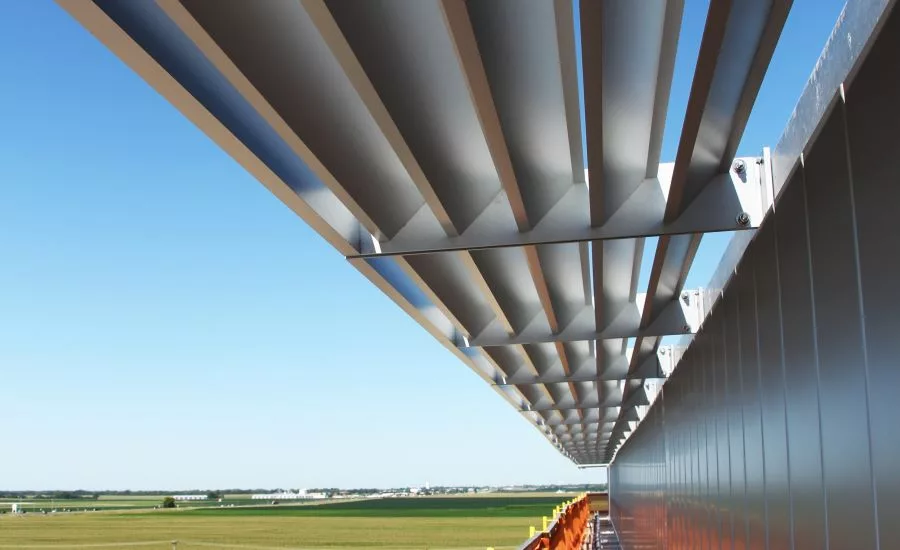
Brise soleil is an exceptional architectural sunshade feature that deflects sunlight, reduces heat, all while allowing natural light to enter a building. Once installed, brise soleil can block direct sunshine from entering a building during warm seasons and provide a cooling effect. They also can allow for direct sunlight to enter and warm spaces during colder times of the year. This combination can reduce energy consumption over the life of the building.
Since the angle at which sun rays enter the window depends on the time of day, the season, and location of the building, there are several brise soleil options. Fixed brise soleil blocks sun rays that shine in vertically, while allowing a horizontal view from the exterior of a window. On many occasions, a fixed brise soleil only covers the top part of the windows. While projected brise soleil often provides solar protection from the top floor of a building.
Horizontal and vertical fins can either cover the whole facade or just the top of the windows. These block part of the sunlight and can redirect some of the natural light into the building. Because vertical fins are dominant, they are an ideal product to enhance a façade visually and sustainably.
Light Shelves
Another type of sunshade, light shelves, are devices that control sun while also contributing to aesthetics, sustainable design and the comfort of those who occupy the building. Light shelves can come in a standard form, but also be customized in a design that fits a building’s specific needs.
To help reduce the need for artificial light inside buildings, light shelves contain a highly reflective surface that deflects daylight onto the ceiling of a building’s interior. This allows light to further enter the building, providing an illuminating glow without fluorescents. Due to their overhang, light shelves provide shading near windows, which can reduce window glare. This reduction in both glare and heat retention leads to more productive energy use and earns LEED points toward energy-efficient building construction.
Light shelves hold the unique ability to be customized to meet complex curves and bends, specific colors or unusual attachment conditions. There are several material options for panels available in various angles and depths. These materials can be tailored based on the corner design and are compatible with multiple curtain wall and storefront framing systems.
Parking Garage Screening
A parking garage screening system can offer strength, style and even security for parking lots that are either underground or outdoors. The unique manufacturing capabilities available allow designers an abundance of freedom when creating parking garage screening systems, which also provide a durable, useful and aesthetic appeal.
Louvered blades, architectural grilles, expanded mesh, tensioned mesh and perforated plates can all be used to create garage screening.
These systems are easily customizable and are chosen based on the amount of sunlight that should be allowed into the structure. The unique fabrication of these systems can be anything from the hole size and shape, to the materials, finishes and shapes of the panels themselves.
These screening systems provide a reduction of lighting to the building that also cuts down on heat and glare from the sun, while still offering ambient lighting that cuts back on energy usage. The reduction of exhaust pollution to the surrounding environment helps to fulfill the needs and requirements of building developers and city municipalities during the design process to get the garages and projects approved. Most systems can qualify for LEED Certification point contribution as well.
Parking garage screening can add a level of security due to the lack of visibility from the outside world. This helps to protect vehicles from vandalism and theft, as well as give shade and weather protection to the patrons of the building. Parking garage screening mitigates accidental falls and protects objects from being thrown in and out of the garage simply by limiting the open space in the exterior enclosure of the structure. When planning for structures, every possible outcome and aspect of the construction must be critically reviewed and anticipated, showing the dedication to the process.
With the aesthetic and sustainability benefits of sunshades, whether it be perforated sunshades, brise soleil, light shelves or parking garage systems, the popularity of installing these on buildings will not be going away anytime soon. They are an ideal choice for any architect who wants to improve the overall appearance of a building and provide the project with better sustainability features. Not only can they create a one-of-a-kind look for the building, but also help better regulate the temperature of the building and assist in making it LEED credit compliant.
Looking for a reprint of this article?
From high-res PDFs to custom plaques, order your copy today!
.webp?height=740&t=1767036885&width=auto "Header - BE 1170x658 (002).png")

.webp?height=740&t=1755781744&width=auto "KEE(2).png")


.webp?height=200&t=1734025739&width=200 "IIBEC(10).png")