Building Enclosure logo
search
cart
facebook twitter linkedin youtube instagram Spotify Podcasts Apple Podcasts Spotify Podcasts Apple Podcasts
  • Sign In
  • Create Account
  • Sign Out
  • My Account
Building Enclosure logo
  • NEWS
    • Breaking News
  • SECTIONS
    • Columns
    • Project Profiles
    • Trade Shows
    • Sponsor Insights
  • SYSTEM DESIGNS
    • Low-Slope Roofs
    • Pitched Roofs
    • Metal Roofing Materials
    • Waterproofing
    • Sustainability
    • Insulation
    • Exterior Claddings
    • Wall Systems
    • Building Envelope
  • BLOG
    • The BE Blog
  • MEDIA
    • Podcasts
    • Webinars
    • Quiz
    • Videos
    • Polls
    • Interactive Spotlights
    • Newsletter
    • Photo Galleries
  • DIRECTORIES
    • Directory: Blue Book
    • Directory: Roofing Resource
  • PRODUCTS
  • TECHNICAL
    • Codes
      • Waterproofing
      • Roofing
    • Details
      • Waterproofing
      • Roofing
  • CONTINUING ED
  • ABOUT
    • Advertise
      • Editorial Calendar
    • Contact
    • eMag Archive Issues
  • SIGN UP!
Wall Systems

Modular Construction as a Post COVID-19 Design Alternative
By Isaac-Daniel Astrachan
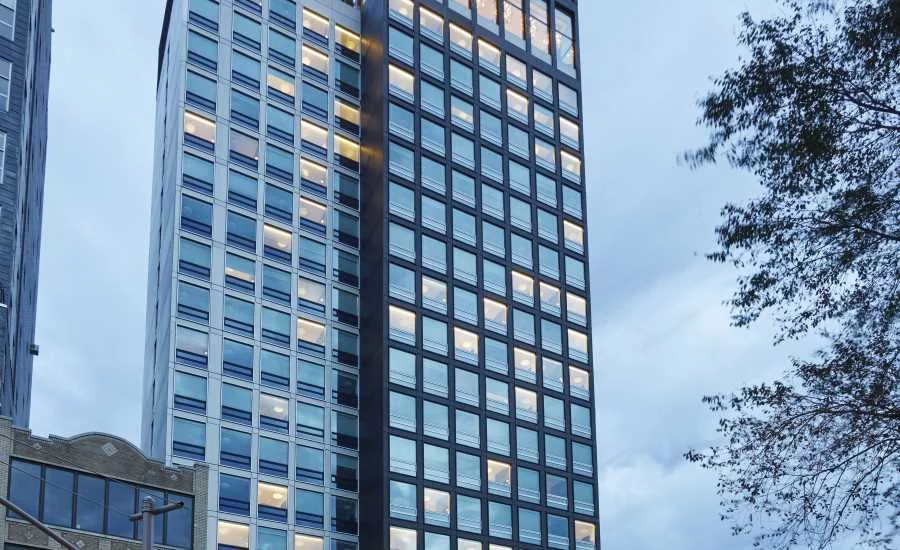
citizenM Bowery Hotel
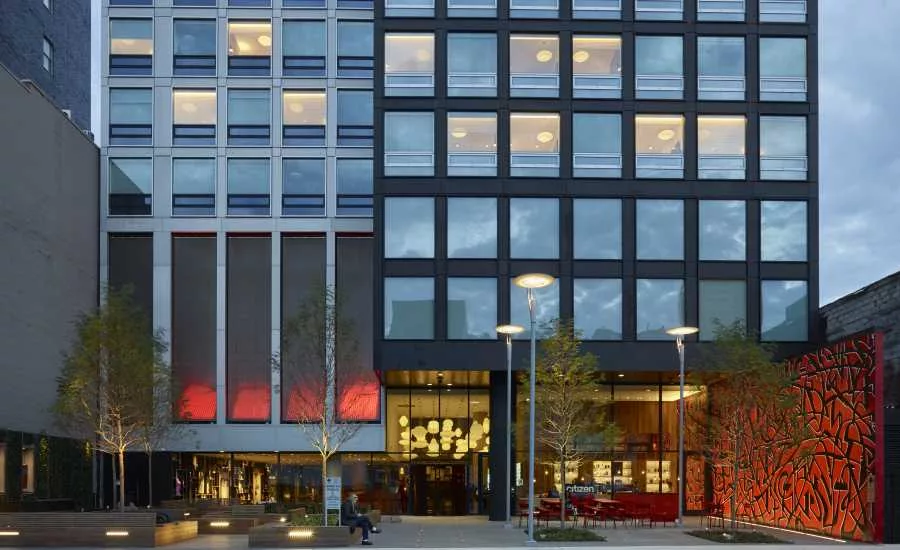
The citizenM Bowery Hotel. All photos courtesy of Stephen B. Jacobs Group.
citizenM Bowery Hotel
August 17, 2020

Over the past few months the world has been flipped upside down, experiencing changes to accommodate the pandemic and post-pandemic life. Now it’s time to re-evaluate architecture as well. With an ever-growing shortage of skilled workers as many retire without replacement, and an even greater absence in the foreseeable future, relying on this labor for new projects leaves holes and question marks. The solution: modular construction. In short, modular construction involves using pre-made modules created in a factory and brought to construction sites for assembly. Because the modules are not constructed on-site, this method allows for quicker and more efficient work with less skilled labor.

The efficiency and pace of modular construction makes projects significantly cheaper. For the same quality, if not better, modular construction can get a project done faster, and as many industry professionals know, every extra day on a project costs extra money. First, the manufacturing of the modules and the on-site work can occur separately and simultaneously, cutting down wait times. Furthermore, as the modules are constructed in a factory, weather delays will not play a large role in delays or inconveniences, making the process even more efficient and cost-effective. Because modular construction is meticulously planned and coordinated, it will save time, labor and money as opposed to the current methods being used.

During the pandemic and immediate post-pandemic world, modular construction can help remedy problems that both architects and cities as a whole are facing. Modular construction not only requires fewer skilled workers but fewer workers in general, allowing projects that otherwise would not meet safety regulations to continue working. Furthermore, for those running these projects, modular construction will greatly reduce the labor costs involved.

Modular construction also offers disruption-less expansion for those working on healthcare facilities. Because on-site construction often interrupts day-to-day hospital activities, building modules off-site and later transporting them is convenient for all parties. During the pandemic, expanding without disrupting healthcare facilities’ activities is especially important. Another Coronavirus-related benefit to modular construction is the movability of the modules. These modules can be created for hospitals in advance, shipped off wherever they are needed most, and then sent to another location or stored as necessary.

The expedited construction time is especially helpful for those working on healthcare facilities or affordable housing projects as it creates the opportunity for additional buildings to be constructed in a short period of time and in an affordable manner. Stephen B. Jacobs Group is currently working on multiple affordable housing projects throughout New York City proving that this method is completely manageable and accomplishes the desired results.

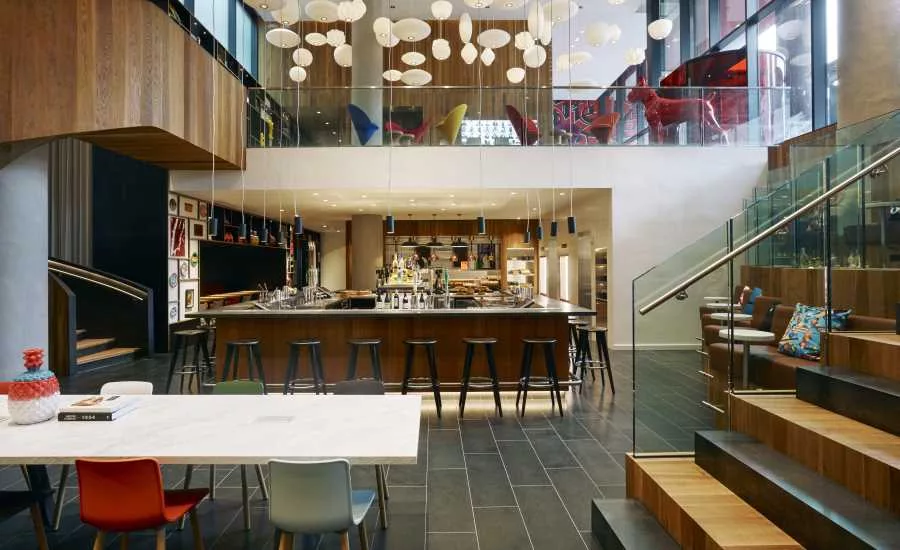
Even for larger projects, modular construction offers benefits that the current system simply cannot match. Better cost-performance and a high positive impact rate make modular construction the convenient, affordable, and efficient choice. Stephen B. Jacobs Group recently finished constructing the tallest modular building in the world: citizenM Bowery Hotel. The hotel boasts 300 guest rooms over 15 floors of modules and a rooftop bar supported by the strong internal structure. The first four floors were designed conventionally with wide-open spaces, but above that lie the guest rooms, designed strategically with modular construction.

The combination of the two creates a unique and memorable space for guests while also being affordable and efficient to build. This being said, the building was not lacking challenges to overcome. Working with modular construction, it is important to be acutely aware of building codes and restrictions on the modules themselves. But, as Stephen B. Jacobs Group did, with some creativity and innovation, these challenges can be overcome and the cost, building time, and product will be well worth the in-depth planning stage. As seen with the citizenM Bowery Hotel, modular construction is the future of the hospitality industry offering strong and efficient spaces.

Aside from hotels, restaurants and bars will also be revolutionized by modular construction, especially as we enter the new normal of eating out, or lack thereof. The pandemic has shifted restaurant focus from indoor dining and serviced eating to take out and delivery, and it will likely stay that way for the foreseeable future. This shift in focus provides a unique opportunity to rethink, redesign, and renew the food industry. Current restaurant architecture highlights dining spaces, but their money is invested and coming from out-of-restaurant sales.

Modular design allows restaurants to quickly and cheaply open new locations to make food more accessible for customers who do not require the indoor dining aspect of the original location. The size of each module provides restaurants with the opportunity to decide how large of a space they need and choose a location where a full-scale restaurant would otherwise not be able to fit. This flexibility in space and size will allow restaurants to expand their consumer base and place themselves somewhere more convenient to capitalize on customer wants.

On top of the other advantages that modular construction provides, such as efficiency and affordability, it also has some inherent environmental benefits. Generally, there are fewer emissions, less raw material waste, and reduced environmental impact associated with modular construction in comparison to other construction methods. Moving into a more sustainability-focused society, the environmental advantage of modular construction definitely makes it stand out as opposed to the other cost-effective construction solutions which often leave a negative impact on the environment and do not meet the same quality standards.

KEYWORDS: AEC industry COVID-19 labor shortage modular system

Share This Story

Looking for a reprint of this article?
From high-res PDFs to custom plaques, order your copy today!


Photo of isaac daneil astrachan
Isaac-Daniel Astrachan, AIA, LEEP AP, has been with SBJGroup since 1998 when he started as the project manager for Hotel Giraffe. Since then he has worked on many different hospitality and residential projects. He has recently completed ALTA LIC, a 43-story residential tower in Long Island City, and citizenM NY Bowery Hotel, the tallest modular hotel in the world. Prior to joining the firm, Astrachan worked for Didier Repellin, Chief Architect and Inspector-General of historic monuments in France. He graduated from Columbia College in 1990 and received his Master of Architecture degree from Harvard’s Graduate School of Design in 1995. He serves on the board of Downtown United Soccer Club and is a member of Manhattan Community Board No.2’s Future of Pier 40 Working Group.

Recommended Content

JOIN TODAY
to unlock your recommendations.

Already have an account? Sign In

  • bar graph shows LEED v4/LEED v5/LEED v6 in various colors

    When Will LEED v4 / v4.1 and LEED v5 Expire?

    The latest version of the LEED rating system, LEED v5, is...
    Sustainability
    By: Daniel Overbey
  • Celebrating Women In AEC-2026

    Celebrating Women in The AEC Industry Part 1

    A round-up of women in the design, engineering and...
    Sustainability
    By: Lindsay Lewis
  • KEE membrane application on a roof

    A Beginner’s Guide to Single-Ply Roofing Membranes

    While PVC and TPO appear extremely similar, the chemistry...
    Low-Slope Roofs
    By: Peter Gross
Manage My Account
  • Sign up for the Newsletter
  • Online Registration
  • Manage My Preferences
  • Registration Customer Service

More Videos

Sponsored Content

Sponsored Content is a special paid section where industry companies provide high quality, objective, non-commercial content around topics of interest to the Building Enclosure audience. All Sponsored Content is supplied by the advertising company and any opinions expressed in this article are those of the author and not necessarily reflect the views of Building Enclosure or its parent company, BNP Media. Interested in participating in our Sponsored Content section? Contact your local rep!

close
  • 2 construction workers and a DEXcell panel
    Sponsored byDEXcell Roof Boards

    Designing Low-Slope Roofs for Resilience

  • Bell Bank headquarters in Fargo, North Dakota
    Sponsored bySto Corp.

    Drained and Back-Ventilated Rainscreens vs Pressurized-Equalized Rainscreens

  • A construction worker using DEXcell roof boards
    Sponsored byDEXcell Roof Boards

    The Hidden Strength of Low-Slope Roof Systems: Why Roof Cover Boards Matter

Popular Stories

construction industry workers in hard hats stand around a city scape

Construction Industry Revolts Over New CSI Licensing Plan

graph shows green, orange and red dot lines going up

LEED v5 and the Cost Impacts of ASHRAE Standard 90.1-2019

2 construction workers and a DEXcell panel

Designing Low-Slope Roofs for Resilience

Building Enclosure Newsletter

BE Poll

Events

April 9, 2026

Strategies for High-Performance Below-Grade Waterproofing

Credits: 1 AIA LU/HSW ; 1 IIBEC CEH; 0.1 IACET CEU

On-Demand Designing a high-performance building enclosure requires more than just surface-level protection; it demands a rigorous, performance-based mastery of below-grade water and gas mitigation. This discussion will provide an expert-level analysis of below-grade waterproofing within the comprehensive framework of the high-performance building enclosure.

April 28, 2026

Roof Design Considerations That Prevent Installation Failures and Change Orders

Credit: 1 AIA LU/HSW; 1 IIBEC CEH; 0.1 ICC CEU

On-Demand This course provides visual examples of actual field conditions. Some good, some not so good; along with design suggestions that can cut installation costs and reduce construction change orders. Upon completion of this course, you will have a better understanding of the requirements the roofing contractor must meet to provide the specified roofing system warranty, and long-term value to the owner.

View All Submit An Event

Products

Plaster and Drywall Assemblies Manual

Plaster and Drywall Assemblies Manual

This is a comprehensive manual that goes beyond codes and standards, providing expert guidance in design, detailing, material selection and troubleshooting for plaster and drywall.

See More Products

Related Articles

  • FGIA Logo

    FGIA Virtual Fall Conference Keynote Discusses Post-COVID-19 Economy

    See More
  • getty

    The Future of Trade Shows Post COVID-19

    See More
  • GCP Applied Technologies

    Top Five Benefits of Self-Adhered Products in Modular Construction

    See More

Related Products

See More Products
  • 0-7643-2189-7.jpg

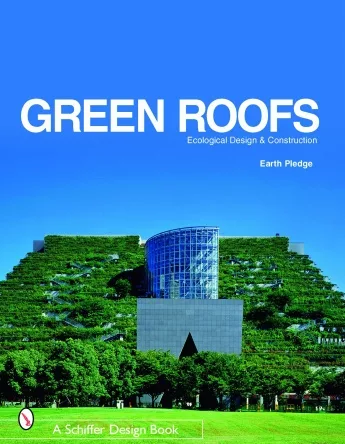
    Green Roofs: Ecological Design and Construction

  • net zero.jpg

    Net Zero Energy Design: A Guide for Commercial Architecture

  • 9780128207918.jpg

    Eco-efficient Materials for Reducing Cooling Needs in Buildings and Construction 1st Edition

See More Products
×

Enhance your expertise with unparalleled insights.

Join thousands of building professionals today. Shouldn’t you know what they know?

SUBSCRIBE TODAY!
  • RESOURCES
    • Advertise
    • Contact Us
    • Store
    • Want More
  • SIGN UP TODAY
    • Create Account
    • Newsletter
    • Customer Service
    • Manage Preferences
  • SERVICES
    • Marketing Services
    • Reprints
    • Market Research
    • List Rental
    • Survey/Respondent Access
  • STAY CONNECTED
    • LinkedIn
    • Facebook
    • Instagram
    • YouTube
    • X
  • PRIVACY
    • PRIVACY POLICY
    • TERMS & CONDITIONS
    • DO NOT SELL MY PERSONAL INFORMATION
    • PRIVACY REQUEST
    • ACCESSIBILITY

Copyright ©2026. All Rights Reserved BNP Media, Inc. and BNP Media II, LLC.

Design, CMS, Hosting & Web Development :: ePublishing