The State Energy Efficiency Scorecard
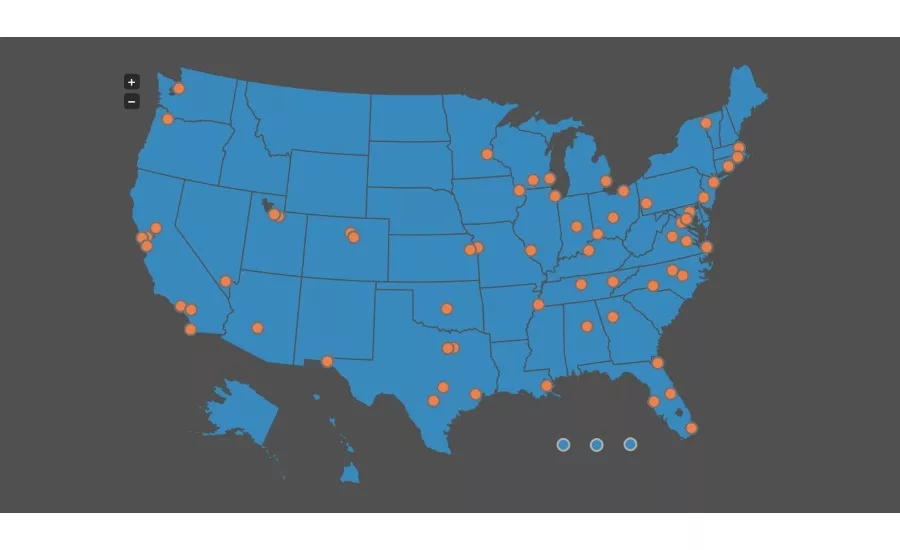
As more states struggle with extreme weather events, the 2017 State Energy Efficiency Scorecard gives state-level policymakers a road map for building stronger and more-resilient communities. This 11th annual report from the American Council for an Energy-Efficient Economy (ACEEE), released today, shows which states are doing the best on energy efficiency — a critical tool for withstanding and recovering from storms and economic shocks. To download the State Energy Efficiency Scorecard online, go to http://aceee.org/state-policy/scorecard.
Idaho, Florida, and Virginia are the three most-improved states in the newly released report. Massachusetts broke its 2016 tie with California by holding on to the No. 1 ranking, while the Golden State slipped to No. 2. As national leaders, Rhode Island, Vermont, and Oregon round out the top five in the ACEEE Scorecard. Idaho posted the most gains by far in 2017, surging past a number of mid-ranked states in ACEEE’s comparative index of efficiency policies, best practices, and other metrics. Idaho advanced seven spots, from 33rd to 26th place. The balance of the 10 most-improved states are Virginia, Oklahoma, Florida, Utah, Nevada, Louisiana, Oregon, Washington, D.C., and Kentucky. While they show promise, all states can improve.
Storm-hit Florida and Texas rose in the rankings. Florida is among the top 10 most-improved states for energy efficiency. In late 2016 the state began its new Farm Renewable and Efficiency Demonstration (FRED) Program, which provides free energy evaluations to farmers and grant reimbursements for proposed efficiency measures. In addition, Florida is preparing to implement a stronger state building code with a major emphasis on energy efficiency. Both Florida (jumping three spots on the Scorecard to rank #22) and Texas (improving to #26) can continue to place greater emphasis on energy efficiency policy and implementation as they rebuild in the wake of the recent hurricanes.
“States hit by Hurricanes Harvey and Irma will need to rebuild, and energy efficiency can help them do so smartly, including improved building codes and promotion of Combined Heat and Power (CHP) systems,” said Steven Nadel, executive director, ACEEE. “By pursuing energy efficiency policies, states can save residents and businesses billions in the long term. There is a lot of overall movement in the 2017 Scorecard. Some states that have gone for years without much change have made incredible strides.”
Charlie Baker, governor of Massachusetts, said: “As Massachusetts continues to make historic investments and progress in clean energy development, energy efficiency remains the most cost-effective method of reducing ratepayer costs and lowering greenhouse gas emissions. Massachusetts is proud to lead the nation in energy efficiency policies and programs, and over the last year our administration has focused on increasing access for low- and moderate-income ratepayers, while investing in innovative peak demand reduction projects that will provide significant environmental and economic benefits to the Commonwealth.”
Terry McAuliffe, governor of Virginia said: “I am encouraged that ACEEE continues to recognize the excellent work we are doing in the Commonwealth to advance energy efficiency through innovative programs such as the VASaves Green Communities Program and Energy Performance Contracting for public agencies. While we have made progress in these areas, there is still much to be done to grow utility-sponsored programs and encourage strategies like Combined Heat and Power. Energy efficiency is a win-win for Virginia’s economy and our environment, and we must build on the momentum generated over the last four years.”
Gina Raimondo, governor of Rhode Island, said: “From the nation’s first offshore wind farm to the thousands of clean energy jobs we’ve created over the past few years, I’m proud that Rhode Island is leading the nation in the green economy. These programs help all of us — including residents, businesses, cities, towns and State government — to save money on our energy bills, reduce our carbon footprint and add to the 15,000 clean energy jobs in our economy. Rhode Island’s third place ranking in this report, up from fourth last year, demonstrates that our investments in electric and natural gas energy efficiency programs are paying off.”
Butch Otter, governor of Idaho, said: “Idaho is committed to using energy and all our precious resources in the most efficient way possible. The ACEEE report shows that we’re making real progress in capturing cost-effective energy efficiencies, which helps reduce power bills for ratepayers and the need for more costly and less sustainable forms of energy generation.”
OTHER KEY FINDINGS
- California, Massachusetts, and New York continue to lead the way in energy-efficient transportation policies for the second consecutive year. California’s requirements for reducing greenhouse gas (GHG) emissions have prompted several strategies for smart growth. Massachusetts promoted smart growth development in cities and municipalities through state-delivered financial incentives. New York, Oregon, Washington, and Vermont are among the few states in the nation to have a vehicle miles traveled (VMT) reduction target.
- No. 3 Rhode Island achieved a perfect 20-out-of-20 score in the utility programs category for the fourth year in a row, thanks again to its ambitious Three-Year Energy Efficiency Procurement Plan, which has helped to drive electric utility savings to levels approaching 3%, among the highest in the country. In December 2016, the Governor’s Executive Climate Change Coordinating Council (EC4) issued the Greenhouse Gas Emissions Reduction Plan to help cut emissions 45% by 2035 under the Resilient Rhode Island Act.
- Vermont and Oregon ranked fourth and fifth, respectively, both posting increases to their nation-leading levels of electricity savings and showing strong performances across nearly every policy area. In the top 10 again this year were Connecticut, New York, Washington, Minnesota, and Maryland. Each of these states has well-established efficiency programs and continues to push the boundaries by redefining the ways in which policies and regulations can enable energy savings.
- Rhode Island, Massachusetts, and Vermont were the leading states in utility-sector energy efficiency programs and policies. These three states also topped this category in 2014, 2015, and 2016. With records of success, all three continued to raise the bar on cost-effective programs and policies.
- California continued to lead in efficient buildings policies, with its latest building energy code updates taking effect in January 2017 and moving the state closer to its goal of achieving net zero energy use for all new residential buildings by 2020 and commercial buildings by 2030. Other leaders include the District of Columbia, New York, and Washington, all of which have adopted the latest model codes and enforce mandatory building energy benchmarking and transparency policies for the commercial or residential building sector.
- Multiple states in the lower tiers also showed progress. Louisiana moved up three spots to 44th, with savings continuing to increase as its utilities transition from the three-year “quick start” phase of their energy efficiency programs to the more comprehensive second phase. Mississippi, which also kicked off quick-start programs in 2014, held proceedings to guide the evolution to full-scale portfolios this year as well.
Looking for a reprint of this article?
From high-res PDFs to custom plaques, order your copy today!
.webp?height=740&t=1767036885&width=auto "Header - BE 1170x658 (002).png")

.webp?height=740&t=1755781744&width=auto "KEE(2).png")


.webp?height=200&t=1727443302&width=200 "FGIA(3).png")