Building Enclosure logo
search
cart
facebook twitter linkedin youtube instagram Spotify Podcasts Apple Podcasts Spotify Podcasts Apple Podcasts
  • Sign In
  • Create Account
  • Sign Out
  • My Account
Building Enclosure logo
  • NEWS
    • Breaking News
  • SECTIONS
    • Columns
    • Project Profiles
    • Trade Shows
    • Sponsor Insights
  • SYSTEM DESIGNS
    • Low-Slope Roofs
    • Pitched Roofs
    • Metal Roofing Materials
    • Waterproofing
    • Sustainability
    • Insulation
    • Exterior Claddings
    • Wall Systems
    • Building Envelope
  • BLOG
    • The BE Blog
  • MEDIA
    • Podcasts
    • Webinars
    • Quiz
    • Videos
    • Polls
    • Interactive Spotlights
    • Newsletter
    • Photo Galleries
  • DIRECTORIES
    • Directory: Blue Book
    • Directory: Roofing Resource
  • PRODUCTS
  • TECHNICAL
    • Codes
      • Waterproofing
      • Roofing
    • Details
      • Waterproofing
      • Roofing
  • CONTINUING ED
  • ABOUT
    • Advertise
      • Editorial Calendar
    • Contact
    • eMag Archive Issues
  • SIGN UP!
Waterproofing

Positive vs. Negative Waterproofing: Where, When and Why

By BNP Media Staff
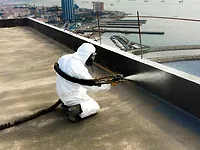
Workers apply a waterproof coating to a wall
Image courtesy of John D'Annunzio

Image courtesy of John D'Annunzio

November 1, 2006
Prior to designing waterproofing for a new building, the architect is faced with a plethora of questions. The initial question is “Where do you want the waterproofing to be installed?” The choices are:
  • Positive side waterproofing.
  • Negative side waterproofing.
  • Integral waterproofing.

Integral waterproofing is comprised of admixtures that are incorporated into the concrete mixture during the initial pour. These types of products are very vulnerable and are not considered for discussion in this text.

Positive vs. Negative: Where

Positive side waterproofing is applied to the wet or exterior face of foundations or slabs on grade and below grade, as well as suspended slabs. It is the predominant type of waterproofing used in new construction. Positive side waterproofing applications consist of all commercially available dampproofing or waterproofing systems. Properly applied positive side waterproofing protects the interior of the facility from moisture infiltration and protects the structural components, including concrete and steel. Positive side below-grade systems include fluid-applied membranes, sheet-membrane systems, hydros clay and vapor barriers.

One of the primary advantages of positive side systems is that water is prevented from entering the substrate surface. The substrate is also protected from freeze-thaw cycles, as well as from corrosive chemicals in the groundwater.

The primary disadvantage of positive side waterproofing is that the system is inaccessible for repairs after the installation. This means that costly removal of topping (concrete, landscaping, grass, dirt, etc.) is required prior to repair - no matter how small the area of repair is. Another disadvantage is that subslabs and well pointing are required for foundation waterproofing.

Negative side waterproofing is applied to the dry or inside face of the subsurface. It is used primarily for water holding purposes. Negative side waterproofing prevents water from entering occupied space.

However, it does not prevent water from entering the substrate.

The materials used in negative side waterproofing applications must be able to withstand hydrostatic pressure. The most common forms of materials used in these applications are epoxy injections and cementitious coatings.

There are also acrylic or crystalline chemical conversion additives on the market that are applied at the blind side and penetrate into the substrate.

The primary advantage of negative side waterproofing is that the area is fully accessible after installation. Any further defects or required touch-ups can be repaired with no surface removal or intrusion to the substrate. This method also eliminates the need for subslabs and well pointing for foundation waterproofing, which are required on positive side systems.

Moisture entry allowed into the substrate on negative side waterproofing systems can be viewed as both an advantage (it promotes active curing of the concrete substrate) and a disadvantage (it contributes to the corrosion of the concrete and steel reinforcements from groundwater and chemicals). Negative side waterproofing does not provide protection from freeze-thaw cycles and is limited to the application of cementitious systems.

Positive vs. Negative: When

The decision to use positive side or negative side waterproofing can be made after exploring a litany of questions regarding site conditions:

  • Will there be exposure to corrosive soil materials? If so, consider only positive side waterproofing.
  • Will there be exposure to freeze/thaw cycling? If so, consider only positive side waterproofing.
  • Will there be interior humidity limitations? If so, consider only positive side waterproofing. If the answer to all of these questions is no, then negative side waterproofing can be considered.

Positive vs. Negative: Why

Most waterproofing experts agree that the most effective form of new construction waterproofing installation is at the positive side of the structure. The installation of any system on the negative side is exposed to the added risk of having the waterproofing “pushed off” or disbonded from the substrate by moisture that infiltrates the concrete in a liquid or vapor form. Waterproofing applied to the negative side of the structure also provides a passage for any ground containments or chemicals to enter into the substrate and deteriorate the concrete and corrode steel reinforcements.

To eliminate these concerns it is possible (although not always economical) to install a negative side bulkhead wall to hold the waterproofing in place. This method may prove to be more costly than excavation of the surface. The optimum solution is to apply positive side waterproofing on newly constructed structures and limit negative side waterproofing to remedial applications.

KEYWORDS: below grade Carlisle SynTec fluid applied waterproofing system

Share This Story

Looking for a reprint of this article?
From high-res PDFs to custom plaques, order your copy today!


Recommended Content

JOIN TODAY
to unlock your recommendations.

Already have an account? Sign In

  • bar graph shows LEED v4/LEED v5/LEED v6 in various colors

    When Will LEED v4 / v4.1 and LEED v5 Expire?

    The latest version of the LEED rating system, LEED v5, is...
    Sustainability
    By: Daniel Overbey
  • Celebrating Women In AEC-2026

    Celebrating Women in The AEC Industry Part 1

    A round-up of women in the design, engineering and...
    Building Envelope
    By: Lindsay Lewis
  • KEE membrane application on a roof

    A Beginner’s Guide to Single-Ply Roofing Membranes

    While PVC and TPO appear extremely similar, the chemistry...
    Low-Slope Roofs
    By: Peter Gross
Manage My Account
  • Sign up for the Newsletter
  • Online Registration
  • Manage My Preferences
  • Registration Customer Service

More Videos

Sponsored Content

Sponsored Content is a special paid section where industry companies provide high quality, objective, non-commercial content around topics of interest to the Building Enclosure audience. All Sponsored Content is supplied by the advertising company and any opinions expressed in this article are those of the author and not necessarily reflect the views of Building Enclosure or its parent company, BNP Media. Interested in participating in our Sponsored Content section? Contact your local rep!

close
  • 2 construction workers and a DEXcell panel
    Sponsored byDEXcell Roof Boards

    Designing Low-Slope Roofs for Resilience

  • Bell Bank headquarters in Fargo, North Dakota
    Sponsored bySto Corp.

    Drained and Back-Ventilated Rainscreens vs Pressurized-Equalized Rainscreens

  • A construction worker using DEXcell roof boards
    Sponsored byDEXcell Roof Boards

    The Hidden Strength of Low-Slope Roof Systems: Why Roof Cover Boards Matter

Popular Stories

construction industry workers in hard hats stand around a city scape

Construction Industry Revolts Over New CSI Licensing Plan

graph shows green, orange and red dot lines going up

LEED v5 and the Cost Impacts of ASHRAE Standard 90.1-2019

2 construction workers and a DEXcell panel

Designing Low-Slope Roofs for Resilience

Building Enclosure Newsletter

BE Poll

Events

June 17, 2025

Addressing Condensation in Low-Slope Roof Assemblies

Credits: 1 AIA LU/HSW; 0.1 ICC CEU; 1 IIBEC CEH; 0.1 IACET CEU

On Demand In modern roofing systems, vapor retarders and air barriers do more than just minimize air leakage—they’re essential to maximizing performance and longevity. This engaging course dives into the next generation of moisture control: permeable vapor retarders and air barriers. Discover how these cutting-edge technologies are transforming low-slope roofing assemblies by improving energy efficiency, managing moisture, and boosting wind uplift resistance.

April 9, 2026

Strategies for High-Performance Below-Grade Waterproofing

Credits: 1 AIA LU/HSW ; 1 IIBEC CEH; 0.1 IACET CEU

On-Demand Designing a high-performance building enclosure requires more than just surface-level protection; it demands a rigorous, performance-based mastery of below-grade water and gas mitigation. This discussion will provide an expert-level analysis of below-grade waterproofing within the comprehensive framework of the high-performance building enclosure.

View All Submit An Event

Products

Plaster and Drywall Assemblies Manual

Plaster and Drywall Assemblies Manual

This is a comprehensive manual that goes beyond codes and standards, providing expert guidance in design, detailing, material selection and troubleshooting for plaster and drywall.

See More Products

Related Articles

  • Construction Market Forecast: Nonresidential Negative; Non-Building Positive

    See More
  • GCP

    The Durability Factor with Cold-Applied vs. Hot-Applied Liquid Waterproofing

    See More
  • The What, Where & Why of Liquid Applied Roofing

    The What, Where & Why of Liquid Applied Roofing

    See More

Related Products

See More Products
  • 0071489738.jpeg

    Construction Waterproofing Handbook Second Edition

See More Products

Events

View AllSubmit An Event
  • March 18, 2025

    Going Seamless: The What, Where & Why of Liquid Applied Roofing

    Credits: 1 AIA LU/HSW; 0.1 ICC CEU; 1 IIBEC CEH On-Demand: This webinar will discuss the many components that make up a liquid applied roof, how they fit into the building code, and what types of projects can really benefit from these types of systems. 
View AllSubmit An Event
×

Enhance your expertise with unparalleled insights.

Join thousands of building professionals today. Shouldn’t you know what they know?

SUBSCRIBE TODAY!
  • RESOURCES
    • Advertise
    • Contact Us
    • Store
    • Want More
  • SIGN UP TODAY
    • Create Account
    • Newsletter
    • Customer Service
    • Manage Preferences
  • SERVICES
    • Marketing Services
    • Reprints
    • Market Research
    • List Rental
    • Survey/Respondent Access
  • STAY CONNECTED
    • LinkedIn
    • Facebook
    • Instagram
    • YouTube
    • X
  • PRIVACY
    • PRIVACY POLICY
    • TERMS & CONDITIONS
    • DO NOT SELL MY PERSONAL INFORMATION
    • PRIVACY REQUEST
    • ACCESSIBILITY

Copyright ©2026. All Rights Reserved BNP Media, Inc. and BNP Media II, LLC.

Design, CMS, Hosting & Web Development :: ePublishing