Avoiding the Landfill: The Recycling of Vinyl Roof Membranes
Increasing raw material costs, higher landfill tipping fees, legislation to restrict disposal of construction materials - and an architectural community that demands the lightest environmental footprint achievable - all are leading toward the mainstreaming of post-consumer recycling and the day when specifiers routinely call for recycling of roofs at the end of their service life.

Increasing raw material costs, higher landfill tipping fees, legislation to restrict disposal of construction materials - and an architectural community that demands the lightest environmental footprint achievable - all are leading toward the mainstreaming of post-consumer recycling and the day when specifiers routinely call for recycling of roofs at the end of their service life.
Since vinyl is a roofing material demonstrated to be recyclable into new roofing products, the North American vinyl (PVC) roofing industry is conducting a feasibility study to evaluate strategies for making post-consumer recycling of its products in North America viable on a broad scale.
Incorporating lessons learned from several pilot projects in the United States and 15 years of experience by their European counterparts, the member manufacturers of the Vinyl Roofing Division of the Chemical Fabrics & Film Association are combining post-consumer recycling technologies with logistical expertise to limit vinyl’s contribution to landfill waste.
As with all recycling, the success of this initiative will depend on the motivation of the participants in the process. A sustainable post-consumer recycling strategy requires membrane recovery in the tear-down, transportation and reprocessing efficiency, and a ready customer base for the recycled product - all addressed on a large scale.
 Along with the building owner or developer, the architect’s role in supporting roof recycling is pivotal. The architect can include language in the specification requiring that an existing vinyl roof membrane be recycled by the manufacturer of the replacement membrane. An additional requirement that the replacement membrane be taken back at the end of its useful life may also be considered.
The roofing contractor is central to this process, working closely with the membrane manufacturer to coordinate reclamation and assuming responsibility for membrane removal and preparation and loading for shipment according to the manufacturer’s procedures. Any long-term approach to reclaiming old roofs will need to address contractor training in the logistics of tear-off and transport for recycling instead of landfill disposal.
Slightly more handling is involved, as the contractor must separate the membrane from other waste materials to deliver a “clean” product - free of foreign materials like stone ballast and metal fasteners - to the membrane processing facility. Old membranes must be cut into strips of prescribed widths and rolled and tack welded before leaving the jobsite for the recycler.
In its pilot projects, the Vinyl Roofing Division found that the savings in disposal fees and the value of the salvaged materials generally exceeded the cost of the additional labor, shipping and grinding fees. Total net costs are dependent on total roofing square footage, the distance that the old roof must be shipped to be processed, and the avoided landfill tipping fees.
European roofing manufacturers have been recycling retired vinyl roofs into other useful products since 1994. A European Single Ply Waterproofing Association (ESWA) program, ROOFCOLLECT, coordinates the recovery and processing of post-consumer vinyl roofing membranes. With the European Commission, ESWA sets annual targets for this activity; in 2007, 13.3 million pounds of roofing membrane were recycled due to its efforts. Field reports indicate that, at 10-plus years of age, the first membranes made with recycled post-consumer material perform the same as membranes produced of virgin raw materials.
Not only was the Marriott’s vinyl roof recycled when it was replaced, but also the thermal insulation, which defrayed shipping costs.
Increasing raw material costs, higher landfill tipping fees, legislation to restrict disposal of construction materials - and an architectural community that demands the lightest environmental footprint achievable - all are leading toward the mainstreaming of post-consumer recycling and the day when specifiers routinely call for recycling of roofs at the end of their service life.
Since vinyl is a roofing material demonstrated to be recyclable into new roofing products, the North American vinyl (PVC) roofing industry is conducting a feasibility study to evaluate strategies for making post-consumer recycling of its products in North America viable on a broad scale.
Incorporating lessons learned from several pilot projects in the United States and 15 years of experience by their European counterparts, the member manufacturers of the Vinyl Roofing Division of the Chemical Fabrics & Film Association are combining post-consumer recycling technologies with logistical expertise to limit vinyl’s contribution to landfill waste.
As with all recycling, the success of this initiative will depend on the motivation of the participants in the process. A sustainable post-consumer recycling strategy requires membrane recovery in the tear-down, transportation and reprocessing efficiency, and a ready customer base for the recycled product - all addressed on a large scale.
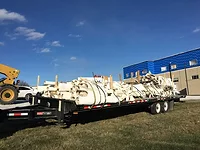
The aged roof of the University of Iowa’s Carver-Hawkeye Arena was recycled into roofing walkway membrane.
The roofing contractor is central to this process, working closely with the membrane manufacturer to coordinate reclamation and assuming responsibility for membrane removal and preparation and loading for shipment according to the manufacturer’s procedures. Any long-term approach to reclaiming old roofs will need to address contractor training in the logistics of tear-off and transport for recycling instead of landfill disposal.
Slightly more handling is involved, as the contractor must separate the membrane from other waste materials to deliver a “clean” product - free of foreign materials like stone ballast and metal fasteners - to the membrane processing facility. Old membranes must be cut into strips of prescribed widths and rolled and tack welded before leaving the jobsite for the recycler.
In its pilot projects, the Vinyl Roofing Division found that the savings in disposal fees and the value of the salvaged materials generally exceeded the cost of the additional labor, shipping and grinding fees. Total net costs are dependent on total roofing square footage, the distance that the old roof must be shipped to be processed, and the avoided landfill tipping fees.
European roofing manufacturers have been recycling retired vinyl roofs into other useful products since 1994. A European Single Ply Waterproofing Association (ESWA) program, ROOFCOLLECT, coordinates the recovery and processing of post-consumer vinyl roofing membranes. With the European Commission, ESWA sets annual targets for this activity; in 2007, 13.3 million pounds of roofing membrane were recycled due to its efforts. Field reports indicate that, at 10-plus years of age, the first membranes made with recycled post-consumer material perform the same as membranes produced of virgin raw materials.
Looking for a reprint of this article?
From high-res PDFs to custom plaques, order your copy today!
.webp?height=740&t=1767036885&width=auto "Header - BE 1170x658 (002).png")

.webp?height=740&t=1755781744&width=auto "KEE(2).png")