Is Waterproofing Required?

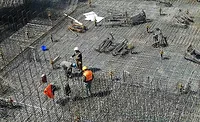
Building elements requiring waterproofing protection include planters and elevated structural slabs over underground spaces. (Photo courtesy of Carlisle Coatings and Waterproofing.)
The first question architects must answer is whether waterproofing is required on the building that they are designing. This can be a complex question, and the answer could have significant ramifications over the life span of the structure. Economic and code requirements often weigh heavily on the decision-making process.Waterproofing may be included for a peace of mind; this is one component of the building where it may be best to err on the side of caution.
There are several reasons why waterproofing is required. They include:
- To meet code requirements.
- To keep water out of the building.
- To protect the structure’s concrete and steel elements.
- To cope with hydrostatic pressure.
- To save money by eliminating the cost of excavation.

This garden at the Utah State Capitol covers an underground parking garage. (Photo courtesy of Carlisle Coatings and Waterproofing.)
Certain codes require the use of waterproofing under different conditions. It is the responsibility of the architect or designer to make certain that the waterproofing component complies with the applicable federal, state or local codes. The water table and hydrostatic pressure are primary considerations of the codes.A proper engineering study of the grounds is required to establish this criterion for the design phase.
UBC and BOCA codes require dampproofing or waterproofing when the site ground water table is maintained at an elevation of not less than 6 inches below the bottom of the ground slab. The UBC and BOCA codes also require waterproofing applications where hydrostatic pressure will occur. ASTM states that dampproofing or waterproofing is required for slabs on the ground and foundation retaining walls.
Protecting the Building’s Interior
The main function of a structure is to protect man from the environment. This is one element that has remained constant throughout history. Advancements in building design, material technology and application procedures have not changed this function. The main purpose of waterproofing is to serve as a barrier that protects the interior of the structure from moisture intrusion and other environmental ingress.
Below-grade building components are susceptible to moisture intrusion because they can be exposed to moisture from groundwater for weeks - even months - at a time. Buildings constructed in lowlying areas with high water tables can be exposed to groundwater throughout the life of the structure.
There are several points where a belowgrade exterior component is prone to moisture infiltration. These points require proper design diligence from architects to keep moisture out of the building. Some of the more common areas of concern include:
- Tie-rod holes.
- Cold joints.
- Expansion joints.
- Penetrations.
- Internal drains.
- Structural connections.
Structural Protection
In addition to keeping moisture out of the building, waterproofing serves another equally important role. It helps protect the structural elements - concrete and steel - from damage due moisture and chemicals, soils, etc.
Deterioration from the elements can occur in the form of cracks and spalling of the concrete or corrosion and rusting of the steel components. In each case, these deficiencies have an adverse effect on the long-term performance capacity of these components.
If the integrity of the concrete is maintained, it can remain waterproof; however, concrete can crack before hardening through construction movement, plastic or drying shrinkage or early frost damage. Concrete can crack after hardening through settlement, seismic forces, vibration or creep, deflection from soil movement or excessive loading.

The determination of hydrostatic pressure is an important element prior to the design stage. This is a basic factor in the choice of a waterproofing system. By definition, if hydrostatic pressure is present, then waterproofing - not dampproofing - is required.
Key considerations include the intensity and duration of the hydrostatic pressure. This should be defined by a civil engineer and is important in determining of waterproofing materials that are specified. Other issues that require clarification prior to design include whether the pressure is continuous or intermittent and whether the water is stationary or flowing.
The intensity and duration of hydrostatic pressure must be considered in the design of waterproofing systems for several reasons. Hydrostatic pressure can have adverse effects on waterproofing systems if they are not properly designed or applied. Hydrostatic pressure can force membranes into voids in the concrete. Cracking in the concrete that occurs under flexural stress can rupture the membrane and create leaks. Hydrostatic pressure can also force water into tie-rod holes, cold joints and rock pockets. It can also turn minor imperfections into probable sources of leaks.
Economics
The term “value engineering” has gained prominence in the last decade, particularly with general contractors looking to add to their profit margins through substitution of materials and systems.
The term implies that there may be some value in substituting design materials or application procedures with lessexpensive methods of construction. This approach can be ill advised when it comes to below-grade waterproofing. The primary reason for concern involves the consideration of risk versus cost. If a building owner wants to cut costs, the waterproofing system is the last place to do so. This is because the cost of excavation far exceeds the initial cost. Due to this fact, the designer should always minimize risk despite any reasonable - or unreasonable - costs.With waterproofing, there is only one chance to do it right.
Architects should stand firm on the waterproofing design and should not accept change orders for materials or systems that they are not familiar (or comfortable) with. If the building owner or general contractor forces changes to design or materials or application procedures without the designer’s acceptance, the designer should have those parties sign a release of liability. As a professional in the industry, the designer will assume liability for all design components - even those changed without their consent - unless a release of liability is provided.
Where Is Waterproofing Required?
Once it has been established that waterproofing is required, the next important decision is to determine where it is required. Typically, waterproofing should be applied over all below-grade concrete surfaces. There are several other established building components that require waterproofing protection.
They include:
- Underground structures.
- Elevated structural slabs over underground spaces.
- Structural slabs below grade.
- Structural slabs above grade.
- Foundations.
- Lagging walls.
- Plazas.
- Terraces.
- Promenades.
- Planters.
Looking for a reprint of this article?
From high-res PDFs to custom plaques, order your copy today!
.webp?height=740&t=1767036885&width=auto "Header - BE 1170x658 (002).png")

.webp?height=740&t=1755781744&width=auto "KEE(2).png")