Building Enclosure logo
search
cart
facebook twitter linkedin youtube instagram Spotify Podcasts Apple Podcasts Spotify Podcasts Apple Podcasts
  • Sign In
  • Create Account
  • Sign Out
  • My Account
Building Enclosure logo
  • NEWS
    • Breaking News
  • SECTIONS
    • Columns
    • Project Profiles
    • Trade Shows
    • Sponsor Insights
  • SYSTEM DESIGNS
    • Low-Slope Roofs
    • Pitched Roofs
    • Metal Roofing Materials
    • Waterproofing
    • Sustainability
    • Insulation
    • Exterior Claddings
    • Wall Systems
    • Building Envelope
  • BLOG
    • The BE Blog
  • MEDIA
    • Podcasts
    • Webinars
    • Quiz
    • Videos
    • Polls
    • Interactive Spotlights
    • Newsletter
    • Photo Galleries
  • DIRECTORIES
    • Directory: Blue Book
    • Directory: Roofing Resource
  • PRODUCTS
  • TECHNICAL
    • Codes
      • Waterproofing
      • Roofing
    • Details
      • Waterproofing
      • Roofing
  • CONTINUING ED
  • ABOUT
    • Advertise
      • Editorial Calendar
    • Contact
    • eMag Archive Issues
  • SIGN UP!
Breaking News

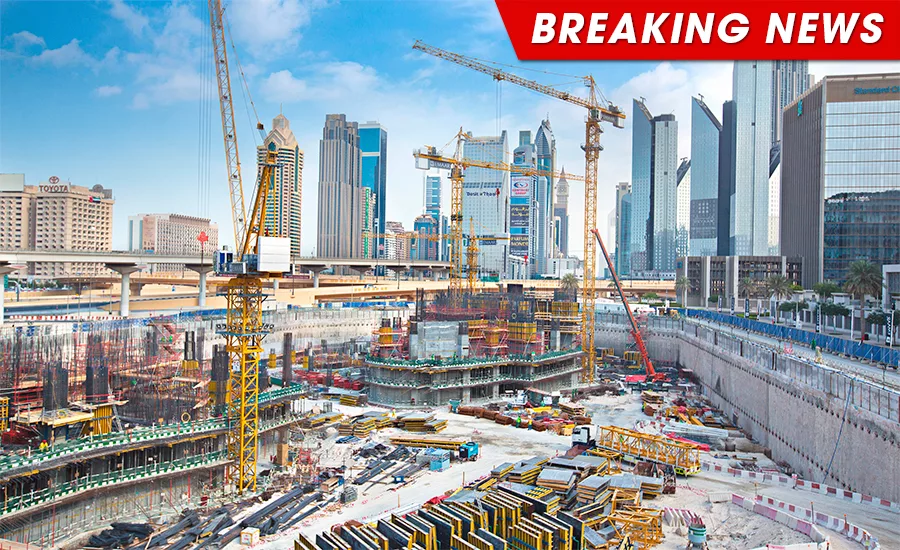
Owens Corning Spotlights Strategies to Support Life Safety
breaking news1
October 7, 2020

As Fire Prevention Week is observed from October 4-10, Owens Corning Thermafiber is spotlighting three strategies to help architects support a higher level of safety in commercial buildings. The recommendations come at a time when the western U.S. is experiencing historic wildfires and many parts of the Midwest are under burn bans.

Angie Ogino, Technical Services Leader at Owens Corning Thermafiber and Vice President of the International Firestop Council (IFC) and Fire Safe North America (FSNA), recommends three strategies to support passive life safety efforts in commercial buildings:

  1. Specify Mineral Wool in the Exterior Wall Assembly: Mineral wool, tested specifically for perimeter fire containment (PFC) and continuous insulation (ci), provides fire resistance to the exterior wall assembly. Mineral wool for the perimeter application has demonstrated fire resistance in testing at temperatures exceeding 2000°F (1,093°C). Such performance is critical in high-rise structures and in buildings, such as hospitals, where egress may be more difficult for occupants.


In continuous insulation applications, architects must balance the International Building Code (IBC) requirement for non-combustible wall construction with the energy code requirement that buildings be wrapped in air/water-resistive barriers. These exterior claddings are often comprised of combustible materials. When a building’s enclosure is wrapped in combustible materials – for example, a combustible water-resistant barrier, or an aluminum composite or high-pressure laminate cladding – specifying mineral wool insulation may help assemblies pass the NFPA 285 fire test and protect life safety.

High-profile fires such as the 2005 Windsor Tower fire in Madrid, Spain, demonstrate why curtain walls should be protected to limit fire and smoke spread at joints between floors and exterior walls. As part of a building’s PFC system, mineral wool can limit the “leapfrog” effect. This term refers to when fire ascends a building by breaking out vision glass on one floor and leaping up a building’s exterior as the break-out effect is perpetuated floor by floor.

  1. Review Engineering Judgements and Use UL/Intertek-Approved Mineral Wool per E2307: Subtle variances in PFC assembly design may affect building performance in the event of a fire. The quality of engineering judgments (EJ), such as referencing a tested system that closely resembles the project details, can provide guidance in specifying the PFC assembly.


When a new building design or application deviates from a tested PFC system, the Thermafiber Insolutions® team can provide guidance based on years of testing and experience with assemblies around the globe. Over the past 50 years, Owens Corning® Thermafiber® has compiled an extensive library of tested assemblies to support architects in specifying components for PFC assemblies. Any PFC assembly decision should be based on a UL/Intertek approved system and include mineral wool tested to ASTM E2307 - 20, Standard Test Method for Determining Fire Resistance of Perimeter Fire Barriers Using Intermediate-Scale, Multi-story Test Apparatus.

  1. Specify building materials with the U.S. SAFETY Act Designation: While climate change is driving historic wildfires, sadly, acts of terrorism can also lead to fire. Following the tragic events of September 11, 2001, the U.S. Congress established the Support Anti-Terrorism by Fostering Effective Technologies (SAFETY) Act to help keep potentially life-saving technologies in the marketplace. Under the auspices of the Department of Homeland Security, the SAFETY Act limits liability for claims resulting from an act of terrorism. The Act applies to a wide range of building professionals, including architects, engineers, contractors, curtain wall manufacturers, and building owners. In 2017, Owens Corning became the first insulation manufacturer to be publicly listed with the Department of Homeland Security as having technology carrying the SAFETY Act designation.


While Fire Prevention Week is an annual observance, the safety threat posed by fire knows no seasonality. A series of high-profile fires in recent years has raised the question of whether fire-risk maps, zoning, and building codes should be reevaluated. An article in the September 12, 2020 issue of The Economist reports, “Fire-risk maps and zoning, which determine who must follow building codes, are in desperate need of a rethink. Among other things, they consider urbanized areas ‘unburnable,’ which ignores science showing that the majority of buildings catch fire when flying embers are blown a mile or more away from the flaming vegetation.”

While code changes take time, architects can introduce practices that support a life safety strategy into today’s designs. Three effective strategies to support life safety are 1: Specify mineral wool; 2: Review engineering judgements and choose an assembly tested to E2307; and 3: Specify materials carrying the U.S. SAFETY Act designation.

KEYWORDS: commercial buildings fire resistance manufacturing

Share This Story

Looking for a reprint of this article?
From high-res PDFs to custom plaques, order your copy today!


Recommended Content

JOIN TODAY
to unlock your recommendations.

Already have an account? Sign In

  • bar graph shows LEED v4/LEED v5/LEED v6 in various colors

    When Will LEED v4 / v4.1 and LEED v5 Expire?

    The latest version of the LEED rating system, LEED v5, is...
    Sustainability
    By: Daniel Overbey
  • Celebrating Women In AEC-2026

    Celebrating Women in The AEC Industry Part 1

    A round-up of women in the design, engineering and...
    Sustainability
    By: Lindsay Lewis
  • KEE membrane application on a roof

    A Beginner’s Guide to Single-Ply Roofing Membranes

    While PVC and TPO appear extremely similar, the chemistry...
    Low-Slope Roofs
    By: Peter Gross
Manage My Account
  • Sign up for the Newsletter
  • Online Registration
  • Manage My Preferences
  • Registration Customer Service

More Videos

Sponsored Content

Sponsored Content is a special paid section where industry companies provide high quality, objective, non-commercial content around topics of interest to the Building Enclosure audience. All Sponsored Content is supplied by the advertising company and any opinions expressed in this article are those of the author and not necessarily reflect the views of Building Enclosure or its parent company, BNP Media. Interested in participating in our Sponsored Content section? Contact your local rep!

close
  • 2 construction workers and a DEXcell panel
    Sponsored byDEXcell Roof Boards

    Designing Low-Slope Roofs for Resilience

  • Bell Bank headquarters in Fargo, North Dakota
    Sponsored bySto Corp.

    Drained and Back-Ventilated Rainscreens vs Pressurized-Equalized Rainscreens

  • A construction worker using DEXcell roof boards
    Sponsored byDEXcell Roof Boards

    The Hidden Strength of Low-Slope Roof Systems: Why Roof Cover Boards Matter

Popular Stories

construction industry workers in hard hats stand around a city scape

Construction Industry Revolts Over New CSI Licensing Plan

graph shows green, orange and red dot lines going up

LEED v5 and the Cost Impacts of ASHRAE Standard 90.1-2019

2 construction workers and a DEXcell panel

Designing Low-Slope Roofs for Resilience

Building Enclosure Newsletter

BE Poll

Events

April 9, 2026

Strategies for High-Performance Below-Grade Waterproofing

Credits: 1 AIA LU/HSW ; 1 IIBEC CEH; 0.1 IACET CEU

On-Demand Designing a high-performance building enclosure requires more than just surface-level protection; it demands a rigorous, performance-based mastery of below-grade water and gas mitigation. This discussion will provide an expert-level analysis of below-grade waterproofing within the comprehensive framework of the high-performance building enclosure.

April 28, 2026

Roof Design Considerations That Prevent Installation Failures and Change Orders

Credit: 1 AIA LU/HSW; 1 IIBEC CEH; 0.1 ICC CEU

On-Demand This course provides visual examples of actual field conditions. Some good, some not so good; along with design suggestions that can cut installation costs and reduce construction change orders. Upon completion of this course, you will have a better understanding of the requirements the roofing contractor must meet to provide the specified roofing system warranty, and long-term value to the owner.

View All Submit An Event

Products

Plaster and Drywall Assemblies Manual

Plaster and Drywall Assemblies Manual

This is a comprehensive manual that goes beyond codes and standards, providing expert guidance in design, detailing, material selection and troubleshooting for plaster and drywall.

See More Products

Related Articles

  • 1.jpg

    Owens Corning Spotlights Innovation and the Future of Sustainable Commercial Buildings

    See More
  • Supporting Life Safety in Low Spandrel Designs

    PODCAST: Supporting Life Safety in Low Spandrel Designs

    See More
  • NFPA

    The Fire Protection Research Foundation to Host Free Fire and Life Safety Webinar Series

    See More

Related Products

See More Products
  • facility.jpg

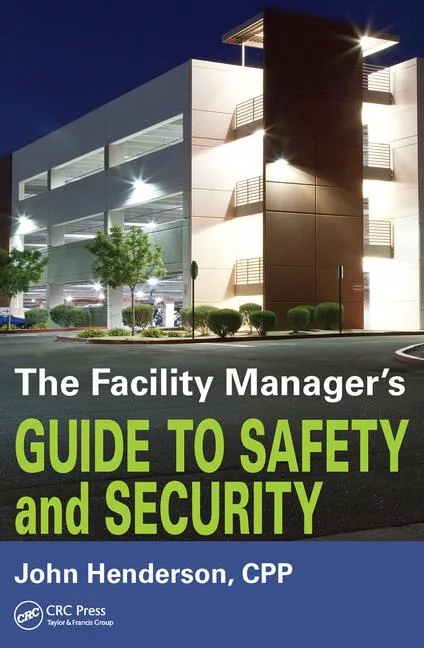
    The Facility Manager's Guide to Safety and Security

  • heating cooling.jpg

    Heating, Cooling, Lighting: Sustainable Design Strategies Towards Net Zero Architecture, 5th Edition

  • 0470872616.jpg

    Sustainable Renovation: Strategies for Commercial Building Systems and Envelope

See More Products

Events

View AllSubmit An Event
  • April 30, 2026

    Where Energy Efficiency Meets Life Safety: Polyiso CI and the Critical Role of NFPA 285

    Credits: 1 AIA LU/HSW; 1 IIBEC CEH; 0.1 ICC CEU On-Demand This presentation delivers a comprehensive look at the performance advantages of continuous insulation, with a special focus on polyisocyanurate (polyiso CI) solutions.
View AllSubmit An Event
×

Enhance your expertise with unparalleled insights.

Join thousands of building professionals today. Shouldn’t you know what they know?

SUBSCRIBE TODAY!
  • RESOURCES
    • Advertise
    • Contact Us
    • Store
    • Want More
  • SIGN UP TODAY
    • Create Account
    • Newsletter
    • Customer Service
    • Manage Preferences
  • SERVICES
    • Marketing Services
    • Reprints
    • Market Research
    • List Rental
    • Survey/Respondent Access
  • STAY CONNECTED
    • LinkedIn
    • Facebook
    • Instagram
    • YouTube
    • X
  • PRIVACY
    • PRIVACY POLICY
    • TERMS & CONDITIONS
    • DO NOT SELL MY PERSONAL INFORMATION
    • PRIVACY REQUEST
    • ACCESSIBILITY

Copyright ©2026. All Rights Reserved BNP Media, Inc. and BNP Media II, LLC.

Design, CMS, Hosting & Web Development :: ePublishing