Building Enclosure logo
search
cart
facebook twitter linkedin youtube instagram Spotify Podcasts Apple Podcasts Spotify Podcasts Apple Podcasts
  • Sign In
  • Create Account
  • Sign Out
  • My Account
Building Enclosure logo
  • NEWS
    • Breaking News
  • SECTIONS
    • Columns
    • Project Profiles
    • Trade Shows
    • Sponsor Insights
  • SYSTEM DESIGNS
    • Low-Slope Roofs
    • Pitched Roofs
    • Metal Roofing Materials
    • Waterproofing
    • Sustainability
    • Insulation
    • Exterior Claddings
    • Wall Systems
    • Building Envelope
  • BLOG
    • The BE Blog
  • MEDIA
    • Podcasts
    • Webinars
    • Quiz
    • Videos
    • Polls
    • Interactive Spotlights
    • Newsletter
    • Photo Galleries
  • DIRECTORIES
    • Directory: Blue Book
    • Directory: Roofing Resource
  • PRODUCTS
  • TECHNICAL
    • Codes
      • Waterproofing
      • Roofing
    • Details
      • Waterproofing
      • Roofing
  • CONTINUING ED
  • ABOUT
    • Advertise
      • Editorial Calendar
    • Contact
    • eMag Archive Issues
  • SIGN UP!

Insulation in Concealed Spaces

The benefits of using insulation as passive fire protection in multifamily buildings.
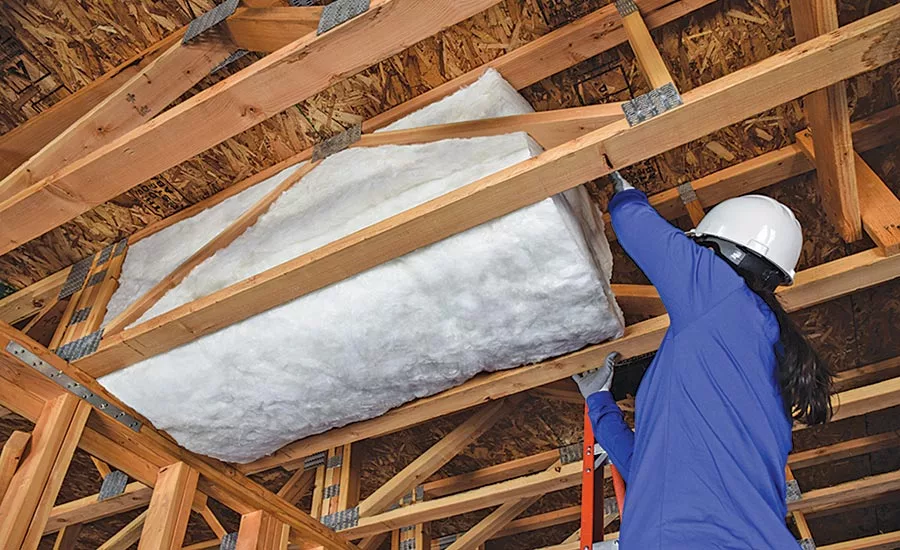
Insulation in Concealed Spaces
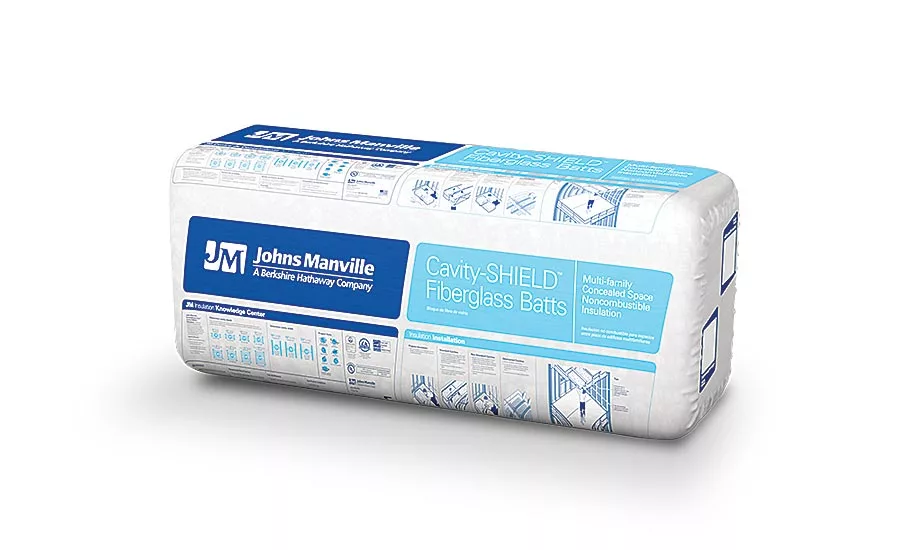
Cavity-Shield fiberglass batts
Insulation in Concealed Spaces
Cavity-Shield fiberglass batts
Insulation in Concealed Spaces
June 5, 2019

When it comes to designing and building a multifamily structure, building owners and developers are faced with many choices, each with their own unique challenges. One key component and code-regulated decision is addressing fire protection in concealed spaces or the open area between each floor of the building, as required by the National Fire Protection Association. While indoor sprinklers are a common option for fulfilling active fire protection requirements, fiberglass insulation fulfills the same requirements as a passive fire protectant and is a solution growing in popularity due to its ability to deliver additional benefits.

Here are a few factors for building owners to consider when meeting project goals and scope. They should also consult with their architect and builder to determine the best fire protection strategy for concealed spaces.


Added Benefit of Sound Protection

With many residents living in a multifamily structure, tenants expect a certain level of privacy, similar to what they would experience in their own single-unit home. Coupled with requirements laid out in the International Building Code and International Residential Code, developers are required to provide an effective sound barrier between floors, often choosing fiberglass insulation as the solution.

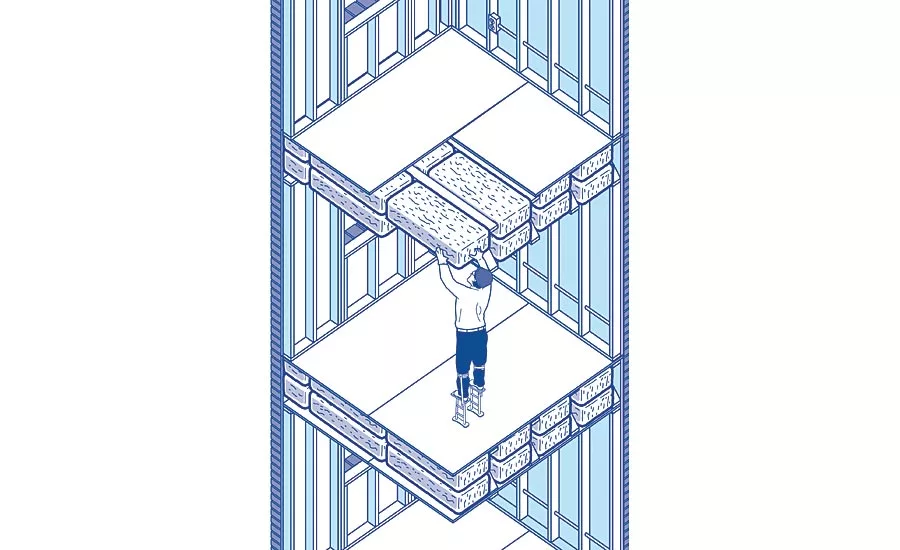
This provides an opportunity to use insulation as both the sound barrier and as a passive fire protectant when placed in the cavity of a concealed space between floors, saving both money and install time. Some fiberglass insulation solutions, such as the formaldehyde-free Cavity-SHIELD from Johns Manville, meet NFPA 13 requirements for limiting potential flame spread between and through floors, which eliminates the need for sprinkler systems. It’s important to note that sound and fire protection have varying requirements for insulation thickness—please refer to local and national building regulations for exact specifications.


Simple Installation

The installation process for fiberglass batts is less time and less labor intensive. Batts are easily installed by simply placing them into the cavity, and fasteners can be used to hold them in place if necessary. Plus, fiberglass batt insulation won’t settle throughout its usage life. Conversely, a sprinkler installation can be a bit more complex as it can involve multiple contractors—like a plumber and fire sprinkler contractor—to set up additional water lines and piping. Additionally, if a pipe bursts or a sprinkler accidentally releases, additional maintenance would be required for any resulting water damage, mold, or other follow-on issues.

Despite a simpler install process, quality installation is key. Consult an insulation contractor to ensure the install job meets NFPA 13 code requirements and does not exceed the maximum air gap of 2 inches (50 millimeters).


Readily Available Materials

Insulation is known to be a readily available material and using this product as passive fire protection in the concealed spaces of multifamily residential buildings can also be significantly more cost effective than installing sprinkler systems. For example, sprinklers can also incur many long-term maintenance costs if a leak or malfunction occurs, which can mean a labor-intensive repair project requiring one or more skilled contractors.

Section 903.2 of IBC specifies the cases in which sprinklers are required in multifamily buildings and this code should be referred to when choosing proper fire protection measures. If insulation is used in concealed spaces between floors, sprinklers will still be required in actual units and common areas.

Every structure has varying needs and builder preferences. When considering if fiberglass insulation is a suitable solution for passive fire protection in the concealed space between floors of multifamily structures, it’s important to understand its benefits and advantages, like acoustical performance, and how it helps meet code requirements. There is no one-size-fits-all approach when it comes to fire protection and all project scopes and components must be considered on a project-by-project basis. W&C

This article was originally posted on www.wconline.com.
KEYWORDS: EIFS fiberglass fire resistance

Share This Story

Looking for a reprint of this article?
From high-res PDFs to custom plaques, order your copy today!


Recommended Content

JOIN TODAY
to unlock your recommendations.

Already have an account? Sign In

  • bar graph shows LEED v4/LEED v5/LEED v6 in various colors

    When Will LEED v4 / v4.1 and LEED v5 Expire?

    The latest version of the LEED rating system, LEED v5, is...
    Sustainability
    By: Daniel Overbey
  • Celebrating Women In AEC-2026

    Celebrating Women in The AEC Industry Part 1

    A round-up of women in the design, engineering and...
    Sustainability
    By: Lindsay Lewis
  • KEE membrane application on a roof

    A Beginner’s Guide to Single-Ply Roofing Membranes

    While PVC and TPO appear extremely similar, the chemistry...
    Low-Slope Roofs
    By: Peter Gross
Manage My Account
  • Sign up for the Newsletter
  • Online Registration
  • Manage My Preferences
  • Registration Customer Service

More Videos

Sponsored Content

Sponsored Content is a special paid section where industry companies provide high quality, objective, non-commercial content around topics of interest to the Building Enclosure audience. All Sponsored Content is supplied by the advertising company and any opinions expressed in this article are those of the author and not necessarily reflect the views of Building Enclosure or its parent company, BNP Media. Interested in participating in our Sponsored Content section? Contact your local rep!

close
  • 2 construction workers and a DEXcell panel
    Sponsored byDEXcell Roof Boards

    Designing Low-Slope Roofs for Resilience

  • Bell Bank headquarters in Fargo, North Dakota
    Sponsored bySto Corp.

    Drained and Back-Ventilated Rainscreens vs Pressurized-Equalized Rainscreens

  • A construction worker using DEXcell roof boards
    Sponsored byDEXcell Roof Boards

    The Hidden Strength of Low-Slope Roof Systems: Why Roof Cover Boards Matter

Popular Stories

a man wearing a mask installs insulation into a wall system

Quiet Rooms and Healthier Air: A Second Look at What Goes Inside the Wall Cavity

Canalino Elementary School and Canalino Family School exterior

Daylighting Design to Support Rapidly Growing Trend in Modular Building Construction

construction workers on a roof, plane flies in background

Why Specifications Are Becoming the Next Critical Layer of Construction Compliance

Building Enclosure Newsletter

BE Poll

Events

June 17, 2025

Addressing Condensation in Low-Slope Roof Assemblies

Credits: 1 AIA LU/HSW; 0.1 ICC CEU; 1 IIBEC CEH; 0.1 IACET CEU

On Demand In modern roofing systems, vapor retarders and air barriers do more than just minimize air leakage—they’re essential to maximizing performance and longevity. This engaging course dives into the next generation of moisture control: permeable vapor retarders and air barriers. Discover how these cutting-edge technologies are transforming low-slope roofing assemblies by improving energy efficiency, managing moisture, and boosting wind uplift resistance.

April 9, 2026

Strategies for High-Performance Below-Grade Waterproofing

Credits: 1 AIA LU/HSW ; 1 IIBEC CEH; 0.1 IACET CEU

On-Demand Designing a high-performance building enclosure requires more than just surface-level protection; it demands a rigorous, performance-based mastery of below-grade water and gas mitigation. This discussion will provide an expert-level analysis of below-grade waterproofing within the comprehensive framework of the high-performance building enclosure.

View All Submit An Event

Products

Plaster and Drywall Assemblies Manual

Plaster and Drywall Assemblies Manual

This is a comprehensive manual that goes beyond codes and standards, providing expert guidance in design, detailing, material selection and troubleshooting for plaster and drywall.

See More Products

Related Articles

  • insulation r-value

    Clarifying Slab-on-Grade Insulation in ASHRAE Standard 90.1

    See More
  • Enverge Smith college sprayer

    Spray Foam Insulation in Action

    See More
  • continuous insulation CI

    Continuous Insulation in Building Envelope Design

    See More

Related Products

See More Products
  • 9780128207918.jpg

    Eco-efficient Materials for Reducing Cooling Needs in Buildings and Construction 1st Edition

  • energy modeling.jpg

    Energy Modeling and Computations in the Building Envelope

  • interior design.jpg

    Building Systems in Interior Design

See More Products
×

Enhance your expertise with unparalleled insights.

Join thousands of building professionals today. Shouldn’t you know what they know?

SUBSCRIBE TODAY!
  • RESOURCES
    • Advertise
    • Contact Us
    • Store
    • Want More
  • SIGN UP TODAY
    • Create Account
    • Newsletter
    • Customer Service
    • Manage Preferences
  • SERVICES
    • Marketing Services
    • Reprints
    • Market Research
    • List Rental
    • Survey/Respondent Access
  • STAY CONNECTED
    • LinkedIn
    • Facebook
    • Instagram
    • YouTube
    • X
  • PRIVACY
    • PRIVACY POLICY
    • TERMS & CONDITIONS
    • DO NOT SELL MY PERSONAL INFORMATION
    • PRIVACY REQUEST
    • ACCESSIBILITY

Copyright ©2026. All Rights Reserved BNP Media, Inc. and BNP Media II, LLC.

Design, CMS, Hosting & Web Development :: ePublishing