Building Enclosure logo
search
cart
facebook twitter linkedin youtube instagram Spotify Podcasts Apple Podcasts Spotify Podcasts Apple Podcasts
  • Sign In
  • Create Account
  • Sign Out
  • My Account
Building Enclosure logo
  • NEWS
    • Breaking News
  • SECTIONS
    • Columns
    • Project Profiles
    • Trade Shows
    • Sponsor Insights
  • SYSTEM DESIGNS
    • Low-Slope Roofs
    • Pitched Roofs
    • Metal Roofing Materials
    • Waterproofing
    • Sustainability
    • Insulation
    • Exterior Claddings
    • Wall Systems
    • Building Envelope
  • BLOG
    • The BE Blog
  • MEDIA
    • Podcasts
    • Webinars
    • Quiz
    • Videos
    • Polls
    • Interactive Spotlights
    • Newsletter
    • Photo Galleries
  • DIRECTORIES
    • Directory: Blue Book
    • Directory: Roofing Resource
  • PRODUCTS
  • TECHNICAL
    • Codes
      • Waterproofing
      • Roofing
    • Details
      • Waterproofing
      • Roofing
  • CONTINUING ED
  • ABOUT
    • Advertise
      • Editorial Calendar
    • Contact
    • eMag Archive Issues
  • SIGN UP!
Breaking News

SmithGroup Forecasts Trends for Design in the 2020s
SmithGroup
December 20, 2019

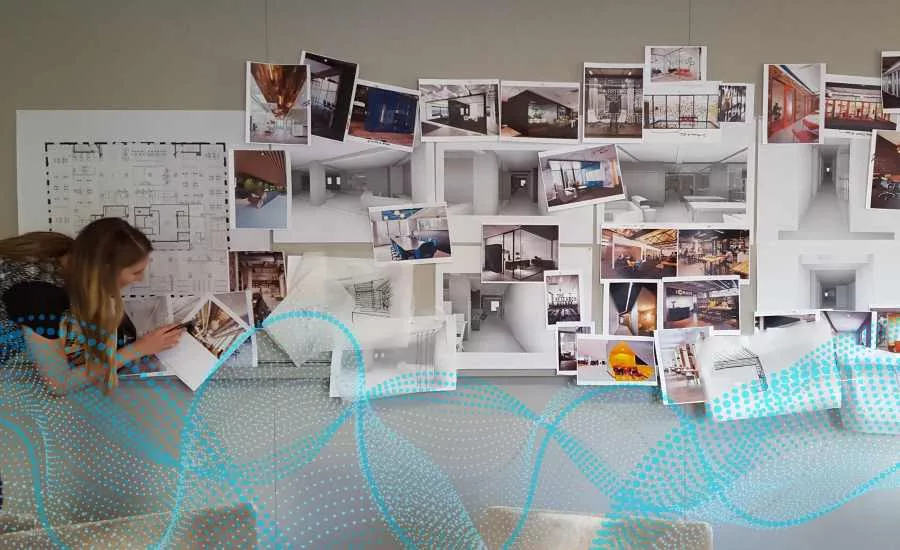
As the oldest continually operating architecture and engineering firm in the country, SmithGroup has seen many changes in the world of design. The firm is always focused on its mission to Design a Better Future, so at the dawn of the 2020s they are anticipating what the coming decade will bring to the design industry and profession. As designers, SmithGroup believes that they can be more than advocates and advisors – they believe that they can be lobbyists and leaders for monumental changes that will have a broad impact on our communities and society. 

In order to get a broad perspective on what the future might look like, the firm recognized that there was no better resource to tap than their team of 1,300 design professionals whose expertise stretches across a wide breadth of disciplines. Insights came from entry level designers to the firm’s most senior leaders and everyone in between, leading to a vision that anticipates four major drivers for design in the decade ahead: 

Design & Technology 
Like most professions, technology has had a major impact on design. This will increase at a more rapid pace in the decade ahead and will affect every stage of the design process. 

At the early stages of design, “visualization tools will become more realistic and immersive, leading to a future where collaboration between the owner, contractor and designers will be far more integrated,” predicts Wayne Barger, health practice director. 

As automation and the Internet of Things (IoT) continue to grow, designers are looking at how they can enable the experience that people have in the built environment and find ways to make buildings more responsive to occupants. “The connected environment along with personal technologies will provide ever-increasing customization for occupants,” says chief information officer Derek White. 

All of this technology leaves designers with tremendous amounts of data, yet most firms are just beginning to figure out what to do with it. “Those firms that can identify the most creative ways to visualize and simplify increasingly inordinate amounts of diverse data down to its most essential insights will be the ones to emerge as leaders within this new decade,” says Lauren Leighty, a landscape architect and campus studio leader in the firm’s Ann Arbor office. 

Read more about SmithGroup’s predictions for how technology will impact design in the next ten years.

Design & Climate 
While technology holds a high degree of promise for the design industry, the issue of climate change presents a tremendous risk in the decade ahead. “All designers will need to become more adept at understanding challenges that are not only faced by our individual discipline, but that touch multiple disciplines and require a truly integrated approach,” says Jessica Janzen, an architect in Dallas. 

The way that energy resources are used needs to continue to evolve – practices that are the exception will become the norm. “Everything we design in 2020 and beyond should be net-zero energy or net-zero energy capable, achieving the maximum energy efficiency possible while being designed to accommodate future renewable systems,” says Greg Mella, corporate director of sustainability. 

“Buildings will have to be self-sustaining, regenerative and adaptable to human needs while still harmonious with the natural environment and the changes it brings with it,” asserts Sven Shockey, corporate design director in the Washington, DC office. 

The good news is that thoughtful design can make a difference. “The challenge for the industry is to not just design spaces that prevent impacts of disasters, but understand what new design environments may be,” says Laura Holman, an architect in Chicago. 

Read more about how the climate crisis will influence the design industry in the 2020s.

Design & Cities 
Advancements in technology and climate changes will also have a significant impact in the shape of cities in the decade ahead. Urban systems must be prepared for these changes. “Cities, institutions and communities will turn their attention away from building-scale sustainability to focus on adaptation and implementation of more equitable support structures within communities. We’ll be designing for massive adaptation strategies at all scales,” claims urban systems strategist Steven Baumgartner in SmithGroup’s Pittsburgh office. 

The impact of technology on transportation, will cause a major disruption in the way we cities are designed. Urban design co-director Michael Johnson agrees, “As new technologies and innovative business models pave the way for more resilient transportation solutions, alternative multimodal transit systems will become more popular.” 

Read more about  the firm’s forecast for the impact of cities in the next decade.

Design & Social Change 
While technology, climate and cities are all changing, the people will need to change too. The 2020s will be an era of challenging systemic inequalities and prejudices and accepting the richness of experience our diverse society presents. The firm anticipates seeing, “inclusive design for buildings and sites that will challenge long-held, but veiled, attitudes toward historically marginalized and at-risk identities,” says Lori Singleton, corporate design director in Ann Arbor. 

Designers will grapple with how spaces either promote or obstruct equity and will need to incorporate critical race theory, intersectionality and other social theories to decode existing spatial inequities and create more inclusive places. “Design will address gender and racial equity in the built environment,” says Merrill St. Leger, urban designer for SmithGroup in Washington, DC. 

As designers who are influencing the built environment for years to come, it will be critical to ensure that all voices are heard. “Our industry must widen the net of inclusion. Design affects all of us, and must be made by all of us,” says John Moorhead, architect in the firm’s Boston office. 

Read more about how design will respond to social change in the 2020s.

In the days and weeks ahead, SmithGroup will be publishing more in-depth content about their vision for the 2020s in the Collections section of smithgroup.com. Be sure to check back and learn more about their thoughts on what it will take to Design a Better Future in the 2020s. https://www.smithgroup.com/the-decade-ahead-design-in-2020-and-beyond.

KEYWORDS: architecture firms construction climate design firm

Share This Story

Looking for a reprint of this article?
From high-res PDFs to custom plaques, order your copy today!


Recommended Content

JOIN TODAY
to unlock your recommendations.

Already have an account? Sign In

  • bar graph shows LEED v4/LEED v5/LEED v6 in various colors

    When Will LEED v4 / v4.1 and LEED v5 Expire?

    The latest version of the LEED rating system, LEED v5, is...
    Sustainability
    By: Daniel Overbey
  • Celebrating Women In AEC-2026

    Celebrating Women in The AEC Industry Part 1

    A round-up of women in the design, engineering and...
    Sustainability
    By: Lindsay Lewis
  • KEE membrane application on a roof

    A Beginner’s Guide to Single-Ply Roofing Membranes

    While PVC and TPO appear extremely similar, the chemistry...
    Low-Slope Roofs
    By: Peter Gross
Manage My Account
  • Sign up for the Newsletter
  • Online Registration
  • Manage My Preferences
  • Registration Customer Service

More Videos

Sponsored Content

Sponsored Content is a special paid section where industry companies provide high quality, objective, non-commercial content around topics of interest to the Building Enclosure audience. All Sponsored Content is supplied by the advertising company and any opinions expressed in this article are those of the author and not necessarily reflect the views of Building Enclosure or its parent company, BNP Media. Interested in participating in our Sponsored Content section? Contact your local rep!

close
  • 2 construction workers and a DEXcell panel
    Sponsored byDEXcell Roof Boards

    Designing Low-Slope Roofs for Resilience

  • Bell Bank headquarters in Fargo, North Dakota
    Sponsored bySto Corp.

    Drained and Back-Ventilated Rainscreens vs Pressurized-Equalized Rainscreens

  • A construction worker using DEXcell roof boards
    Sponsored byDEXcell Roof Boards

    The Hidden Strength of Low-Slope Roof Systems: Why Roof Cover Boards Matter

Popular Stories

construction industry workers in hard hats stand around a city scape

Construction Industry Revolts Over New CSI Licensing Plan

Canalino Elementary School and Canalino Family School exterior

Daylighting Design to Support Rapidly Growing Trend in Modular Building Construction

construction workers on a roof, plane flies in background

Why Specifications Are Becoming the Next Critical Layer of Construction Compliance

Building Enclosure Newsletter

BE Poll

Events

June 17, 2025

Addressing Condensation in Low-Slope Roof Assemblies

Credits: 1 AIA LU/HSW; 0.1 ICC CEU; 1 IIBEC CEH; 0.1 IACET CEU

On Demand In modern roofing systems, vapor retarders and air barriers do more than just minimize air leakage—they’re essential to maximizing performance and longevity. This engaging course dives into the next generation of moisture control: permeable vapor retarders and air barriers. Discover how these cutting-edge technologies are transforming low-slope roofing assemblies by improving energy efficiency, managing moisture, and boosting wind uplift resistance.

April 9, 2026

Strategies for High-Performance Below-Grade Waterproofing

Credits: 1 AIA LU/HSW ; 1 IIBEC CEH; 0.1 IACET CEU

On-Demand Designing a high-performance building enclosure requires more than just surface-level protection; it demands a rigorous, performance-based mastery of below-grade water and gas mitigation. This discussion will provide an expert-level analysis of below-grade waterproofing within the comprehensive framework of the high-performance building enclosure.

View All Submit An Event

Products

Plaster and Drywall Assemblies Manual

Plaster and Drywall Assemblies Manual

This is a comprehensive manual that goes beyond codes and standards, providing expert guidance in design, detailing, material selection and troubleshooting for plaster and drywall.

See More Products

Related Articles

  • Trends and Considerations for Design of Sustainable Roofing Systems

    See More
  • Is There a Place for ‘Design Freedom’ in Performance-Driven Design?

    See More
  • PCL - Construction Outlook - TOF (002).jpg

    PCL Construction Forecasts Key Trends Shaping U.S. Construction in 2024

    See More

Related Products

See More Products
  • ecology.jpg

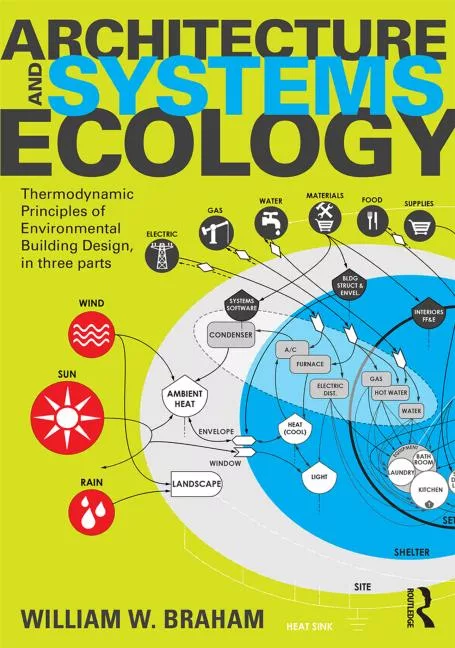
    Architecture and Systems Ecology: Thermodynamic Principles of Environmental Building Design, in three parts

  • interior design.jpg

    Building Cost Planning for the Design Team

  • 41G-JcZWT+L._SX342_SY445_.jpg

    The Architect's Studio Companion: Rules of Thumb for Preliminary Design, 7th Edition

See More Products

Events

View AllSubmit An Event
  • August 12, 2025

    Sustainable Steel Framing in the Building Envelope

    Credits: 1 AIA LU/HSW; 0.1 ICC CEU; 1 IIBEC CEH On-Demand In this webinar, participants will get a taste of what it takes to make steel today, in the cleaner, high-tech factories that are very different from the steel mills of decades ago, and will see how their specification language and design practices can help reduce the carbon footprint of buildings using steel framing.
View AllSubmit An Event
×

Enhance your expertise with unparalleled insights.

Join thousands of building professionals today. Shouldn’t you know what they know?

SUBSCRIBE TODAY!
  • RESOURCES
    • Advertise
    • Contact Us
    • Store
    • Want More
  • SIGN UP TODAY
    • Create Account
    • Newsletter
    • Customer Service
    • Manage Preferences
  • SERVICES
    • Marketing Services
    • Reprints
    • Market Research
    • List Rental
    • Survey/Respondent Access
  • STAY CONNECTED
    • LinkedIn
    • Facebook
    • Instagram
    • YouTube
    • X
  • PRIVACY
    • PRIVACY POLICY
    • TERMS & CONDITIONS
    • DO NOT SELL MY PERSONAL INFORMATION
    • PRIVACY REQUEST
    • ACCESSIBILITY

Copyright ©2026. All Rights Reserved BNP Media, Inc. and BNP Media II, LLC.

Design, CMS, Hosting & Web Development :: ePublishing