Building Enclosure logo
search
cart
facebook twitter linkedin youtube instagram Spotify Podcasts Apple Podcasts Spotify Podcasts Apple Podcasts
  • Sign In
  • Create Account
  • Sign Out
  • My Account
Building Enclosure logo
  • NEWS
    • Breaking News
  • SECTIONS
    • Columns
    • Project Profiles
    • Trade Shows
    • Sponsor Insights
  • SYSTEM DESIGNS
    • Low-Slope Roofs
    • Pitched Roofs
    • Metal Roofing Materials
    • Waterproofing
    • Sustainability
    • Insulation
    • Exterior Claddings
    • Wall Systems
    • Building Envelope
  • BLOG
    • The BE Blog
  • MEDIA
    • Podcasts
    • Webinars
    • Quiz
    • Videos
    • Polls
    • Interactive Spotlights
    • Newsletter
    • Photo Galleries
  • DIRECTORIES
    • Directory: Blue Book
    • Directory: Roofing Resource
  • PRODUCTS
  • TECHNICAL
    • Codes
      • Waterproofing
      • Roofing
    • Details
      • Waterproofing
      • Roofing
  • CONTINUING ED
  • ABOUT
    • Advertise
      • Editorial Calendar
    • Contact
    • eMag Archive Issues
  • SIGN UP!
Breaking News

House of Representatives Passes Disaster Recovery Funds Bill

Breaking News 4
November 19, 2019

The U.S. House of Representatives passed the Reforming Disaster Recovery Act (H.R. 3702), requiring that new construction and rehabilitation funded through the U.S. Department of Housing and Urban Development’s Community Development Block Grant disaster recovery program (CDBG-DR) adhere to the latest building codes. The International Code Council worked closely with House leadership on the bill.

The CDBG-DR program provides flexible funding to states and local governments to address unmet recovery needs related to housing, infrastructure and economic revitalization, focusing assistance toward low- and moderate-income communities. CDBG-DR is the largest post-disaster recovery program not operated by the Federal Emergency Management Agency (FEMA). Congress provided $35.4 billion for the program in response to the damage caused by Hurricanes Maria, Irma and Harvey.

Studies consistently show that adopting and applying up to date codes is one of the most effective mitigation measures a community can undertake. A recent study by the congressionally-established National Institute of Building Science found that using the latest model building codes provides a benefit of $11 for every $1 invested through earthquake, flood and wind mitigation benefits, with a $4 to $1 wildfire mitigation benefit.

Despite the demonstrated benefits of using up to date codes, their adoption is not consistent across the country. According to FEMA, two-thirds of communities facing hazard risk have not adopted hazard resistant codes. This means that the safety and resilience requirements for federally supported reconstruction investments currently varies considerably. The Reforming Disaster Recovery Act addresses this challenge by establishing minimum standards for post-disaster rebuilding, ensuring all communities and their residents are provided with the same protections regardless of where they are located. The bill couples the code requirement with additional funding to train building officials, fire officials and the construction industry on the latest building codes.

“Tying infrastructure investments to code requirements is one of the best ways to protect people and mitigate damage from future disasters,” said Code Council Chief Executive Dominic Sims, CBO. “The Reforming Disaster Recovery Act ensures one of the United States’ largest recovery programs promotes safe, cost-effective and resilient construction.”

Requiring minimum building standards for federal infrastructure investments is an ongoing priority of the Code Council, its members and partners. For more information about the importance of updated building codes, see these resources:

  • Codes Save website: www.iccsafe.org/codes-save
  • National Mitigation Investment Strategy
  • A letter to Congressional leadership signed by 40 state and local emergency response, manufacturing, contractor, insurance, energy efficiency, engineering, design and resilience organizations 
  • A resolution by the Congressional Fire Services Institute 
  • An op-ed by bipartisan former FEMA Administrators and the Code Council
KEYWORDS: building codes natural disasters

Share This Story

Looking for a reprint of this article?
From high-res PDFs to custom plaques, order your copy today!


Recommended Content

JOIN TODAY
to unlock your recommendations.

Already have an account? Sign In

  • bar graph shows LEED v4/LEED v5/LEED v6 in various colors

    When Will LEED v4 / v4.1 and LEED v5 Expire?

    The latest version of the LEED rating system, LEED v5, is...
    Sustainability
    By: Daniel Overbey
  • Celebrating Women In AEC-2026

    Celebrating Women in The AEC Industry Part 1

    A round-up of women in the design, engineering and...
    Sustainability
    By: Lindsay Lewis
  • KEE membrane application on a roof

    A Beginner’s Guide to Single-Ply Roofing Membranes

    While PVC and TPO appear extremely similar, the chemistry...
    Low-Slope Roofs
    By: Peter Gross
Manage My Account
  • Sign up for the Newsletter
  • Online Registration
  • Manage My Preferences
  • Registration Customer Service

More Videos

Sponsored Content

Sponsored Content is a special paid section where industry companies provide high quality, objective, non-commercial content around topics of interest to the Building Enclosure audience. All Sponsored Content is supplied by the advertising company and any opinions expressed in this article are those of the author and not necessarily reflect the views of Building Enclosure or its parent company, BNP Media. Interested in participating in our Sponsored Content section? Contact your local rep!

close
  • 2 construction workers and a DEXcell panel
    Sponsored byDEXcell Roof Boards

    Designing Low-Slope Roofs for Resilience

  • Bell Bank headquarters in Fargo, North Dakota
    Sponsored bySto Corp.

    Drained and Back-Ventilated Rainscreens vs Pressurized-Equalized Rainscreens

  • A construction worker using DEXcell roof boards
    Sponsored byDEXcell Roof Boards

    The Hidden Strength of Low-Slope Roof Systems: Why Roof Cover Boards Matter

Popular Stories

construction industry workers in hard hats stand around a city scape

Construction Industry Revolts Over New CSI Licensing Plan

Canalino Elementary School and Canalino Family School exterior

Daylighting Design to Support Rapidly Growing Trend in Modular Building Construction

construction workers on a roof, plane flies in background

Why Specifications Are Becoming the Next Critical Layer of Construction Compliance

Building Enclosure Newsletter

BE Poll

Events

June 17, 2025

Addressing Condensation in Low-Slope Roof Assemblies

Credits: 1 AIA LU/HSW; 0.1 ICC CEU; 1 IIBEC CEH; 0.1 IACET CEU

On Demand In modern roofing systems, vapor retarders and air barriers do more than just minimize air leakage—they’re essential to maximizing performance and longevity. This engaging course dives into the next generation of moisture control: permeable vapor retarders and air barriers. Discover how these cutting-edge technologies are transforming low-slope roofing assemblies by improving energy efficiency, managing moisture, and boosting wind uplift resistance.

April 9, 2026

Strategies for High-Performance Below-Grade Waterproofing

Credits: 1 AIA LU/HSW ; 1 IIBEC CEH; 0.1 IACET CEU

On-Demand Designing a high-performance building enclosure requires more than just surface-level protection; it demands a rigorous, performance-based mastery of below-grade water and gas mitigation. This discussion will provide an expert-level analysis of below-grade waterproofing within the comprehensive framework of the high-performance building enclosure.

View All Submit An Event

Products

Plaster and Drywall Assemblies Manual

Plaster and Drywall Assemblies Manual

This is a comprehensive manual that goes beyond codes and standards, providing expert guidance in design, detailing, material selection and troubleshooting for plaster and drywall.

See More Products

Related Articles

  • breaking news1

    AIA Applauds Passage of Disaster Recovery Reform Act

    See More
  • Breaking News

    FEMA Strengthens Construction Standards for Disaster Recovery

    See More
  • Breaking News 4

    The ICC Applauds New Disaster Recovery Legislation

    See More

Related Products

See More Products
  • ecology.jpg

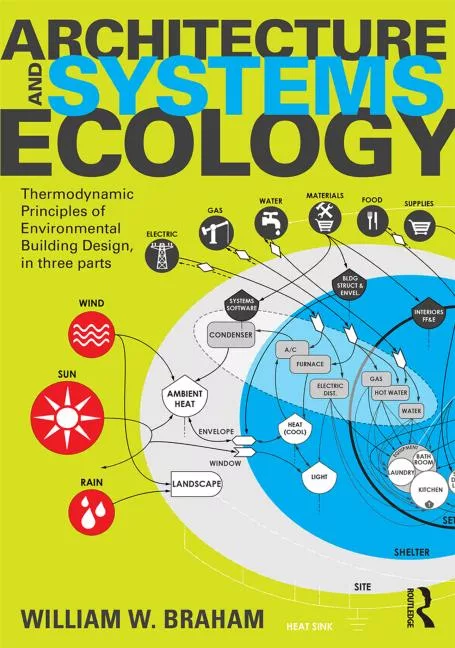
    Architecture and Systems Ecology: Thermodynamic Principles of Environmental Building Design, in three parts

  • 41G-JcZWT+L._SX342_SY445_.jpg

    The Architect's Studio Companion: Rules of Thumb for Preliminary Design, 7th Edition

  • 71lmKx8brKL._SY385_.jpg

    A Visual Dictionary of Architecture, 2nd Edition

See More Products

Events

View AllSubmit An Event
  • April 30, 2026

    Where Energy Efficiency Meets Life Safety: Polyiso CI and the Critical Role of NFPA 285

    Credits: 1 AIA LU/HSW; 1 IIBEC CEH; 0.1 ICC CEU On-Demand This presentation delivers a comprehensive look at the performance advantages of continuous insulation, with a special focus on polyisocyanurate (polyiso CI) solutions.
View AllSubmit An Event
×

Enhance your expertise with unparalleled insights.

Join thousands of building professionals today. Shouldn’t you know what they know?

SUBSCRIBE TODAY!
  • RESOURCES
    • Advertise
    • Contact Us
    • Store
    • Want More
  • SIGN UP TODAY
    • Create Account
    • Newsletter
    • Customer Service
    • Manage Preferences
  • SERVICES
    • Marketing Services
    • Reprints
    • Market Research
    • List Rental
    • Survey/Respondent Access
  • STAY CONNECTED
    • LinkedIn
    • Facebook
    • Instagram
    • YouTube
    • X
  • PRIVACY
    • PRIVACY POLICY
    • TERMS & CONDITIONS
    • DO NOT SELL MY PERSONAL INFORMATION
    • PRIVACY REQUEST
    • ACCESSIBILITY

Copyright ©2026. All Rights Reserved BNP Media, Inc. and BNP Media II, LLC.

Design, CMS, Hosting & Web Development :: ePublishing