Building Enclosure logo
search
cart
facebook twitter linkedin youtube instagram Spotify Podcasts Apple Podcasts Spotify Podcasts Apple Podcasts
  • Sign In
  • Create Account
  • Sign Out
  • My Account
Building Enclosure logo
  • NEWS
    • Breaking News
  • SECTIONS
    • Columns
    • Project Profiles
    • Trade Shows
    • Sponsor Insights
  • SYSTEM DESIGNS
    • Low-Slope Roofs
    • Pitched Roofs
    • Metal Roofing Materials
    • Waterproofing
    • Sustainability
    • Insulation
    • Exterior Claddings
    • Wall Systems
    • Building Envelope
  • BLOG
    • The BE Blog
  • MEDIA
    • Podcasts
    • Webinars
    • Quiz
    • Videos
    • Polls
    • Interactive Spotlights
    • Newsletter
    • Photo Galleries
  • DIRECTORIES
    • Directory: Blue Book
    • Directory: Roofing Resource
  • PRODUCTS
  • TECHNICAL
    • Codes
      • Waterproofing
      • Roofing
    • Details
      • Waterproofing
      • Roofing
  • CONTINUING ED
  • ABOUT
    • Advertise
      • Editorial Calendar
    • Contact
    • eMag Archive Issues
  • SIGN UP!
Low-Slope RoofsWaterproofing

Adding Value to Architecture
By Sean O’Keefe
Weber State University
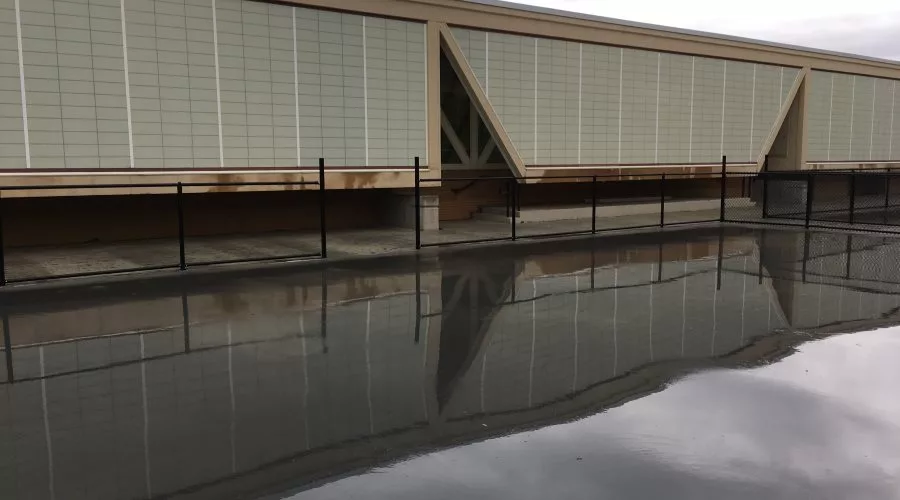
Before: Standing water on the roof of the building was a sure indicator of potential problems below as the sustained accumulation of water and weight isn’t ideal on any roof. Photo courtesy of MHTN Architects.
Weber State University
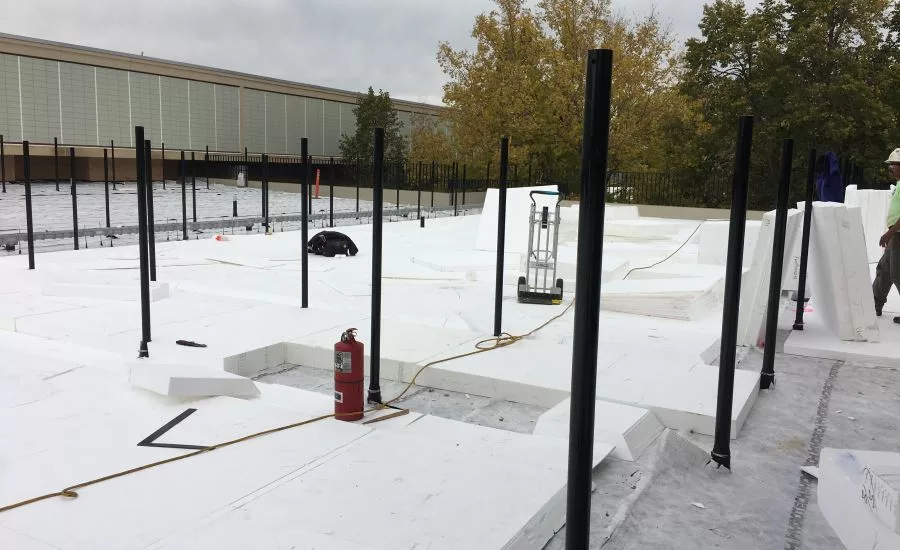
Molded polystyrene block from ACH Foam Technologies was used to fill the void between the roof and the new pickleball courts while also supporting controlled positive drainage across the overall surface. Photo courtesy of MHTN Architects.
Weber State University
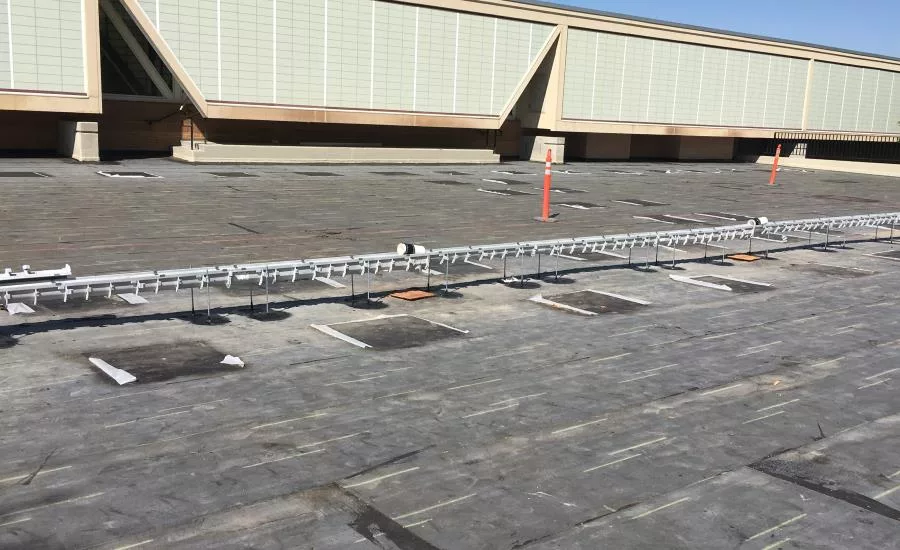
With the landscaped plaza removed, the rehabilitation of the roof’s waterproofing included repairing the structural steel below and integrating a completely new, warrantied, waterproofing system. Photo courtesy of MHTN Architects.
Weber State University
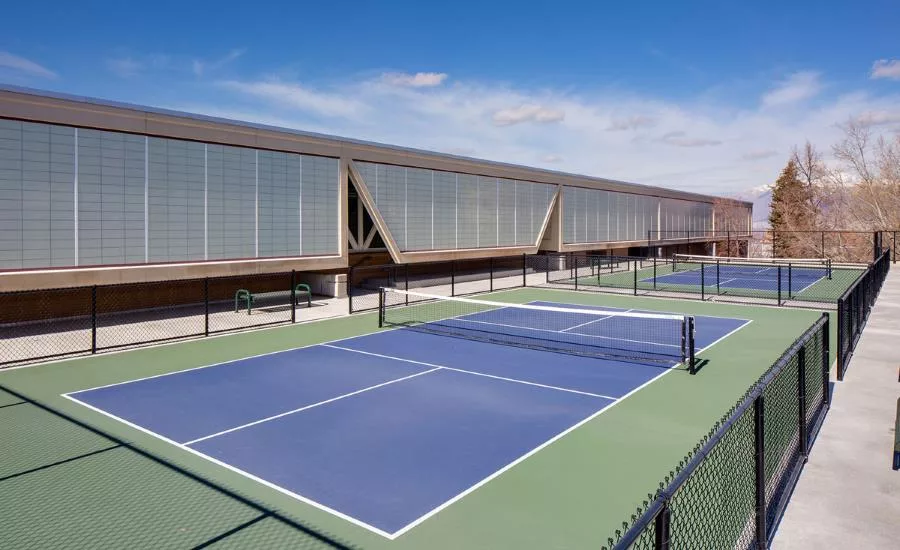
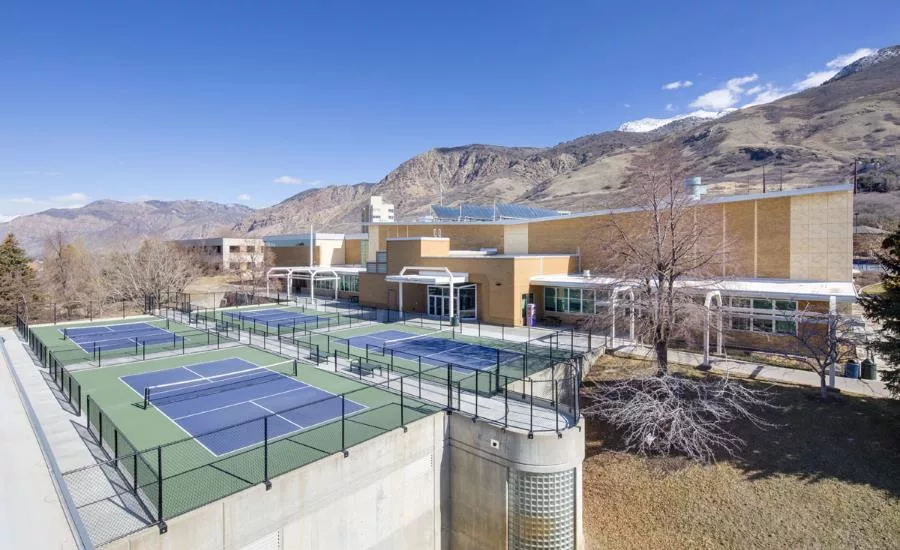
After: Rehabilitated and ready for action, Weber State’s new Pickleball Courts add value by rethinking space and functionality. Photo courtesy of Paul Richer.
Weber State University
After: Rehabilitated and ready for action, Weber State’s new Pickleball Courts add value by rethinking space and functionality. Photo courtesy of Paul Richer.
Weber State University
February 8, 2019

Architecture is an opportunity. Every commission is filled with fresh chances to add tangible value to the place, the people, the owner, and greater world surrounding the project. The decisions made along the way define the results of the owner’s investment, challenging designers and builders to continually look for ways to maximize user benefits without adding expense to the project. A seemingly simple waterproofing rehabilitation project at Weber State University in Ogden, Utah provides an excellent example of increasing a building’s functional worth by rethinking space.

“Weber State is a long-standing client, and we’ve done everything from a three-building residential life campus to small patch-and-repair projects,” says Dale Thomas, project architect at MHTN Architects. Thomas is a detail-oriented designer with more than 35 years of hands-on experience. When MHTN was engaged to solve problems with the waterproofing system on the roof of the Stromberg Athletic Complex, the University, designers, and builders all saw a valuable secondary opportunity.

“The building’s existing waterproofing system had developed some leaks, causing minor issues,” says Thomas of the original cause for concern in the Stromberg Complex. Rebuilding the waterproofing system meant tearing up a roof-top plaza composed of stone pavers, a few benches, and small grass lawns. The University felt the plaza was underutilized and rebuilding as it was prior to construction simply didn’t make sense.

“This was great space right in the middle of the University’s physical education complex. It needed to be activated,” continues Thomas. “Pickleball is a fun new sport enjoyed by people of all ages. The space comfortably accommodated four courts.”

MHTN worked with the University and general contractor Okland Construction to repair the structural steel and integrate a completely new, warrantied, waterproofing system below the plaza as they readied the roof for the new courts. “With the waterproofing system rehabilitated, we then needed to think carefully about drainage, especially for the surface of the courts.”

Though the space was ideal, like tennis, legitimate pickleball courts require a post-tension concrete slab to eliminate joints on the playing surface and minimize concrete cracking. The courts need to be as flat as possible, yet still capable of efficiently draining water from the surface, and in this case, off of the building as well. Since the roof’s existing structural slab was sloped to drain, designers needed a void-filler between the structural slab and the underside of the courts’ post-tensioned slab. The fill needed to be lightweight to minimize additional structural loading and economically feasible within the budget. That’s where designers turned to a unique building material, Foam-Control Geofoam from ACH Foam Technologies.

“We’re used to working with tapered insulation to create a roof’s drainage slope,” continues Thomas. “However, this was kind of an upside-down situation where we were trying to eliminate most of the slope rather than add it.” Incorporating a two-stage drainage system, water on the court surfaces is shed to a center trench drain, accompanied elsewhere by the waterproofing system on the structural slab and roof drains. The geofoam profile had to deliver virtually flat courts yet still direct water to the trench drain.

The responsibility of overseeing the rehabilitation including the non-degrading geofoam blocks fell to Les Hamby of Okland Construction. Les was the superintendent in charge of construction and over a 22-year career with Okland, he’s built just about everything.

“The project was really about limiting the added weight on the roof and getting a very precise taper,” says Hamby of the primary construction challenges. This molded polystyrene rigid geofoam is a lightweight, cellular plastic material that is incredibly strong. Foam-Control Geofoam products range in compressive strength from 2.2 pounds per-square-inch (psi) at one percent deformation all the way up to 18.6 psi.

Working with surveyors onsite, once the structural slab was exposed a series of spot elevations were taken. The survey data was used to establish the exact geofoam profile required to fill the void between the roof and the post-tensioned slab. Meticulously defining the thickness of each piece of foam allowed designers to control positive drainage off the courts and make sure the total volume of added weight didn’t approach structural limitations.

“Accuracy in preconstruction is critical,” says Hamby of the need to take and validate precise survey measurements and translate them to shop drawings. Hamby had worked with rigid foam products before, using geofoam as a structural platform for concrete stadium seating raisers and knows the importance of every piece being cut, shaped, and placed exactly.

“The geofoam platform was about 10 inches thick in the middle and tapered to zero at the edges,” continues Hamby. The final deck height had to match the threshold of the plaza’s existing entry door, which couldn’t be changed, so each piece of foam across the whole roof was unique. “Getting precut pieces on the job site in a logical order really expedites the time it takes to lay down the material.”

Protecting the building from deterioration due to water infiltration will always be Hamby’s biggest concern. He recommends a triple check strategy to make sure things are watertight and he likes reliable, proven products in the solutions he builds. Thomas sees things much the same way, quality is always critical as is innovation in reuse.

“I think renovation is a big part of architecture. To repurpose this plaza to a completely new function is exciting,” says Thomas. “ACH Foam Technologies’ geofoam product was an important part of what made this transformation of space possible.”

KEYWORDS: drainage polystyrene waterproofing product waterproofing system

Share This Story

Looking for a reprint of this article?
From high-res PDFs to custom plaques, order your copy today!


Recommended Content

JOIN TODAY
to unlock your recommendations.

Already have an account? Sign In

  • bar graph shows LEED v4/LEED v5/LEED v6 in various colors

    When Will LEED v4 / v4.1 and LEED v5 Expire?

    The latest version of the LEED rating system, LEED v5, is...
    Sustainability
    By: Daniel Overbey
  • Celebrating Women In AEC-2026

    Celebrating Women in The AEC Industry Part 1

    A round-up of women in the design, engineering and...
    Sustainability
    By: Lindsay Lewis
  • KEE membrane application on a roof

    A Beginner’s Guide to Single-Ply Roofing Membranes

    While PVC and TPO appear extremely similar, the chemistry...
    Low-Slope Roofs
    By: Peter Gross
Manage My Account
  • Sign up for the Newsletter
  • Online Registration
  • Manage My Preferences
  • Registration Customer Service

More Videos

Sponsored Content

Sponsored Content is a special paid section where industry companies provide high quality, objective, non-commercial content around topics of interest to the Building Enclosure audience. All Sponsored Content is supplied by the advertising company and any opinions expressed in this article are those of the author and not necessarily reflect the views of Building Enclosure or its parent company, BNP Media. Interested in participating in our Sponsored Content section? Contact your local rep!

close
  • 2 construction workers and a DEXcell panel
    Sponsored byDEXcell Roof Boards

    Designing Low-Slope Roofs for Resilience

  • Bell Bank headquarters in Fargo, North Dakota
    Sponsored bySto Corp.

    Drained and Back-Ventilated Rainscreens vs Pressurized-Equalized Rainscreens

  • A construction worker using DEXcell roof boards
    Sponsored byDEXcell Roof Boards

    The Hidden Strength of Low-Slope Roof Systems: Why Roof Cover Boards Matter

Popular Stories

construction industry workers in hard hats stand around a city scape

Construction Industry Revolts Over New CSI Licensing Plan

Canalino Elementary School and Canalino Family School exterior

Daylighting Design to Support Rapidly Growing Trend in Modular Building Construction

construction workers on a roof, plane flies in background

Why Specifications Are Becoming the Next Critical Layer of Construction Compliance

Building Enclosure Newsletter

BE Poll

Events

June 17, 2025

Addressing Condensation in Low-Slope Roof Assemblies

Credits: 1 AIA LU/HSW; 0.1 ICC CEU; 1 IIBEC CEH; 0.1 IACET CEU

On Demand In modern roofing systems, vapor retarders and air barriers do more than just minimize air leakage—they’re essential to maximizing performance and longevity. This engaging course dives into the next generation of moisture control: permeable vapor retarders and air barriers. Discover how these cutting-edge technologies are transforming low-slope roofing assemblies by improving energy efficiency, managing moisture, and boosting wind uplift resistance.

April 9, 2026

Strategies for High-Performance Below-Grade Waterproofing

Credits: 1 AIA LU/HSW ; 1 IIBEC CEH; 0.1 IACET CEU

On-Demand Designing a high-performance building enclosure requires more than just surface-level protection; it demands a rigorous, performance-based mastery of below-grade water and gas mitigation. This discussion will provide an expert-level analysis of below-grade waterproofing within the comprehensive framework of the high-performance building enclosure.

View All Submit An Event

Products

Plaster and Drywall Assemblies Manual

Plaster and Drywall Assemblies Manual

This is a comprehensive manual that goes beyond codes and standards, providing expert guidance in design, detailing, material selection and troubleshooting for plaster and drywall.

See More Products

Related Articles

  • UMMC

    Metal Cladding Brings Value to New Emergency Services Center

    See More
  • Metl-Span

    Panels Add R-Value to Chicago Renovation

    See More
  • KIA

    KAI Texas Adds New Employees to Architecture Department

    See More

Related Products

See More Products
  • ecology.jpg

    Architecture and Systems Ecology: Thermodynamic Principles of Environmental Building Design, in three parts

  • 71lmKx8brKL._SY385_.jpg

    A Visual Dictionary of Architecture, 2nd Edition

  • heating cooling.jpg

    Heating, Cooling, Lighting: Sustainable Design Strategies Towards Net Zero Architecture, 5th Edition

See More Products
×

Enhance your expertise with unparalleled insights.

Join thousands of building professionals today. Shouldn’t you know what they know?

SUBSCRIBE TODAY!
  • RESOURCES
    • Advertise
    • Contact Us
    • Store
    • Want More
  • SIGN UP TODAY
    • Create Account
    • Newsletter
    • Customer Service
    • Manage Preferences
  • SERVICES
    • Marketing Services
    • Reprints
    • Market Research
    • List Rental
    • Survey/Respondent Access
  • STAY CONNECTED
    • LinkedIn
    • Facebook
    • Instagram
    • YouTube
    • X
  • PRIVACY
    • PRIVACY POLICY
    • TERMS & CONDITIONS
    • DO NOT SELL MY PERSONAL INFORMATION
    • PRIVACY REQUEST
    • ACCESSIBILITY

Copyright ©2026. All Rights Reserved BNP Media, Inc. and BNP Media II, LLC.

Design, CMS, Hosting & Web Development :: ePublishing