Building Enclosure logo
search
cart
facebook twitter linkedin youtube instagram Spotify Podcasts Apple Podcasts Spotify Podcasts Apple Podcasts
  • Sign In
  • Create Account
  • Sign Out
  • My Account
Building Enclosure logo
  • NEWS
    • Breaking News
  • SECTIONS
    • Columns
    • Project Profiles
    • Trade Shows
    • Sponsor Insights
  • SYSTEM DESIGNS
    • Low-Slope Roofs
    • Pitched Roofs
    • Metal Roofing Materials
    • Waterproofing
    • Sustainability
    • Insulation
    • Exterior Claddings
    • Wall Systems
    • Building Envelope
  • BLOG
    • The BE Blog
  • MEDIA
    • Podcasts
    • Webinars
    • Quiz
    • Videos
    • Polls
    • Interactive Spotlights
    • Newsletter
    • Photo Galleries
  • DIRECTORIES
    • Directory: Blue Book
    • Directory: Roofing Resource
  • PRODUCTS
  • TECHNICAL
    • Codes
      • Waterproofing
      • Roofing
    • Details
      • Waterproofing
      • Roofing
  • CONTINUING ED
  • ABOUT
    • Advertise
      • Editorial Calendar
    • Contact
    • eMag Archive Issues
  • SIGN UP!

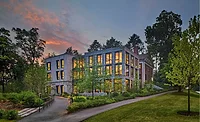
Architects Complete Robert Redford Conservancy at Pitzer College

Designed to integrate instruction, research, and outreach on green practices, the Redford Conservancy for Southern California Sustainability is built from a historic landmark.

July 6, 2018

Global architecture, design and branding firm Carrier Johnson + Culture, has announced the completion of a sustainability designed renovation and adaptation of a 1931 former infirmary building on the campus of Pitzer College in Claremont, California. At the same time, the firm is also announcing that the renovated building has received platinum level certification under the U.S. Green Building Council’s LEED standard.


A More Natural Setting

The Spanish revival style building, formerly the infirmary for Pitzer and several other Claremont Colleges, has re-opened as a home for the Robert Redford Conservancy for Southern California Sustainability, and for the Bernard Biological Field Station. The 10,500 square feet of the interiors include classrooms for science and the arts, conservancy offices, and an office and lab for the field station, as well as, exhibit space, informal study nooks, and two naturally ventilated sunrooms. The completed project, set within a 12-acre site north from the main campus, also takes full advantage of the pristine natural surroundings with the integration of 3,500 square feet of outdoor classrooms, plus lounge space and a “council ring” for face-to-face discussions in informal outdoor settings.


“Pitzer College has a longstanding tradition of sustainable practices and a number of award-winning, LEED certified buildings already on campus,” says Kevin Krumdieck, AIA, LEED AP BD+C, Principal with Carrier Johnson + CULTURE. “For these reasons, the home of the Robert Redford Conservancy, with its mission is to promote social and environmental awareness and wellbeing, had to exemplify best practices in green building.”


Sustainability in Design

The newly designed conservancy building has earned LEED Platinum, the highest level of certification awarded under the standard, says Krumdieck. On top of that, the academic building is also currently being monitored for a 12-month period in pursuit of another sustainability achievement, Net Zero Energy certification, indicating that the building produces at least as much energy as it consumes in operation. To help achieve this, news solar photovoltaic panels installed atop the roof structures of the two outdoor classrooms are planned to generate 88,000 kilowatt-hours annually.


Conserving Energy and History

Because the buildings’ redesign includes skylights and large-format glazing for maximizing penetration of natural daylight, plus passive strategies for thermal comfort, the solar energy generated from the panel arrays is expected to provide sufficient electricity for operation year round. According to Krumdieck, installing the solar panels on the outdoor classroom roofs, allowed the project to maintain the original historic character of the building. “Preserving the historic facades and form while adapting the interiors for sustainable educational uses created tremendous value for the college and the community. This approach is as green as it gets,” Krumdieck adds.


The director of the Redford Conservancy, Pitzer’s Associate Professor of environmental analysis, Brinda Sarathy, oversaw the planning for the new facility. The resulting Carrier Johnson + CULTURE led project, “embodies beauty, sustainability, and a spirit of true collaboration,” said Sarathy.


Natural and Low-impact Design

The sustainable design methods employed emphasize natural and low-impact design. Krumdieck points to the landscape design as an example, the project designers identified drought-tolerant, native plant species that enrich the site, and the local ecology. Paved areas are porous, and minimized to accommodate service and emergency access, increasing the natural sensibility of the Redford Conservancy’s site.


“The result is a demonstration of what truly sustainable design can achieve,” says Krumdieck. “We’re proud to have contributed to transforming a beautiful historic site into a dynamic new academic facility for Pitzer. This is a facility that unites the past and the future, while celebrating the Robert Redford Conservancy’s mission through its creation.

This article was originally posted on www.wconline.com.
KEYWORDS: architecture building design sustainable design

Share This Story

Looking for a reprint of this article?
From high-res PDFs to custom plaques, order your copy today!


Recommended Content

JOIN TODAY
to unlock your recommendations.

Already have an account? Sign In

  • bar graph shows LEED v4/LEED v5/LEED v6 in various colors

    When Will LEED v4 / v4.1 and LEED v5 Expire?

    The latest version of the LEED rating system, LEED v5, is...
    Sustainability
    By: Daniel Overbey
  • Celebrating Women In AEC-2026

    Celebrating Women in The AEC Industry Part 1

    A round-up of women in the design, engineering and...
    Building Envelope
    By: Lindsay Lewis
  • KEE membrane application on a roof

    A Beginner’s Guide to Single-Ply Roofing Membranes

    While PVC and TPO appear extremely similar, the chemistry...
    Low-Slope Roofs
    By: Peter Gross
Manage My Account
  • Sign up for the Newsletter
  • Online Registration
  • Manage My Preferences
  • Registration Customer Service

More Videos

Sponsored Content

Sponsored Content is a special paid section where industry companies provide high quality, objective, non-commercial content around topics of interest to the Building Enclosure audience. All Sponsored Content is supplied by the advertising company and any opinions expressed in this article are those of the author and not necessarily reflect the views of Building Enclosure or its parent company, BNP Media. Interested in participating in our Sponsored Content section? Contact your local rep!

close
  • 2 construction workers and a DEXcell panel
    Sponsored byDEXcell Roof Boards

    Designing Low-Slope Roofs for Resilience

  • Bell Bank headquarters in Fargo, North Dakota
    Sponsored bySto Corp.

    Drained and Back-Ventilated Rainscreens vs Pressurized-Equalized Rainscreens

  • A construction worker using DEXcell roof boards
    Sponsored byDEXcell Roof Boards

    The Hidden Strength of Low-Slope Roof Systems: Why Roof Cover Boards Matter

Popular Stories

construction industry workers in hard hats stand around a city scape

Construction Industry Revolts Over New CSI Licensing Plan

a man wearing a mask installs insulation into a wall system

Quiet Rooms and Healthier Air: A Second Look at What Goes Inside the Wall Cavity

Canalino Elementary School and Canalino Family School exterior

Daylighting Design to Support Rapidly Growing Trend in Modular Building Construction

Building Enclosure Newsletter

BE Poll

Events

June 17, 2025

Addressing Condensation in Low-Slope Roof Assemblies

Credits: 1 AIA LU/HSW; 0.1 ICC CEU; 1 IIBEC CEH; 0.1 IACET CEU

On Demand In modern roofing systems, vapor retarders and air barriers do more than just minimize air leakage—they’re essential to maximizing performance and longevity. This engaging course dives into the next generation of moisture control: permeable vapor retarders and air barriers. Discover how these cutting-edge technologies are transforming low-slope roofing assemblies by improving energy efficiency, managing moisture, and boosting wind uplift resistance.

April 9, 2026

Strategies for High-Performance Below-Grade Waterproofing

Credits: 1 AIA LU/HSW ; 1 IIBEC CEH; 0.1 IACET CEU

On-Demand Designing a high-performance building enclosure requires more than just surface-level protection; it demands a rigorous, performance-based mastery of below-grade water and gas mitigation. This discussion will provide an expert-level analysis of below-grade waterproofing within the comprehensive framework of the high-performance building enclosure.

View All Submit An Event

Products

Plaster and Drywall Assemblies Manual

Plaster and Drywall Assemblies Manual

This is a comprehensive manual that goes beyond codes and standards, providing expert guidance in design, detailing, material selection and troubleshooting for plaster and drywall.

See More Products

Related Articles

  • Aliki Perroti & Seth Frank Lyceum.jpg

    Bruner/Cott Architects Completes the Aliki Perroti & Seth Frank Lyceum at Amherst College

    See More
  • Yale Divinity School in New Haven, Connecticut.

    Bruner/Cott Architects and Höweler + Yoon Architecture Complete the Nation’s Largest Living-Building Campus Residence

    See More
  • Robert F. Kennedy Jr. to Address Architects and Home Improvement Professionals

    See More

Related Products

See More Products
  • smo-blue-expanded-edition-log-book.png

    Log Book - Blue Expanded Edition

See More Products

Events

View AllSubmit An Event
  • September 11, 2024

    Building Science for Architects

    Credits: 1 AIA LU/HSW; 1 IIBEC CEH; 0.1 IACET CEUOn-Demand The science of buildings and how they perform is not often a focus during school, but can become a specialty in practice. Topics such as vapor movement, a robust thermal envelope and condensation prevention are ones that cause issues in many buildings.
View AllSubmit An Event
×

Enhance your expertise with unparalleled insights.

Join thousands of building professionals today. Shouldn’t you know what they know?

SUBSCRIBE TODAY!
  • RESOURCES
    • Advertise
    • Contact Us
    • Store
    • Want More
  • SIGN UP TODAY
    • Create Account
    • Newsletter
    • Customer Service
    • Manage Preferences
  • SERVICES
    • Marketing Services
    • Reprints
    • Market Research
    • List Rental
    • Survey/Respondent Access
  • STAY CONNECTED
    • LinkedIn
    • Facebook
    • Instagram
    • YouTube
    • X
  • PRIVACY
    • PRIVACY POLICY
    • TERMS & CONDITIONS
    • DO NOT SELL MY PERSONAL INFORMATION
    • PRIVACY REQUEST
    • ACCESSIBILITY

Copyright ©2026. All Rights Reserved BNP Media, Inc. and BNP Media II, LLC.

Design, CMS, Hosting & Web Development :: ePublishing