Building Enclosure logo
search
cart
facebook twitter linkedin youtube instagram Spotify Podcasts Apple Podcasts Spotify Podcasts Apple Podcasts
  • Sign In
  • Create Account
  • Sign Out
  • My Account
Building Enclosure logo
  • NEWS
    • Breaking News
  • SECTIONS
    • Columns
    • Project Profiles
    • Trade Shows
    • Sponsor Insights
  • SYSTEM DESIGNS
    • Low-Slope Roofs
    • Pitched Roofs
    • Metal Roofing Materials
    • Waterproofing
    • Sustainability
    • Insulation
    • Exterior Claddings
    • Wall Systems
    • Building Envelope
  • BLOG
    • The BE Blog
  • MEDIA
    • Podcasts
    • Webinars
    • Quiz
    • Videos
    • Polls
    • Interactive Spotlights
    • Newsletter
    • Photo Galleries
  • DIRECTORIES
    • Directory: Blue Book
    • Directory: Roofing Resource
  • PRODUCTS
  • TECHNICAL
    • Codes
      • Waterproofing
      • Roofing
    • Details
      • Waterproofing
      • Roofing
  • CONTINUING ED
  • ABOUT
    • Advertise
      • Editorial Calendar
    • Contact
    • eMag Archive Issues
  • SIGN UP!
Wall Systems

The Art of Stretch Forming
By Tammy Schroeder
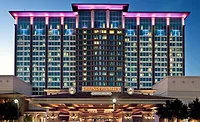
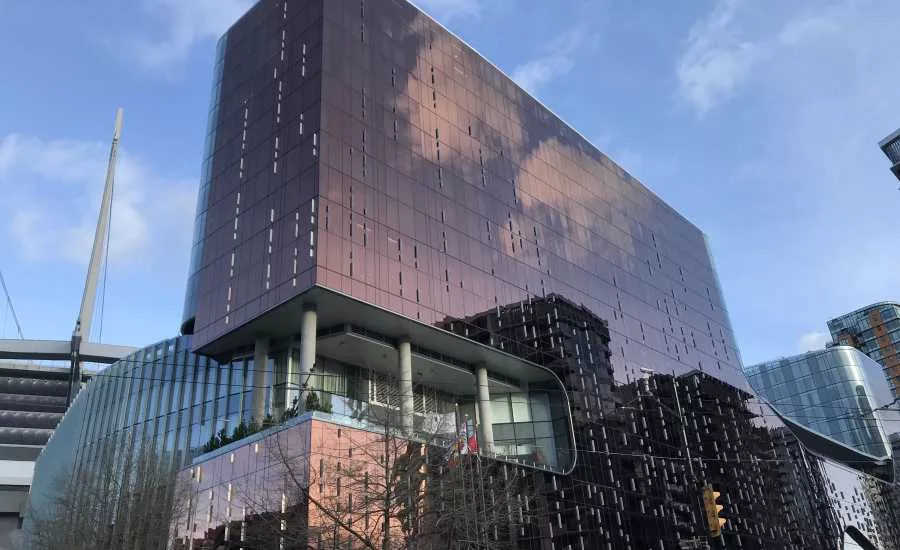
PARQ Resort
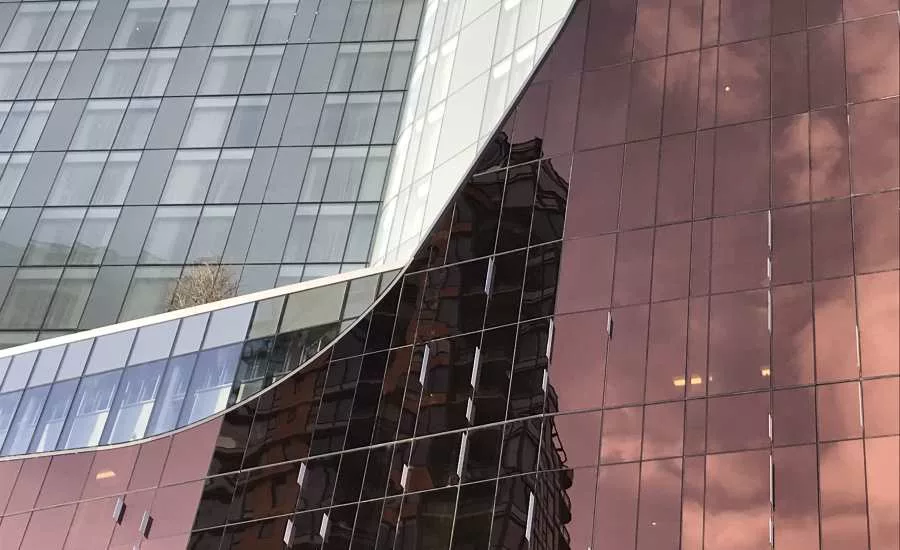
Vancouver’s PARQ Resort and Casino features a 23,000-square-foot façade with curved corners and curtainwall details made possible with stretch-formed aluminum framing members finished in clear anodize. Photo courtesy of Gamma North Corporation.
stretch forming
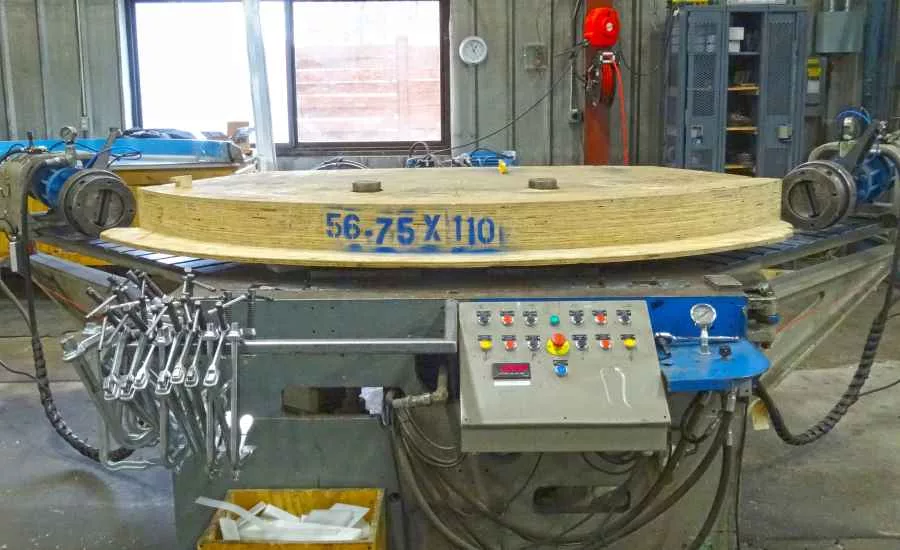
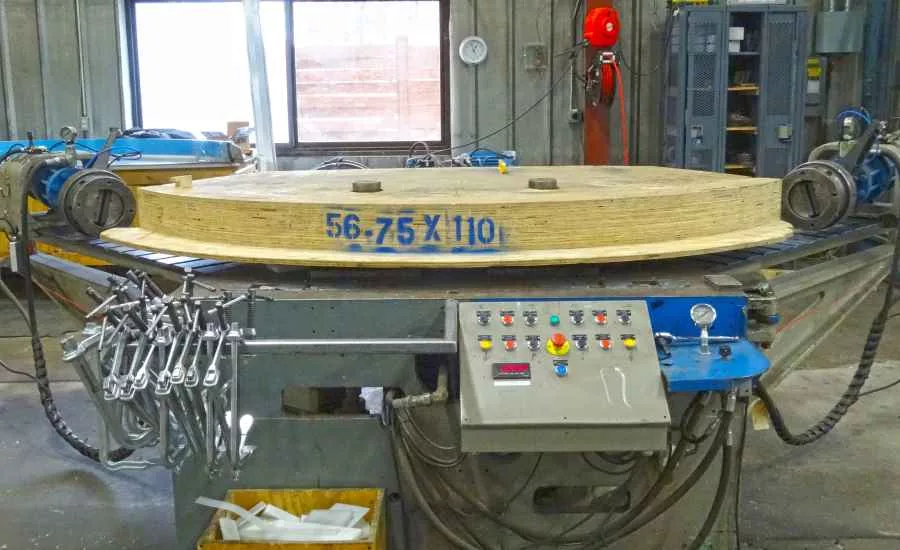
Each form is built to the required radius. These wooden forms may be customized for a special aluminum curvature and used only once, or re-used for more popular, repeating arcs. Photo courtesy of Southern Stretch Forming.
stretch forming2
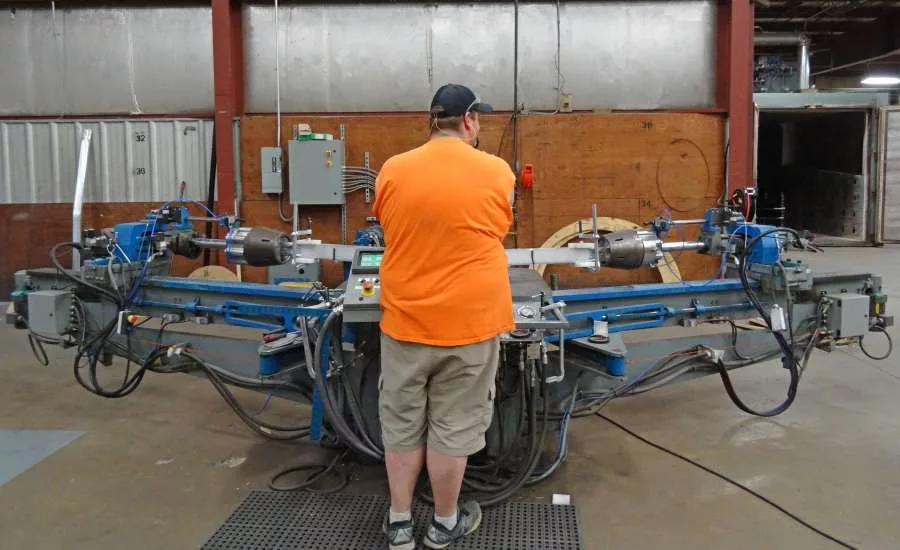
It takes years of experience to become a skilled craftsperson that can stretch form consistent, successful, curved aluminum components for architectural projects. Photo courtesy of Southern Stretch Forming.
stretch forming3
Stretch forming is a metal bending process in which a lineal shape, such as an aluminum extrusion, is stretched and bent simultaneously over a form, called a die. Photo courtesy of Southern Stretch Forming.
extrusion curve
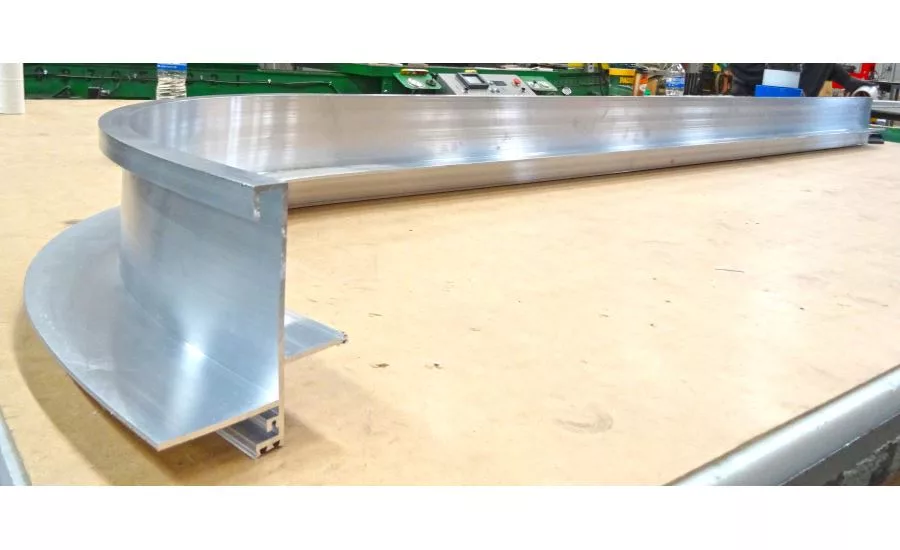
The stretch forming process yields a smooth and even surface with each component meeting the project’s specifications and warranty conditions. Photo courtesy of Southern Stretch Forming.
PARQ Resort and Casino
Vancouver’s PARQ Resort and Casino features a 23,000-square-foot façade with curved corners and curtainwall details made possible with stretch-formed aluminum framing members finished in clear anodize. Photo courtesy of Gamma North Corporation.
PARQ Resort
stretch forming
stretch forming2
stretch forming3
extrusion curve
PARQ Resort and Casino
May 14, 2018

Stretch forming was invented during the 1940s with the rise of the aerospace industry for the curving of aluminum aircraft parts to reduce weight, and thereby, fuel consumption. It expanded into car components and eventually, into the architectural industry. Architects and designers pursued new opportunities to create curved facades and building components.

The process of stretch forming is more of an art, than a science. It takes years of experience to become a skilled craftsperson that can stretch form consistent, successful, curved aluminum components for architectural projects.

Stretch forming is a metal bending process in which a lineal shape, such as an aluminum extrusion, is stretched and bent simultaneously over a form, called a die. Each form is built to the required radius. These forms may be customized for a special curvature and used only once, or re-used for more popular, repeating arcs.


Opportunities with Stretch Forming

Stretch forming capabilities typically include portions of circles, including half-circles and eyebrows, ellipses and arched shapes. These shapes can be formed with straight leg sections at one or both ends of the curve. This method of curving eliminates several conventional fabrication and welding steps.

The variety of shapes and cross-sections that can be stretch-formed is almost unlimited – from muntin bars and panning for windows, cladding and spirals for handrails, large mullions for building envelopes to serpentine shapes for canopies. Stretch forming allows architects, designers and builders to realize forms as graceful as they are sturdy and functional.

In most cases, the stretch-formed aluminum component’s curvature is so highly precise that even intricate multi-components and snap-together curtain wall components can be formed from metal without loss of section properties or original design function.

To achieve this level of precision, the basic stretch-forming machine has two arms or carriage beams that hold multiple-positioning gripping jaws. Both ends of the extrusion are inserted into the gripper jaws and stretched to their yield point. The jaws are attached to hydraulic tension cylinders that stretch the extrusion. The arms swing by rotating on large, machined pins with bearings that allow the extrusion to wrap around and against the form. This produces perfectly contoured products, while limiting or even eliminating wrinkling inside the arc. When the wrapping is completed, the stretch force is released and the gripper jaws are opened.

Stretch forming maintains close and consistent tolerances with excellent repeatability, and alignments of complex profiles and compound curves. There should be no visible surface marring, distortion or ripples. These benefits inherent in the stretch forming process yield a smooth and even surface. Each component must meet the project’s specifications and warranty conditions.


Structural vs. Non-Structural Application

Aluminum has proven to be a suitable, reliable material for load-bearing structures for more than 100 years. However, the application of the parts being curved dictates the process used.

After being pushed through an extrusion press, extrusions are cut and placed into a tempering oven to harden and give them structural integrity. When they are fully hardened to a T5 or T6 temper, they are too hard to curve. If the parts to be curved have been fully tempered, they will need to be annealed before curving. To do this, the part is placed in a large oven and heated to a peak temperature range of 700 to 800 degrees Fahrenheit for two to three hours.

Annealing makes the extrusion soft again—enabling it to be curved. Metal that is annealed cannot be hardened again. Once it is softened, it will remain soft. In applications where the parts are expected to carry a structural load or have another structural application, annealing generally is not an acceptable practice.

For structural or load-bearing applications, the best practice is to have extrusions tempered to a soft state of T1, T4 or to a T52 state. Material tempered to a T1 or T4 can be bent without annealing, and can be tempered after the curving process to a T5 or T6 that is typical in structural applications. T52 is a very stable temper and can be curved without annealing, and it maintains its properties after curving without the need for additional tempering.


Painted or Anodized Finishes

Similar to the curving process, the end-use application of the part will determine the best practice for how curved parts should be finished. If an extrusion has been painted or anodized, and has been tempered to a T5 or T6 hardness before being curved, the parts will need to be annealed. The high heat associated with the annealing process likely will cause painted finishes to burn and anodized finishes to discolor or craze. For this reason, when parts require annealing, it is best to finish them after the curving process has been completed.

For extrusions tempered to a T1, T4 or T52 hardness, parts can be finished before curving. However, some marring or slight damage to the finished surface should be expected due to the parts being stretched across the form’s hard surface during the curving process. Depending on the tightness of the radius, anodic coatings also may craze or discolor as a result of being curved. If the T1 or T4 tempered extrusions require oven-aged tempering after curving, the high heat will likely damage the coating.

Regardless of the effect the curving process has on the finish, nearly all manufacturer and applicator warranties are voided when extrusions or brake metal are finished prior to curving. To obtain the best finish quality and to keep parts fully warranted, it is best to finish after curving—regardless of the temper of the extrusion. The American Architectural Manufacturers Association (AAMA) publishes industry-accepted specification standards for anodize and paint finishing of architectural aluminum components.


Thermally Improved Curves

At least one U.S. finishing and service provider also offers thermal improvement services for curved and radius, finished aluminum extrusions backed with an industry-leading warranty. The thermal improvement processes may be specified as either a full pour-and-debridge of radius material, both structural and non-structural, or a fully crimped thermal strut system. The service provider places no restrictions to the degree of curvature, and finishes may be specified in liquid paint, powder coat or anodize.

Installing the thermal barrier in the metal after it has been curved helps minimize stress on the thermal barrier and ensures performance as specified. Choosing the thermal strut system provides the additional design flexibility of dual finishing, where the interior and exterior surfaces may be finished in different colors and formulations.

Ensure that aluminum products’ thermal improvement options strictly comply with its material suppliers’ standards and AAMA’s quality assurance processing guidelines. For optimal quality and convenience, some finishers provide a single-source solution where stretch forming, thermal improvement and finishing are synchronized and retain the full warranty. When available, utilizing the finisher’s trucks also can reduce material handling and packaging to minimize the opportunity for damage, while saving costs and time.

KEYWORDS: aluminum thermal barrier

Share This Story

Looking for a reprint of this article?
From high-res PDFs to custom plaques, order your copy today!


Tammy Schroeder, LEED Green Associate, is a senior marketing specialist at Linetec and serves as an industry educator on architectural coatings. With 18 years of experience in the finishing industry, she shares her knowledge of liquid paint coatings, powder coat and anodize with architects, specifiers and architectural product manufacturers in commercial and residential markets. Schroeder can be reached via email at tammy.schroeder@linetec.com.

Recommended Content

JOIN TODAY
to unlock your recommendations.

Already have an account? Sign In

  • bar graph shows LEED v4/LEED v5/LEED v6 in various colors

    When Will LEED v4 / v4.1 and LEED v5 Expire?

    The latest version of the LEED rating system, LEED v5, is...
    Sustainability
    By: Daniel Overbey
  • Celebrating Women In AEC-2026

    Celebrating Women in The AEC Industry Part 1

    A round-up of women in the design, engineering and...
    Building Envelope
    By: Lindsay Lewis
  • KEE membrane application on a roof

    A Beginner’s Guide to Single-Ply Roofing Membranes

    While PVC and TPO appear extremely similar, the chemistry...
    Low-Slope Roofs
    By: Peter Gross
Manage My Account
  • Sign up for the Newsletter
  • Online Registration
  • Manage My Preferences
  • Registration Customer Service

More Videos

Sponsored Content

Sponsored Content is a special paid section where industry companies provide high quality, objective, non-commercial content around topics of interest to the Building Enclosure audience. All Sponsored Content is supplied by the advertising company and any opinions expressed in this article are those of the author and not necessarily reflect the views of Building Enclosure or its parent company, BNP Media. Interested in participating in our Sponsored Content section? Contact your local rep!

close
  • HITT Construction headquarters
    Sponsored byBuilding Composites® LLC

    Pushing the Envelope

  • 2 construction workers and a DEXcell panel
    Sponsored byDEXcell Roof Boards

    Designing Low-Slope Roofs for Resilience

  • Bell Bank headquarters in Fargo, North Dakota
    Sponsored bySto Corp.

    Drained and Back-Ventilated Rainscreens vs Pressurized-Equalized Rainscreens

Popular Stories

Open vs. closed cell foam in an attic

Open-Cell vs. Closed-Cell Spray Foam

graphic shows white arrows pointing to the right on a light green background

A Breakdown of Air Leakage Testing in LEED v5 BD+C

graphic shows a building destoryed by tornados with information on the amount of torandos in 2026 in the US

Record-Breaking Tornado Activity in Illinois Signals New Challenges for Architects

Building Enclosure Newsletter

BE Poll

Events

April 9, 2026

Strategies for High-Performance Below-Grade Waterproofing

Credits: 1 AIA LU/HSW ; 1 IIBEC CEH; 0.1 IACET CEU

On-Demand Designing a high-performance building enclosure requires more than just surface-level protection; it demands a rigorous, performance-based mastery of below-grade water and gas mitigation. This discussion will provide an expert-level analysis of below-grade waterproofing within the comprehensive framework of the high-performance building enclosure.

April 28, 2026

Roof Design Considerations That Prevent Installation Failures and Change Orders

Credit: 1 AIA LU/HSW; 1 IIBEC CEH; 0.1 ICC CEU

On-Demand This course provides visual examples of actual field conditions. Some good, some not so good; along with design suggestions that can cut installation costs and reduce construction change orders. Upon completion of this course, you will have a better understanding of the requirements the roofing contractor must meet to provide the specified roofing system warranty, and long-term value to the owner.

View All Submit An Event

Products

Plaster and Drywall Assemblies Manual

Plaster and Drywall Assemblies Manual

This is a comprehensive manual that goes beyond codes and standards, providing expert guidance in design, detailing, material selection and troubleshooting for plaster and drywall.

See More Products

Related Articles

  • Best Practices: Mastering the Art of Roof Inspections

    See More
  • Project Profile: The Art of Retrofit Roofing

    See More
  • Thunder Valley Casino Resort

    The Art of Renovation for a California Casino Clad in EIFS

    See More

Related Products

See More Products
  • 41G-JcZWT+L._SX342_SY445_.jpg

    The Architect's Studio Companion: Rules of Thumb for Preliminary Design, 7th Edition

  • energy modeling.jpg

    Energy Modeling and Computations in the Building Envelope

See More Products
×

Enhance your expertise with unparalleled insights.

Join thousands of building professionals today. Shouldn’t you know what they know?

SUBSCRIBE TODAY!
  • RESOURCES
    • Advertise
    • Contact Us
    • Store
    • Want More
  • SIGN UP TODAY
    • Create Account
    • Newsletter
    • Customer Service
    • Manage Preferences
  • SERVICES
    • Marketing Services
    • Reprints
    • Market Research
    • List Rental
    • Survey/Respondent Access
  • STAY CONNECTED
    • LinkedIn
    • Facebook
    • Instagram
    • YouTube
    • X
  • PRIVACY
    • PRIVACY POLICY
    • TERMS & CONDITIONS
    • DO NOT SELL MY PERSONAL INFORMATION
    • PRIVACY REQUEST
    • ACCESSIBILITY

Copyright ©2026. All Rights Reserved BNP Media, Inc. and BNP Media II, LLC.

Design, CMS, Hosting & Web Development :: ePublishing