Building Enclosure logo
search
cart
facebook twitter linkedin youtube instagram Spotify Podcasts Apple Podcasts Spotify Podcasts Apple Podcasts
  • Sign In
  • Create Account
  • Sign Out
  • My Account
Building Enclosure logo
  • NEWS
    • Breaking News
  • SECTIONS
    • Columns
    • Project Profiles
    • Trade Shows
    • Sponsor Insights
  • SYSTEM DESIGNS
    • Low-Slope Roofs
    • Pitched Roofs
    • Metal Roofing Materials
    • Waterproofing
    • Sustainability
    • Insulation
    • Exterior Claddings
    • Wall Systems
    • Building Envelope
  • BLOG
    • The BE Blog
  • MEDIA
    • Podcasts
    • Webinars
    • Quiz
    • Videos
    • Polls
    • Interactive Spotlights
    • Newsletter
    • Photo Galleries
  • DIRECTORIES
    • Directory: Blue Book
    • Directory: Roofing Resource
  • PRODUCTS
  • TECHNICAL
    • Codes
      • Waterproofing
      • Roofing
    • Details
      • Waterproofing
      • Roofing
  • CONTINUING ED
  • ABOUT
    • Advertise
      • Editorial Calendar
    • Contact
    • eMag Archive Issues
  • SIGN UP!
Breaking News

New Edition of Fire Resistance Manual to be Published

breaking news1
April 4, 2018

The Gypsum Association's flagship publication, GA-600 Fire Resistance and Sound Control Design Manual, is revised every three years by a committee of industry experts on the proper specification, installation and use of gypsum panel products in systems tested for fire and sound mitigation. Technical expertise is drawn from across the Gypsum Association's membership. All GA member companies, and most active gypsum board (panel) manufacturers in the U.S. and Canada, contribute to the significant effort of revising the manual to reflect the latest technical specifications for gypsum systems. Members of the Association calcine gypsum and manufacture gypsum board under the provisions of ASTM Standard C 1396 and CAN/CSA-A82.27-M91.
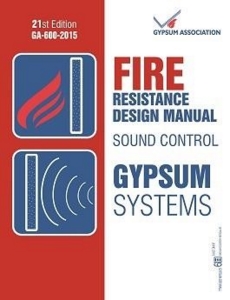
Scheduled for release in the fall of this year, GA-600-2018 will be the 22nd edition of the Manual. For more than 40 years, GA-600 has been referenced by the model building codes as a source of fire-resistive design. The scope of the GA's flagship publication has steadily broadened to address additional factors of interest and concern for designers, builders, code officials and the public. The next edition will be no exception. Although sound control has been included in the publication's scope for many years, the new edition will feature expanded acoustical information including a section of terminology specific to sound control as well as a set of General Explanatory Notes specific to sound control design.  Moreover, sound data tables for all generic systems will be available in the electronic edition of GA-600-2018.

In addition, the book will be reformatted to more clearly distinguish design differences between the fire-tested assembly and the sound-tested assembly, ensuring that the Fire Resistance and Sound Control Design Manual remains among the best organized and easiest to use of the design reference manuals. Sound data for systems with a Sound Transmission Class (STC) rating below 40 will no longer be shown as these assemblies no longer comply with International Building Code (IBC) criteria for sound. However, it is important to note that some older generic systems will continue to list sound control information, including many plaster systems that are important reference designs for historic restoration.

"Although providing tested assemblies for passive fire resistance remains a core component of GA-600, the need for more precise design data on sound control is clear," says Technical Services Director Michael Schmeida, MSc, LEED AP. "The Gypsum Association and its member companies are committed to providing the A/E/C community with increasing levels of information related to acoustics."

Read more about the basics of sound control.

KEYWORDS: acoustics fire resistance gypsum Gypsum Association

Share This Story

Looking for a reprint of this article?
From high-res PDFs to custom plaques, order your copy today!


Recommended Content

JOIN TODAY
to unlock your recommendations.

Already have an account? Sign In

  • bar graph shows LEED v4/LEED v5/LEED v6 in various colors

    When Will LEED v4 / v4.1 and LEED v5 Expire?

    The latest version of the LEED rating system, LEED v5, is...
    Sustainability
    By: Daniel Overbey
  • Celebrating Women In AEC-2026

    Celebrating Women in The AEC Industry Part 1

    A round-up of women in the design, engineering and...
    Sustainability
    By: Lindsay Lewis
  • KEE membrane application on a roof

    A Beginner’s Guide to Single-Ply Roofing Membranes

    While PVC and TPO appear extremely similar, the chemistry...
    Low-Slope Roofs
    By: Peter Gross
Manage My Account
  • Sign up for the Newsletter
  • Online Registration
  • Manage My Preferences
  • Registration Customer Service

More Videos

Sponsored Content

Sponsored Content is a special paid section where industry companies provide high quality, objective, non-commercial content around topics of interest to the Building Enclosure audience. All Sponsored Content is supplied by the advertising company and any opinions expressed in this article are those of the author and not necessarily reflect the views of Building Enclosure or its parent company, BNP Media. Interested in participating in our Sponsored Content section? Contact your local rep!

close
  • 2 construction workers and a DEXcell panel
    Sponsored byDEXcell Roof Boards

    Designing Low-Slope Roofs for Resilience

  • Bell Bank headquarters in Fargo, North Dakota
    Sponsored bySto Corp.

    Drained and Back-Ventilated Rainscreens vs Pressurized-Equalized Rainscreens

  • A construction worker using DEXcell roof boards
    Sponsored byDEXcell Roof Boards

    The Hidden Strength of Low-Slope Roof Systems: Why Roof Cover Boards Matter

Popular Stories

a man wearing a mask installs insulation into a wall system

Quiet Rooms and Healthier Air: A Second Look at What Goes Inside the Wall Cavity

construction industry workers in hard hats stand around a city scape

Construction Industry Revolts Over New CSI Licensing Plan

Canalino Elementary School and Canalino Family School exterior

Daylighting Design to Support Rapidly Growing Trend in Modular Building Construction

Building Enclosure Newsletter

BE Poll

Events

June 17, 2025

Addressing Condensation in Low-Slope Roof Assemblies

Credits: 1 AIA LU/HSW; 0.1 ICC CEU; 1 IIBEC CEH; 0.1 IACET CEU

On Demand In modern roofing systems, vapor retarders and air barriers do more than just minimize air leakage—they’re essential to maximizing performance and longevity. This engaging course dives into the next generation of moisture control: permeable vapor retarders and air barriers. Discover how these cutting-edge technologies are transforming low-slope roofing assemblies by improving energy efficiency, managing moisture, and boosting wind uplift resistance.

April 9, 2026

Strategies for High-Performance Below-Grade Waterproofing

Credits: 1 AIA LU/HSW ; 1 IIBEC CEH; 0.1 IACET CEU

On-Demand Designing a high-performance building enclosure requires more than just surface-level protection; it demands a rigorous, performance-based mastery of below-grade water and gas mitigation. This discussion will provide an expert-level analysis of below-grade waterproofing within the comprehensive framework of the high-performance building enclosure.

View All Submit An Event

Products

Plaster and Drywall Assemblies Manual

Plaster and Drywall Assemblies Manual

This is a comprehensive manual that goes beyond codes and standards, providing expert guidance in design, detailing, material selection and troubleshooting for plaster and drywall.

See More Products

Related Articles

  • SDI Publishes New Edition of the Diaphragm Design Manual

    See More
  • New Edition of the North American Specification of CFS

    See More
  • NCCER_Intro_to_SolarPV_cover.jpg

    NCCER Publishes New Edition of Introductory Solar PV Module

    See More

Related Products

See More Products
  • 007145828X.jpeg

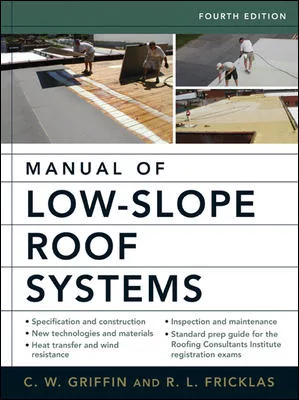
    Manual of Low-Slope Roof Systems Fourth Edition

  • building codes illustated.jpg

    Building Codes Illustrated: A Guide to Understanding the 2021 International Building Code, 7th Edition

  • bim-3e.jpg

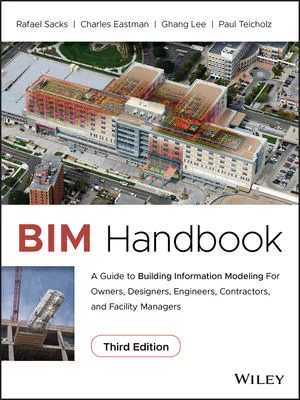
    BIM Handbook: A Guide to Building Information Modeling for Owners, Designers, Engineers, Contractors, and Facility Managers, 3rd Edition

See More Products

Events

View AllSubmit An Event
  • October 7, 2025

    Fit to Be Clad

    Credits: 1 AIA LU/HSW; 1 IIBEC CEH; 0.1 ICC CEUOn-Demand These factors include the different types of metal roof and wall systems, materials used in manufacturing, fastener types as well as environmental issues such as saltwater and wind speed. Structural issues including building framing, roof slope, curving, perforation and more are addressed. Finally, a review of cost assessment and how it’s affected by sustainability needs, installation concerns and jobsite best practices rounds out this course. 
View AllSubmit An Event
×

Enhance your expertise with unparalleled insights.

Join thousands of building professionals today. Shouldn’t you know what they know?

SUBSCRIBE TODAY!
  • RESOURCES
    • Advertise
    • Contact Us
    • Store
    • Want More
  • SIGN UP TODAY
    • Create Account
    • Newsletter
    • Customer Service
    • Manage Preferences
  • SERVICES
    • Marketing Services
    • Reprints
    • Market Research
    • List Rental
    • Survey/Respondent Access
  • STAY CONNECTED
    • LinkedIn
    • Facebook
    • Instagram
    • YouTube
    • X
  • PRIVACY
    • PRIVACY POLICY
    • TERMS & CONDITIONS
    • DO NOT SELL MY PERSONAL INFORMATION
    • PRIVACY REQUEST
    • ACCESSIBILITY

Copyright ©2026. All Rights Reserved BNP Media, Inc. and BNP Media II, LLC.

Design, CMS, Hosting & Web Development :: ePublishing