Building Enclosure logo
search
cart
facebook twitter linkedin youtube instagram Spotify Podcasts Apple Podcasts Spotify Podcasts Apple Podcasts
  • Sign In
  • Create Account
  • Sign Out
  • My Account
Building Enclosure logo
  • NEWS
    • Breaking News
  • SECTIONS
    • Columns
    • Project Profiles
    • Trade Shows
    • Sponsor Insights
  • SYSTEM DESIGNS
    • Low-Slope Roofs
    • Pitched Roofs
    • Metal Roofing Materials
    • Waterproofing
    • Sustainability
    • Insulation
    • Exterior Claddings
    • Wall Systems
    • Building Envelope
  • BLOG
    • The BE Blog
  • MEDIA
    • Podcasts
    • Webinars
    • Quiz
    • Videos
    • Polls
    • Interactive Spotlights
    • Newsletter
    • Photo Galleries
  • DIRECTORIES
    • Directory: Blue Book
    • Directory: Roofing Resource
  • PRODUCTS
  • TECHNICAL
    • Codes
      • Waterproofing
      • Roofing
    • Details
      • Waterproofing
      • Roofing
  • CONTINUING ED
  • ABOUT
    • Advertise
      • Editorial Calendar
    • Contact
    • eMag Archive Issues
  • SIGN UP!
InsulationLow-Slope Roofs

Affordable Energy Efficiency

Simple Options for Reducing Roof Insulation Costs
By Tom Savoy
insulfoam
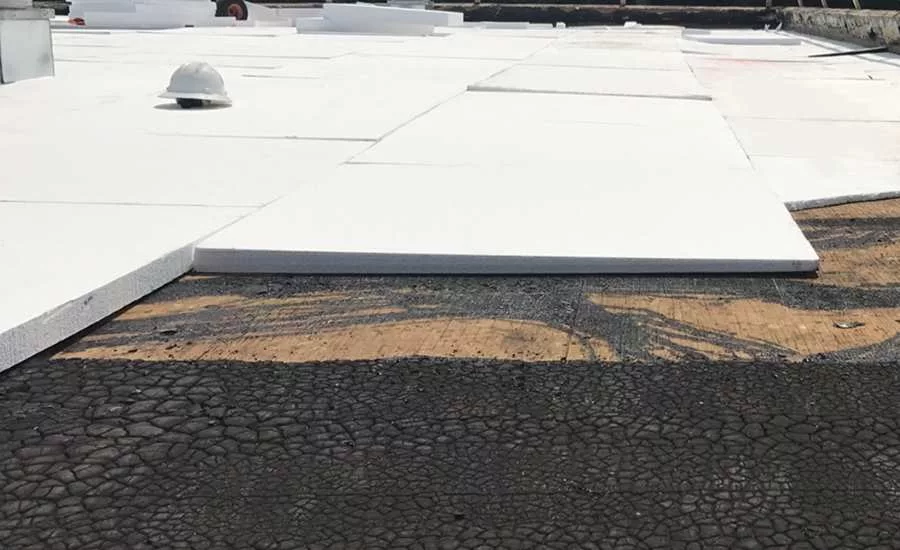
Manufacturers will cut EPS insulation blocks to virtually any slope and any shape to fit roof crickets, saddles, valleys and ridges. Photo courtesy of Insulfoam.
insulfoam2
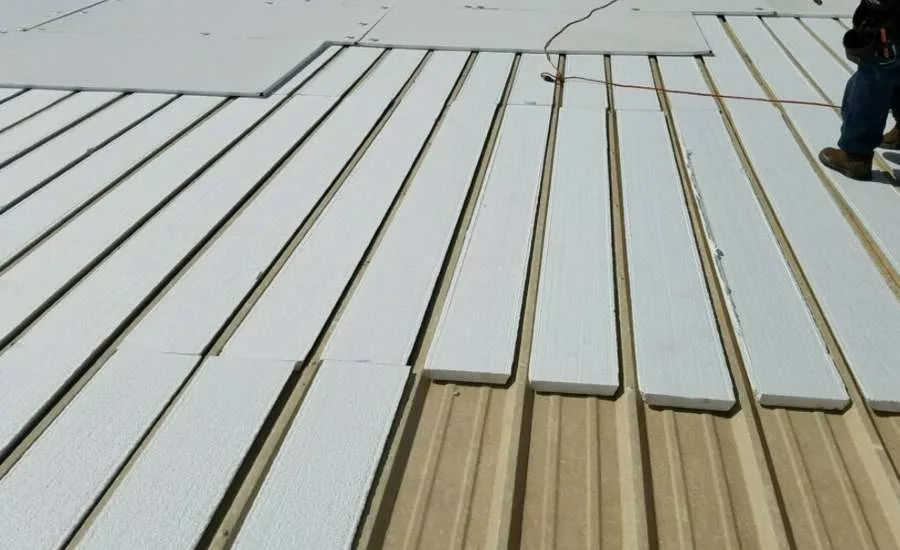
EPS flute fill insulation is factory-cut to fit any metal roof flange profile. Photo courtesy of Insulfoam.
insulfoam
insulfoam2
November 6, 2017

Up to 25 percent of a building’s heat loss is through the roof. To help reduce this energy waste, the International Energy Conservation Code (IECC) requires roof insulation in commercial buildings. Effective insulation helps the building owner save on energy costs year after year, while also helping create a comfortable indoor environment.

Fortunately, building professionals have available to them a range of insulation products that keep heat in during the winter and heat out during the summer. These include three common rigid foam insulation types: polyisocyanurate (polyiso), extruded polystyrene (XPS) and expanded polystyrene (EPS). Among these insulations are options that help the building team save money on both materials and labor.


Measuring What Matters

When specifying one of the rigid foam insulations, to get the most value for your money, it is crucial to evaluate how much thermal performance (R-value) you receive per dollar spent. Yet, many insulation manufacturers market their products based on R-value per-inch.

While R-value per inch might be important if your goal is to build the thinnest roof assembly possible, it says nothing about the insulation’s benefits vs. costs. Selecting insulation based on R-value per-inch would be like choosing a gas station based on the number of gallons their pumps dispense per minute instead of choosing based on the price they charge per gallon. In other words, R-value per-inch and gallons dispensed per minute might be somewhat interesting pieces of data, but are largely irrelevant to what most users care about.

As EPS insulation offers the highest R-value per dollar, many building professionals choose it for their roof insulation needs. For those who specify EPS for its cost effectiveness, moisture performance and stable long-term R-values, product options are available that reduce costs even further.


Tapered Systems

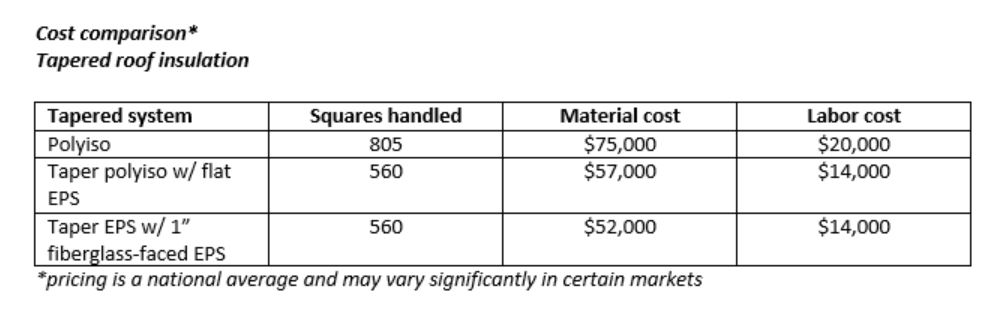
Converting a flat or low-sloped roof to a greater slope for better drainage typically requires workers to stack multiple layers of insulation. This can be a labor-intensive process with XPS and polyiso, as crews must haul and place numerous rigid foam sheets of only a few inches of thickness. By comparison, EPS insulation is available in blocks up to 40 inches thick. Manufacturers will cut those blocks to virtually any slope and any shape to fit roof crickets, saddles, valleys and ridges. Tapered EPS speeds up insulation installation and can reduce roof insulation costs up to 30 percent compared to other tapered insulations. Additional cost savings result from reduced dumpster fees to dispose of insulation cut-offs.
 

Roof Re-Covers

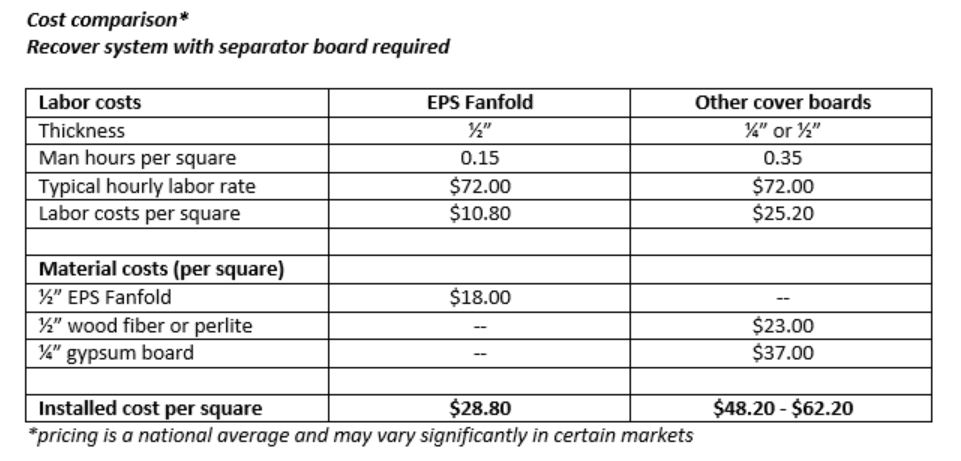
An easy-to-use insulation option for roof recovers in which a separator board is required is EPS panels pre-folded into bundles, with polymeric facers on both sides. Products like R-TECH FF (fan fold) are available in standard sizes up to 200 square-feet (2 squares), comprised of 25 panels that are 2 feet by 4 feet each, and come in various thicknesses. A typical two-square bundle weighs less than 11 pounds, so it is easy for one person to carry.

EPS fanfold bundles require fewer fasteners per square foot than most roofing insulations, and are less expensive than virtually every other recover board. The man-hours needed to install fanfold bundles are about 60 percent less than working with individual sheets. Material costs are also lower than wood fiber, perlite or gypsum board. On large projects, the total savings can add up to tens of thousands of dollars.
                      

Metal Roof Recovers

For metal roof recovers, the standing seams of the metal roofing add a level of complexity for crews to work around to establish a smooth surface for the new roof membrane system. Typically, crews must cut and place numerous pieces of insulation to fill the channels between the standing seams.

An easier alternative is EPS flute fill insulation, which is factory-cut to fit any metal roof flange profile (square, tapered, or profile-cut). By filling in the channels, contractors do not need to worry about their insulation’s ability to span the raised seams without failing. Flute fill insulation also minimizes the use of insulation above the flutes, thereby reducing the possible need to raise curbs and other rooftop systems.


Conclusion

While roof insulation is required by code, and as a practical necessity, it doesn’t have to break the bank. Readily available EPS insulation options can help you save money on commercial roof jobs, in both new construction and building retrofits.

KEYWORDS: energy efficiency roofing insulation

Share This Story

Looking for a reprint of this article?
From high-res PDFs to custom plaques, order your copy today!


Tom Savoy is the technical director for Insulfoam, a division of Carlisle Construction Materials. He has worked in the EPS Industry for 34 years and in construction materials (manufacturing and testing) for 40 years. Tom actively participates in many trade organizations including ASTM, SPRI and EPS IA. He can be reached at tom.savoy@insulfoam.com.

Recommended Content

JOIN TODAY
to unlock your recommendations.

Already have an account? Sign In

  • bar graph shows LEED v4/LEED v5/LEED v6 in various colors

    When Will LEED v4 / v4.1 and LEED v5 Expire?

    The latest version of the LEED rating system, LEED v5, is...
    Sustainability
    By: Daniel Overbey
  • Celebrating Women In AEC-2026

    Celebrating Women in The AEC Industry Part 1

    A round-up of women in the design, engineering and...
    Building Envelope
    By: Lindsay Lewis
  • KEE membrane application on a roof

    A Beginner’s Guide to Single-Ply Roofing Membranes

    While PVC and TPO appear extremely similar, the chemistry...
    Low-Slope Roofs
    By: Peter Gross
Manage My Account
  • Sign up for the Newsletter
  • Online Registration
  • Manage My Preferences
  • Registration Customer Service

More Videos

Sponsored Content

Sponsored Content is a special paid section where industry companies provide high quality, objective, non-commercial content around topics of interest to the Building Enclosure audience. All Sponsored Content is supplied by the advertising company and any opinions expressed in this article are those of the author and not necessarily reflect the views of Building Enclosure or its parent company, BNP Media. Interested in participating in our Sponsored Content section? Contact your local rep!

close
  • 2 construction workers and a DEXcell panel
    Sponsored byDEXcell Roof Boards

    Designing Low-Slope Roofs for Resilience

  • Bell Bank headquarters in Fargo, North Dakota
    Sponsored bySto Corp.

    Drained and Back-Ventilated Rainscreens vs Pressurized-Equalized Rainscreens

  • A construction worker using DEXcell roof boards
    Sponsored byDEXcell Roof Boards

    The Hidden Strength of Low-Slope Roof Systems: Why Roof Cover Boards Matter

Popular Stories

construction industry workers in hard hats stand around a city scape

Construction Industry Revolts Over New CSI Licensing Plan

graph shows green, orange and red dot lines going up

LEED v5 and the Cost Impacts of ASHRAE Standard 90.1-2019

2 construction workers and a DEXcell panel

Designing Low-Slope Roofs for Resilience

Building Enclosure Newsletter

BE Poll

Events

June 17, 2025

Addressing Condensation in Low-Slope Roof Assemblies

Credits: 1 AIA LU/HSW; 0.1 ICC CEU; 1 IIBEC CEH; 0.1 IACET CEU

On Demand In modern roofing systems, vapor retarders and air barriers do more than just minimize air leakage—they’re essential to maximizing performance and longevity. This engaging course dives into the next generation of moisture control: permeable vapor retarders and air barriers. Discover how these cutting-edge technologies are transforming low-slope roofing assemblies by improving energy efficiency, managing moisture, and boosting wind uplift resistance.

April 9, 2026

Strategies for High-Performance Below-Grade Waterproofing

Credits: 1 AIA LU/HSW ; 1 IIBEC CEH; 0.1 IACET CEU

On-Demand Designing a high-performance building enclosure requires more than just surface-level protection; it demands a rigorous, performance-based mastery of below-grade water and gas mitigation. This discussion will provide an expert-level analysis of below-grade waterproofing within the comprehensive framework of the high-performance building enclosure.

View All Submit An Event

Products

Plaster and Drywall Assemblies Manual

Plaster and Drywall Assemblies Manual

This is a comprehensive manual that goes beyond codes and standards, providing expert guidance in design, detailing, material selection and troubleshooting for plaster and drywall.

See More Products

Related Articles

  • energy efficiency

    New Report Reveals Dramatic Energy Efficiency Impacts

    See More
  • Dow Corning Receives $1.2 million from U.S. Department of Energy to Improve Energy Efficiency in Commercial Buildings

    See More
  • 2-16-17 Energy Efficiency

    Who's Driving Energy Efficiency

    See More

Related Products

See More Products
  • energy modeling.jpg

    Energy Modeling and Computations in the Building Envelope

  • net zero.jpg

    Net Zero Energy Design: A Guide for Commercial Architecture

  • 1118458605.jpg

    Sustainable Facades: Design Methods for High-Performance Building Envelopes

See More Products

Events

View AllSubmit An Event
  • April 30, 2026

    Where Energy Efficiency Meets Life Safety: Polyiso CI and the Critical Role of NFPA 285

    Credits: 1 AIA LU/HSW; 1 IIBEC CEH; 0.1 ICC CEU On-Demand This presentation delivers a comprehensive look at the performance advantages of continuous insulation, with a special focus on polyisocyanurate (polyiso CI) solutions.
View AllSubmit An Event
×

Enhance your expertise with unparalleled insights.

Join thousands of building professionals today. Shouldn’t you know what they know?

SUBSCRIBE TODAY!
  • RESOURCES
    • Advertise
    • Contact Us
    • Store
    • Want More
  • SIGN UP TODAY
    • Create Account
    • Newsletter
    • Customer Service
    • Manage Preferences
  • SERVICES
    • Marketing Services
    • Reprints
    • Market Research
    • List Rental
    • Survey/Respondent Access
  • STAY CONNECTED
    • LinkedIn
    • Facebook
    • Instagram
    • YouTube
    • X
  • PRIVACY
    • PRIVACY POLICY
    • TERMS & CONDITIONS
    • DO NOT SELL MY PERSONAL INFORMATION
    • PRIVACY REQUEST
    • ACCESSIBILITY

Copyright ©2026. All Rights Reserved BNP Media, Inc. and BNP Media II, LLC.

Design, CMS, Hosting & Web Development :: ePublishing