Building Enclosure logo
search
cart
facebook twitter linkedin youtube instagram Spotify Podcasts Apple Podcasts Spotify Podcasts Apple Podcasts
  • Sign In
  • Create Account
  • Sign Out
  • My Account
Building Enclosure logo
  • NEWS
    • Breaking News
  • SECTIONS
    • Columns
    • Project Profiles
    • Trade Shows
    • Sponsor Insights
  • SYSTEM DESIGNS
    • Low-Slope Roofs
    • Pitched Roofs
    • Metal Roofing Materials
    • Waterproofing
    • Sustainability
    • Insulation
    • Exterior Claddings
    • Wall Systems
    • Building Envelope
  • BLOG
    • The BE Blog
  • MEDIA
    • Podcasts
    • Webinars
    • Quiz
    • Videos
    • Polls
    • Interactive Spotlights
    • Newsletter
    • Photo Galleries
  • DIRECTORIES
    • Directory: Blue Book
    • Directory: Roofing Resource
  • PRODUCTS
  • TECHNICAL
    • Codes
      • Waterproofing
      • Roofing
    • Details
      • Waterproofing
      • Roofing
  • CONTINUING ED
  • ABOUT
    • Advertise
      • Editorial Calendar
    • Contact
    • eMag Archive Issues
  • SIGN UP!
InsulationLow-Slope Roofs

How Polyiso Can Help Keep Your Commercial Space Warmer and Energy Bill Lower
130603_0292.jpg
March 18, 2024

Rising energy costs and a heightened global focus on energy efficiency mean getting the most out of your heater and reducing structural heat loss is more critical than ever. One of the most effective ways to achieve these goals is through insulation; one of the most cost-effective ways to insulate the space you’re building or designing is with a polyisocyanurate installation for your roof.

A Breakdown: Polyisocyanurate

Known as polyiso for short, polyisocyanurate is one of the world’s most widely used building materials, accounting for more than 75 percent of the insulation used in commercial building construction in North America. It’s most commonly used as continuous insulation for roofs or as a protective roof cover board. A closed-cell, rigid foam board that is bonded to facers on both sides of the board, polyiso is predominantly composed of organic materials, including polyol, a blowing agent and polymeric methylene diphenyl diisocyanate (MDI). This formulation, coupled with its use with different facers, imparts a number of benefits on the user:

  • compatible with a variety of roofing systems
  • third party certified long-term thermal performance
  • low global warming potential blowing agents
  • industry-wide Environmental Product Declaration (EPD). Given all of this, it is no surprise that polyiso is the most widely used product for low-slope commercial roofing.

Given all of this, it is no surprise that polyiso is the most widely used product for low-slope commercial roofing.

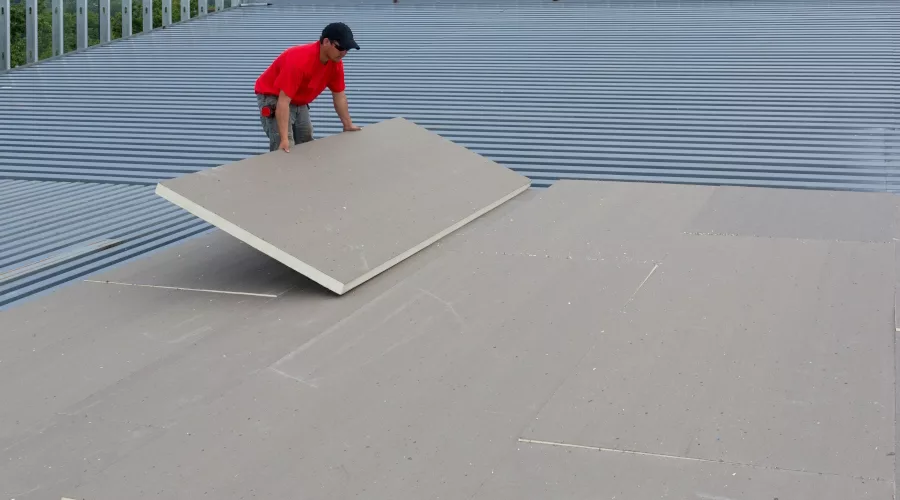
While polyiso is essentially equal to gypsum, a popular alternative, in features like moisture resistance, fire resistance and other uplift properties, the advantages are that it is lighter, easier to ship, and simpler to maneuver around a roof. In fact, polyiso cover boards can protect the underlying insulation from roof traffic and allow the roof to be used for renewable energy systems such as a rooftop solar power system.

Polyiso also provides a high R-value, a measure of how well a product insulates. High R-values mean that the material is better at its job, an inherent benefit of polyiso cover boards. With contemporary energy codes instituting minimum insulation requirements, polyiso is an excellent choice to meet and even exceed those standards.

Easy to Install, Good for the Environment

Installing polyiso insulation on any roof will contribute to the building’s overall thermal efficiency, making it more fire resistant and helping cut energy costs. The global warming potential (GWP) of the blowing agents used when manufacturing polyiso insulation is important to consider when evaluating its environmental impact.

GWP is a comparison of gases to determine their global warming impact, specifically how much energy the emissions of one ton of a certain gas will absorb relative to one ton of carbon dioxide in a given amount of time.

North American manufacturers use pentane, a hydrocarbon with zero ozone depletion potential (ODP) and low-GWP, or pentane blends in the production of polyiso insulation products. With pentane’s GWP value of less-than-10, polyiso insulation products produced and sold in North America are compliant with climate regulations that restrict the manufacturing or installation of products that have higher GWPs.

Science aside, this means that contractors can confidently recommend polyiso insulation products knowing that they comply with any regulations. By effectively creating protective air barriers on top floors, sealing off a building from the outside elements, and decreasing the need for large heating and air conditioning units, polyiso saves energy in more ways than one.

The unique structure of polyiso leads to its exceptional fire-resistant properties. Isocyanurate chemical bonds leads to a high-temperature invulnerability of nearly 390 degrees Fahrenheit, more than double that of most insulation foams. This makes polyiso less susceptible to surface burning and can help prevent flames from spreading. With the stringent criteria of codes related to fire performance in commercial buildings, contractors will have much more flexibility when insulating roofs with polyiso.

Polyiso insulation has always been a leading insulation choice for commercial roofs, and new technological advancements in the formula makeup continue to make it more economical and environmentally friendly. Elevate ISOGARD polyiso insulation offers a solution for commercial roofing challenges as it is engineered to protect against everything from ponded water on a low-slope roof to cold weather. Its thermal performance is up to 40% better than major competitors when tested by an independent third party in cold temperature 40°F (4°C) applications according to ASTM C1289 standards.

When building or designing roofs this winter, consider polyiso insulation to save on energy costs while staying warm.

KEYWORDS: ASTM (American Society for Testing and Materials) polyisocyanurate

Share This Story

Looking for a reprint of this article?
From high-res PDFs to custom plaques, order your copy today!


Recommended Content

JOIN TODAY
to unlock your recommendations.

Already have an account? Sign In

  • bar graph shows LEED v4/LEED v5/LEED v6 in various colors

    When Will LEED v4 / v4.1 and LEED v5 Expire?

    The latest version of the LEED rating system, LEED v5, is...
    Sustainability
    By: Daniel Overbey
  • Celebrating Women In AEC-2026

    Celebrating Women in The AEC Industry Part 1

    A round-up of women in the design, engineering and...
    Sustainability
    By: Lindsay Lewis
  • KEE membrane application on a roof

    A Beginner’s Guide to Single-Ply Roofing Membranes

    While PVC and TPO appear extremely similar, the chemistry...
    Low-Slope Roofs
    By: Peter Gross
Manage My Account
  • Sign up for the Newsletter
  • Online Registration
  • Manage My Preferences
  • Registration Customer Service

More Videos

Sponsored Content

Sponsored Content is a special paid section where industry companies provide high quality, objective, non-commercial content around topics of interest to the Building Enclosure audience. All Sponsored Content is supplied by the advertising company and any opinions expressed in this article are those of the author and not necessarily reflect the views of Building Enclosure or its parent company, BNP Media. Interested in participating in our Sponsored Content section? Contact your local rep!

close
  • HITT Construction headquarters
    Sponsored byBuilding Composites® LLC

    Pushing the Envelope

  • 2 construction workers and a DEXcell panel
    Sponsored byDEXcell Roof Boards

    Designing Low-Slope Roofs for Resilience

  • Bell Bank headquarters in Fargo, North Dakota
    Sponsored bySto Corp.

    Drained and Back-Ventilated Rainscreens vs Pressurized-Equalized Rainscreens

Popular Stories

graphic shows white arrows pointing to the right on a light green background

A Breakdown of Air Leakage Testing in LEED v5 BD+C

Open vs. closed cell foam in an attic

Open-Cell vs. Closed-Cell Spray Foam

skyscraper

NYC Tower Failure Offers Warning for Contractors

Building Enclosure Newsletter

BE Poll

Events

April 9, 2026

Strategies for High-Performance Below-Grade Waterproofing

Credits: 1 AIA LU/HSW ; 1 IIBEC CEH; 0.1 IACET CEU

On-Demand Designing a high-performance building enclosure requires more than just surface-level protection; it demands a rigorous, performance-based mastery of below-grade water and gas mitigation. This discussion will provide an expert-level analysis of below-grade waterproofing within the comprehensive framework of the high-performance building enclosure.

April 28, 2026

Roof Design Considerations That Prevent Installation Failures and Change Orders

Credit: 1 AIA LU/HSW; 1 IIBEC CEH; 0.1 ICC CEU

On-Demand This course provides visual examples of actual field conditions. Some good, some not so good; along with design suggestions that can cut installation costs and reduce construction change orders. Upon completion of this course, you will have a better understanding of the requirements the roofing contractor must meet to provide the specified roofing system warranty, and long-term value to the owner.

View All Submit An Event

Products

Plaster and Drywall Assemblies Manual

Plaster and Drywall Assemblies Manual

This is a comprehensive manual that goes beyond codes and standards, providing expert guidance in design, detailing, material selection and troubleshooting for plaster and drywall.

See More Products

Related Articles

  • sustainable roofing products

    Using the Right Tools Can Keep Your Roofing Crews Sustainable

    See More
  • cool roofing

    Keep Your Building Cool in Summer with a Cool Roof

    See More
  • Metal Panels Help Convert Historic Building into Urban Commercial Space

    See More

Related Products

See More Products
  • business.png

    How to Succeed With Your Own Construction Business

  • net zero.jpg

    Net Zero Energy Design: A Guide for Commercial Architecture

  • 0470872616.jpg

    Sustainable Renovation: Strategies for Commercial Building Systems and Envelope

See More Products

Events

View AllSubmit An Event
  • April 30, 2026

    Where Energy Efficiency Meets Life Safety: Polyiso CI and the Critical Role of NFPA 285

    Credits: 1 AIA LU/HSW; 1 IIBEC CEH; 0.1 ICC CEU On-Demand This presentation delivers a comprehensive look at the performance advantages of continuous insulation, with a special focus on polyisocyanurate (polyiso CI) solutions.
View AllSubmit An Event
×

Enhance your expertise with unparalleled insights.

Join thousands of building professionals today. Shouldn’t you know what they know?

SUBSCRIBE TODAY!
  • RESOURCES
    • Advertise
    • Contact Us
    • Store
    • Want More
  • SIGN UP TODAY
    • Create Account
    • Newsletter
    • Customer Service
    • Manage Preferences
  • SERVICES
    • Marketing Services
    • Reprints
    • Market Research
    • List Rental
    • Survey/Respondent Access
  • STAY CONNECTED
    • LinkedIn
    • Facebook
    • Instagram
    • YouTube
    • X
  • PRIVACY
    • PRIVACY POLICY
    • TERMS & CONDITIONS
    • DO NOT SELL MY PERSONAL INFORMATION
    • PRIVACY REQUEST
    • ACCESSIBILITY

Copyright ©2026. All Rights Reserved BNP Media, Inc. and BNP Media II, LLC.

Design, CMS, Hosting & Web Development :: ePublishing