Pre-Blended Stucco Can Get You Out of a Tight Spot
Contractors Should Consider A Number Of Best Practices For Overcoming Tight Jobsites On Multi-Floor Developments.
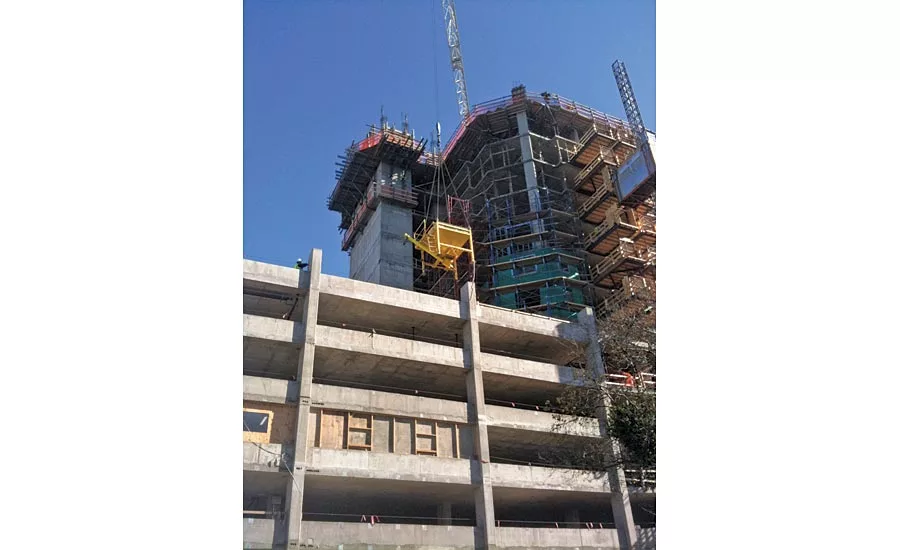
Strong job markets, educational opportunities, healthcare capabilities and social experiences are a few key reasons why 80 percent of Americans still live in urban areas, according to the U.S. Census Bureau. So, cities and other metropolitan settings with increasingly compressed space are building tall, multiple-level, mixed-use structures to accommodate a growing population seeking a live-work-play environment to call home.
Building vertically in cities is nothing new, but jobsites for condos, apartments, offices, schools, hospitals and other structures have shrunk to the point they are often not much larger than the actual development footprint. This common jobsite situation creates a variety of challenges for everyone on a project, but especially stucco contractors that deal with the delivery, storage, staging and mixing of materials before the first square-foot of material can be applied and finished. Driven to stay on schedule and on budget, contactors should consider a number of best practices for overcoming tight jobsites on multi-floor developments starting with the use of proven commercial-grade, pre-blended, packaged stucco.
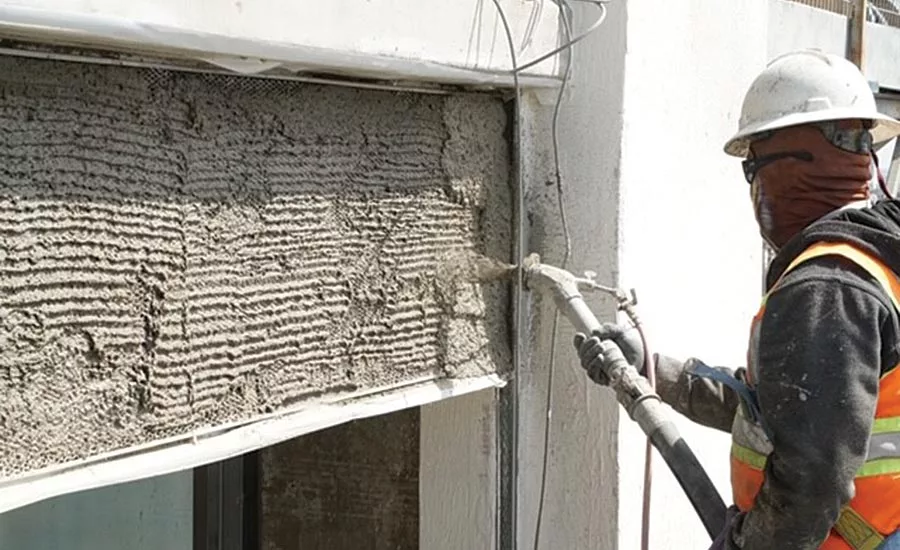
Available in 80-pound bags and 3,000-pound bulk bags, traditional and pumpable pre-blended stucco is ideal for managing tight jobsites not suited for field mixing. In addition to providing consistent quality and performance, computer batched pre-blended stucco means contractors only deal with one material instead of multiple materials—aggregates and cement—needed to field mix stucco. That’s fewer deliveries, less required storage and staging space, and reduced labor and material waste.
Time is of the Essence
The first challenge a contractor faces in urban construction is simply getting materials to a jobsite in a timely manner. Just navigating narrow streets lined with cars and stacked with buildings can be a daily grind for even the most experienced truck driver. However, by working with dispatch and/or distributors, drivers can scout a route in advance, and develop a schedule that considers possible delays like local noise ordinances and construction to make sure deliveries are made on time.
Even with the most meticulous planning, minimizing the number of deliveries to a jobsite is a recommended solution. Pre-blended stucco coming from one plant on one truck rather than aggregates and cement coming from multiple locations on multiple trucks effectively reduces the number of deliveries. Using pre-blended stucco also eliminates project delays caused when one of the materials for field mixing stucco is late to a jobsite. While Mother Nature can be a curse to on-time deliveries of aggregates and cement exposed to weather, she has little impact on pre-blended stucco protected in covered facilities. Bottom line is that contractors only need to be concerned with one delivery rather than multiple deliveries for the same amount of end product.
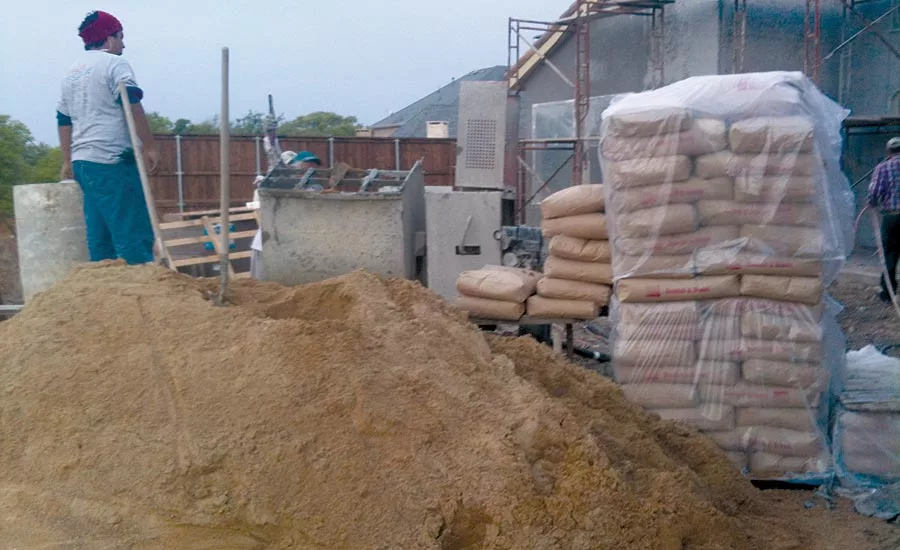
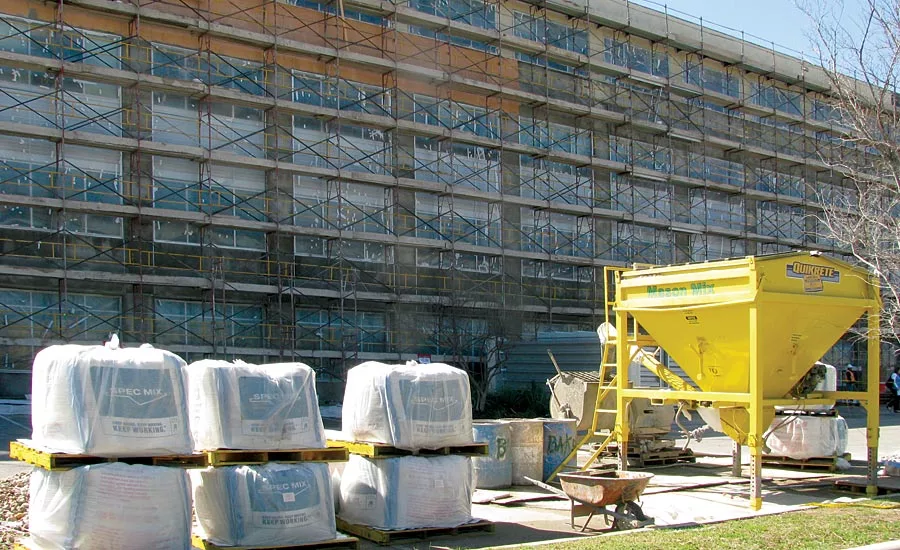
The same volume logic applies once materials arrive on a jobsite, especially in locations with inconvenient “usable” storage space like parking garages and decks. Often contractors are assigned a specific storage spot and required to manage material demands within those limits during a project. While this scenario can result in costly short loads, more frequent deliveries and the use of expensive short-bed trucks, contractors benefit from storing stackable pre-blend stucco bags rather than three ever-changing piles of aggregates and cement. The organized storage of pre-blended stucco stacked three-high (80-pound bags) or two-high (3,000-pound bulk bags) also makes access to ready-to-use stucco easier and faster than dealing with multiple materials, possibly exposed to the elements, that still need to be mixed by hand. You also avoid environmental restrictions like managing run-off of aggregates and cement into stormwater systems.
A Smart Move
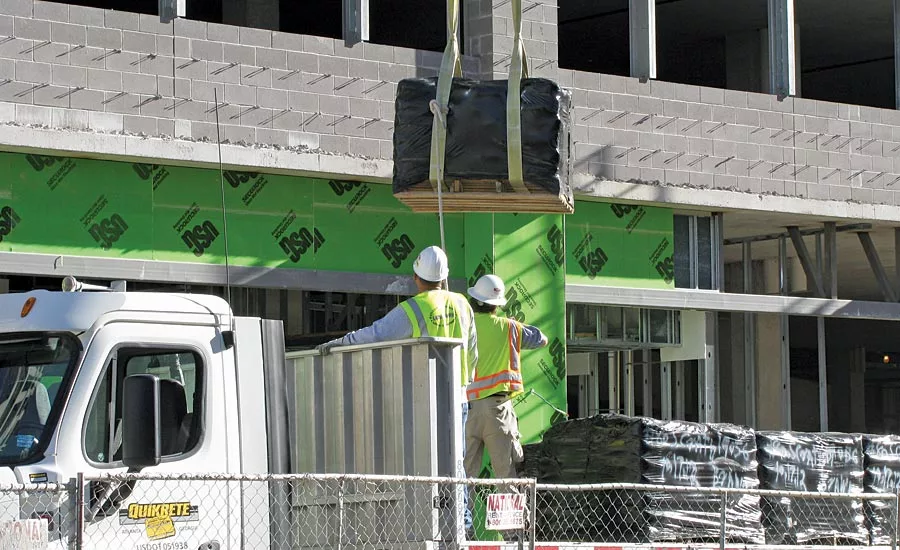
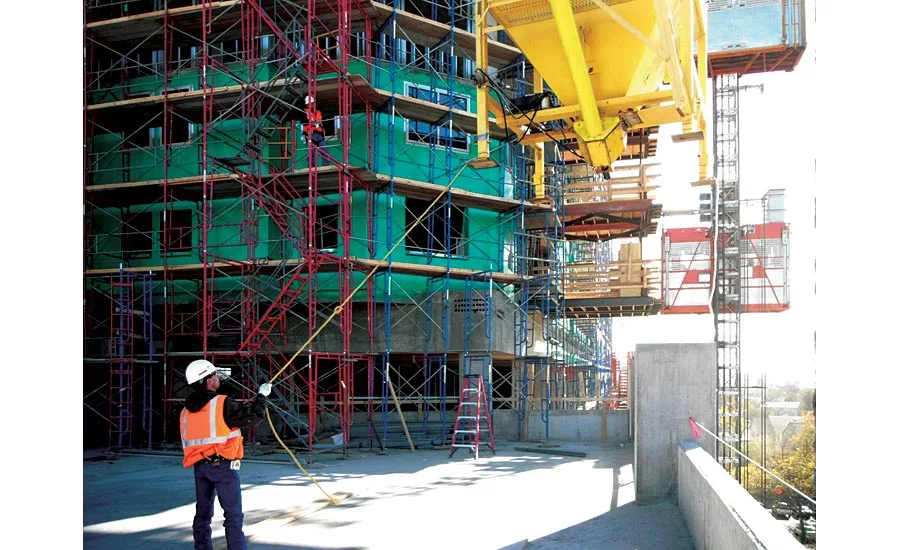
Now that storage is under control, contractors can turn their attention to transporting the pre-bended stucco to various staging areas on a jobsite. The 80-pound bags give contractors the versatility of moving entire pallets or smaller quantities using construction elevators or hoisting equipment to meet the layouts of different floors. Conversely, it takes a lot of time and energy to move stationary piles of aggregates and cement to multiple staging areas for field mixing. This can also create jobsite congestion and down time for the crew. Even in cases where the mixing needs to occur on the ground level before being delivered to staging areas, the process is more efficient and consistent with pre-blended stucco than field mixing.
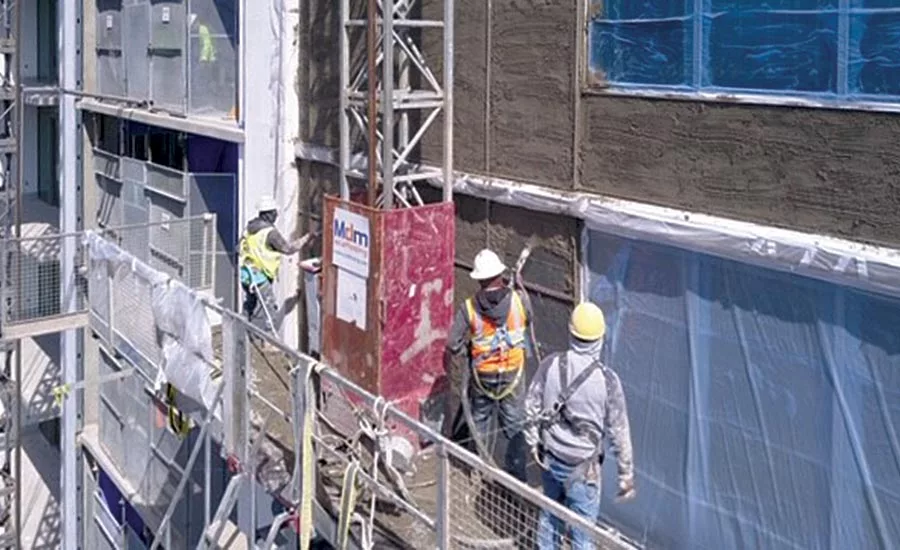
“The ability for us to have pumpable stucco in 80-pound bags is the only thing that allows us to be competitive in a high rise scenario where you are feeding material via a hoist that may not be able to handle the weight or size of a full pallet,” says Steve Veirs, estimator and project manager at DMG Masonry Ltd. “Placing 80-pound bags in several locations helps distribute the weight throughout the floor. Using a continuous mixer and pump with 80-pound bags allows you the freedom to move your mixing/pump operation anywhere—different floors, different areas or mixing and pumping directly from the scaffold. Without this product we could not be successful in the high rise multifamily market.”
Heavy-duty Silos
When there is a need or desire to work with larger quantities of stucco, contractors can count on silo systems that accommodate 3,000-pound bulk bags of pre-blended stucco. Offered in various sizes and styles, contractors can generally find silo systems to fit any jobsite configuration. In some instances, to expedite a project, multiple silo systems can be deployed on one jobsite. Gravity style silos and auger style silos are common options that only require an 8 foot by 8 foot area or less. By comparison, the footprint of a 10-yard sand pile with related cement materials will take up twice that area.
Many silos hold up to 15,000-pounds of stucco, which will cover approximately 4,000 square feet of scratch coat without stopping to reload. Field mixing that much stucco would take significantly more time and labor.
A gravity style silo is operated by sliding open a gate under the silo so it discharges the pre-blended stucco directly into the mixer before adding the water. The pull handle rotates to keep the operator ‘up wind’ from any dust, but the silos can be customized with dust abatement attachments. In addition to the traditional 15,000-pound versions, ‘The Ten Bagger’ that holds 30,000-pounds of material is also available.
There are more auger-style silo systems available depending on the marketplace, but they all discharge the material to the outside of the silo allowing for the use of larger pump and mixer equipment. The system consists of an auger screw delivery driven by a gasoline motor, which is similar to the pump and mixing equipment, so using and maintaining in tandem is convenient.
In very restrictive work areas like parking garages, lower-profile silo systems designed to hold between one and four 3,000-pound bulk bags of pre-blended stucco are available. These silo systems are also lighter, so staging them in higher, more remote locations is feasible. Regardless of the silo system, many contractors load the silo in the morning when they arrive and during lunch break and that keeps their crew busy all day. The use of a silo system isn’t even an option when field mixing stucco.
The numerous advantages of applying and finishing pre-blended stucco calls for a separate article, but the importance of delivering, storing, staging and mixing can’t be overlooked. While tight urban jobsites make it a more challenging endeavor, projects succeed when materials are on-time, effectively stored, quickly staged and efficiently mixed. Pre-blended stucco delivers on all those fronts along with consistent quality and performance not matched by field mixed alternatives. Not to mention, jobsite cleanup requires little labor and any unused pre-blended stucco can be reclaimed for a future project while lost aggregates and cement simply become lost profits.
Looking for a reprint of this article?
From high-res PDFs to custom plaques, order your copy today!
.webp?height=740&t=1767036885&width=auto "Header - BE 1170x658 (002).png")

.webp?height=740&t=1755781744&width=auto "KEE(2).png")