Building Enclosure logo
search
cart
facebook twitter linkedin youtube instagram Spotify Podcasts Apple Podcasts Spotify Podcasts Apple Podcasts
  • Sign In
  • Create Account
  • Sign Out
  • My Account
Building Enclosure logo
  • NEWS
    • Breaking News
  • SECTIONS
    • Columns
    • Project Profiles
    • Trade Shows
    • Sponsor Insights
  • SYSTEM DESIGNS
    • Low-Slope Roofs
    • Pitched Roofs
    • Metal Roofing Materials
    • Waterproofing
    • Sustainability
    • Insulation
    • Exterior Claddings
    • Wall Systems
    • Building Envelope
  • BLOG
    • The BE Blog
  • MEDIA
    • Podcasts
    • Webinars
    • Quiz
    • Videos
    • Polls
    • Interactive Spotlights
    • Newsletter
    • Photo Galleries
  • DIRECTORIES
    • Directory: Blue Book
    • Directory: Roofing Resource
  • PRODUCTS
  • TECHNICAL
    • Codes
      • Waterproofing
      • Roofing
    • Details
      • Waterproofing
      • Roofing
  • CONTINUING ED
  • ABOUT
    • Advertise
      • Editorial Calendar
    • Contact
    • eMag Archive Issues
  • SIGN UP!
Metal Roofing MaterialsSustainability

Top Five Sustainable Materials to Consider for Your Roof
By Eric Skoog
Sustainble Roofing
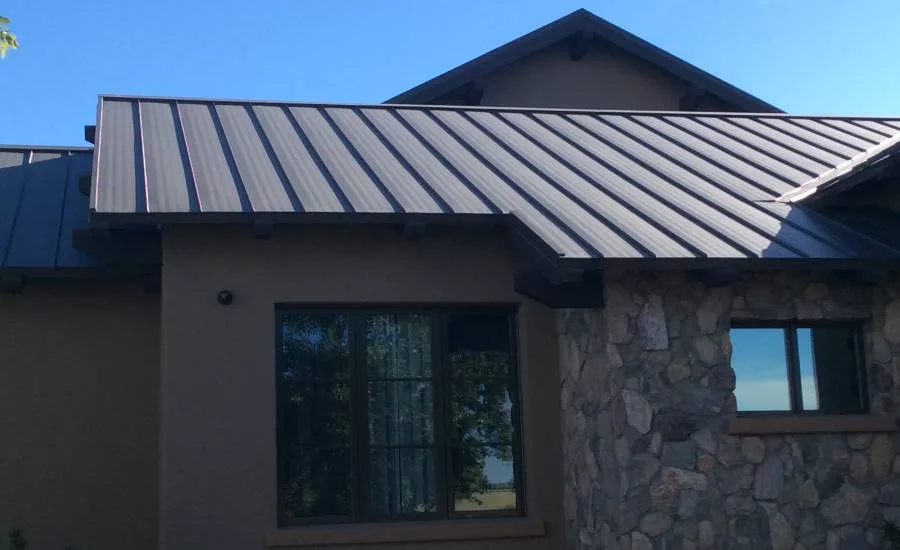
Sunvek Roofing installs metal roofs for commercial and residential properties.
April 21, 2017

Society’s movement towards sustainability has impacted the roofing industry significantly. The intent of the sustainability movement is to encourage use and development of environmentally-friendly options. In the roofing area, this is achieved by installation of products providing long-term service with renewability options and cost-effective service. As regulation increases, manufacturers are moving more towards “green” focused products. These products are durable, environmentally friendly and cost-effective.

Below are five sustainable roofing options that architects and developers may consider specifying for future projects.


Clay

Oddly enough, one of the most sustainable roofing products is clay tile. It is made of natural product obtained from clay pits, is highly durable, and recyclable. Natural clay is available in a variety of colors, and manufacturers may add tints and glazing to extend the range of color options. Since clay can be readily formed, then fired to dry and harden the end product, it is an excellent “green” choice.

Two-piece clay tile has been manufactured for more than two thousand years, evolving gradually over the centuries to the profiles and thickness’ seen today. A typical clay tile roof weighs approximately 10 pounds per-square-foot, although if installed with mortar it can weigh significantly more.

Manufacturers have been developing different configurations of clay tile which result in better air movement beneath the tile. Air movement accomplishes at least two purposes. First, it removes moisture from beneath the tile, so underlayment is likely to last longer. Second, it helps to moderate the surface temperature beneath the tile, resulting in lower cooling costs.


Concrete

As a more recent product extension, cement manufacturers have moved into roof tile production. Concrete roof tiles are formable, durable and fire-proof. Due to the nature of concrete, tiles made with cement tend to be thicker than clay, although the weight is similar. Tinting is added to cement in the manufacturing process to produce a wide array of colors, and the molded end result is typically shaped in the common “s,” “w” and “flat” profiles.

Concrete tile is secured to the roof with nails and/or lugs (small projections at the upper bottom side of the tile) that anchor the tile in place against a wood batten strip. There is generally an air gap between the tile and the roof surface below, permitting air movement beneath the tile.


Slate

Slate is also a natural product. Produced in slate pits, slate is a rock that can be “cut” by fracturing along the grain to create thin slabs of stone of roughly uniform thickness. These “slates” are then installed on a flat surface to create a durable and attractive roof system. Slate is waterproof, fire resistant and very durable. If installed properly, it can last hundreds of years.

Slate has been produced for more than a thousand years. In fact, there is a slate roof in England that has been in service since at least the 8th century. There is a natural variety of color and striation within slate, varying from pit to pit, and it can be produced in varying thicknesses and widths.


Metal(s)

Metal has been installed on roofs for centuries. Originally, lead was used for flashing details. In recent decades, with awareness of the dangers of lead poisoning, lead has lost favor in the roofing industry.

However, a couple of other metals are increasingly being used in roofing applications. Copper and zinc stand out for their durability, aesthetically pleasing results and their formability. Being natural products, both will patina over time, the result of chemical reactions between the surface of the product and the environment. When copper is exposed to salty air, it will turn a brilliant green. In a dry climate, such as the Southwest, over time copper turns the color of a dirty penny. With exposure to climatic conditions, zinc will generally turn a softer blue-gray in appearance.

Copper holds up extremely well and has been installed for centuries. Zinc is a more recent addition to metal roofing and has provides excellent service. Both metals are becoming more common in roofing applications, especially in higher-end residential and commercial applications. Other metal products such as steel and aluminum serve well in roofing applications, and at a lower cost point than either copper or zinc.


Polyurethane Foam

For flat roofs, spray polyurethane foam is an excellent option to consider. It consists of two components (resin and polyisocyanurate) joined together with heat and pressure, which react to rise and form a solid surface. Foam has a number of distinct advantages. It is an insulating material, serves as soundproofing, adds rigidity to a structure, is lightweight and very durable. Foam has been used in roofing applications since the 1960s.

Since it is a seamless product, maintenance is fairly simple. A utility knife and a tube of caulk will serve to address most issues that might arise with a foam roof.

Polyurethane foam has one distinct disadvantage—it will break down over time when exposed to the sun. This is overcome by coating the roof with an elastomeric acrylic, silicone or polyurea, all of which block ultraviolet rays from getting at the foam. The coatings can be used to add a variety of colors to the roof system, although the lighter colors tend to add the most to the insulating value of the roof system.

Polyurethane foam can be installed to any thickness in a series of passes called “lifts.” This puts insulation on the outside of the building, blocking heat or cold from passing through to the structure beneath, and vice-versa. No other roofing material has the combination of strength, formability, seamlessness and insulating value provided by spray polyurethane foam.

As society becomes more environmentally-conscious, architects and developers are converting to more “green” products for construction purposes. For more information about “green” roofing materials, be sure to reach out to your local roofing expert.

KEYWORDS: metal roofing sustainability

Share This Story

Looking for a reprint of this article?
From high-res PDFs to custom plaques, order your copy today!


Eric Skoog is president of SUNVEK. Arizona-based SUNVEK specializes in commercial roofing, maintenance and repairs. Along with installing new foam, metal, tile, shake, shingle, slate, TPO and coated roof systems, they replace underlayments, repair and recoat existing foam roofs, and install silicone, acrylic elastomeric coatings and emulsion over commercial flat roofs to extend their service life. For more information about SUNVEK, please visit www.sunvekroofing.com.

Recommended Content

JOIN TODAY
to unlock your recommendations.

Already have an account? Sign In

  • bar graph shows LEED v4/LEED v5/LEED v6 in various colors

    When Will LEED v4 / v4.1 and LEED v5 Expire?

    The latest version of the LEED rating system, LEED v5, is...
    Sustainability
    By: Daniel Overbey
  • Celebrating Women In AEC-2026

    Celebrating Women in The AEC Industry Part 1

    A round-up of women in the design, engineering and...
    Sustainability
    By: Lindsay Lewis
  • KEE membrane application on a roof

    A Beginner’s Guide to Single-Ply Roofing Membranes

    While PVC and TPO appear extremely similar, the chemistry...
    Low-Slope Roofs
    By: Peter Gross
Manage My Account
  • Sign up for the Newsletter
  • Online Registration
  • Manage My Preferences
  • Registration Customer Service

More Videos

Sponsored Content

Sponsored Content is a special paid section where industry companies provide high quality, objective, non-commercial content around topics of interest to the Building Enclosure audience. All Sponsored Content is supplied by the advertising company and any opinions expressed in this article are those of the author and not necessarily reflect the views of Building Enclosure or its parent company, BNP Media. Interested in participating in our Sponsored Content section? Contact your local rep!

close
  • HITT Construction headquarters
    Sponsored byBuilding Composites® LLC

    Pushing the Envelope

  • 2 construction workers and a DEXcell panel
    Sponsored byDEXcell Roof Boards

    Designing Low-Slope Roofs for Resilience

  • Bell Bank headquarters in Fargo, North Dakota
    Sponsored bySto Corp.

    Drained and Back-Ventilated Rainscreens vs Pressurized-Equalized Rainscreens

Popular Stories

graphic shows white arrows pointing to the right on a light green background

A Breakdown of Air Leakage Testing in LEED v5 BD+C

graphic shows a building destoryed by tornados with information on the amount of torandos in 2026 in the US

Record-Breaking Tornado Activity in Illinois Signals New Challenges for Architects

Patient room doors with flexible privacy features widens possible uses within these spaces and improves patient comfort

Acoustics and Aesthetics: The Value of Integrated Opening Systems

Building Enclosure Newsletter

BE Poll

Events

April 9, 2026

Strategies for High-Performance Below-Grade Waterproofing

Credits: 1 AIA LU/HSW ; 1 IIBEC CEH; 0.1 IACET CEU

On-Demand Designing a high-performance building enclosure requires more than just surface-level protection; it demands a rigorous, performance-based mastery of below-grade water and gas mitigation. This discussion will provide an expert-level analysis of below-grade waterproofing within the comprehensive framework of the high-performance building enclosure.

April 28, 2026

Roof Design Considerations That Prevent Installation Failures and Change Orders

Credit: 1 AIA LU/HSW; 1 IIBEC CEH; 0.1 ICC CEU

On-Demand This course provides visual examples of actual field conditions. Some good, some not so good; along with design suggestions that can cut installation costs and reduce construction change orders. Upon completion of this course, you will have a better understanding of the requirements the roofing contractor must meet to provide the specified roofing system warranty, and long-term value to the owner.

View All Submit An Event

Products

Plaster and Drywall Assemblies Manual

Plaster and Drywall Assemblies Manual

This is a comprehensive manual that goes beyond codes and standards, providing expert guidance in design, detailing, material selection and troubleshooting for plaster and drywall.

See More Products

Related Articles

  • The Top Five Questions About ‘Greening the Roof’

    See More
  • commercial rooftop shows membrane and solar

    Does Your Roof System Outperform Expectations?

    See More
  • Metal - Grand Bay-5_clean_Gulfstream Painting_Lazer.jpg

    How Protective Coatings Can Extend the Life of Your Roof

    See More

Related Products

See More Products
  • 9780128207918.jpg

    Eco-efficient Materials for Reducing Cooling Needs in Buildings and Construction 1st Edition

  • business.png

    How to Succeed With Your Own Construction Business

  • 1118458605.jpg

    Sustainable Facades: Design Methods for High-Performance Building Envelopes

See More Products
×

Enhance your expertise with unparalleled insights.

Join thousands of building professionals today. Shouldn’t you know what they know?

SUBSCRIBE TODAY!
  • RESOURCES
    • Advertise
    • Contact Us
    • Store
    • Want More
  • SIGN UP TODAY
    • Create Account
    • Newsletter
    • Customer Service
    • Manage Preferences
  • SERVICES
    • Marketing Services
    • Reprints
    • Market Research
    • List Rental
    • Survey/Respondent Access
  • STAY CONNECTED
    • LinkedIn
    • Facebook
    • Instagram
    • YouTube
    • X
  • PRIVACY
    • PRIVACY POLICY
    • TERMS & CONDITIONS
    • DO NOT SELL MY PERSONAL INFORMATION
    • PRIVACY REQUEST
    • ACCESSIBILITY

Copyright ©2026. All Rights Reserved BNP Media, Inc. and BNP Media II, LLC.

Design, CMS, Hosting & Web Development :: ePublishing