The Key to a Successful Roof Coating
Roof Coating Application and Performance Tips
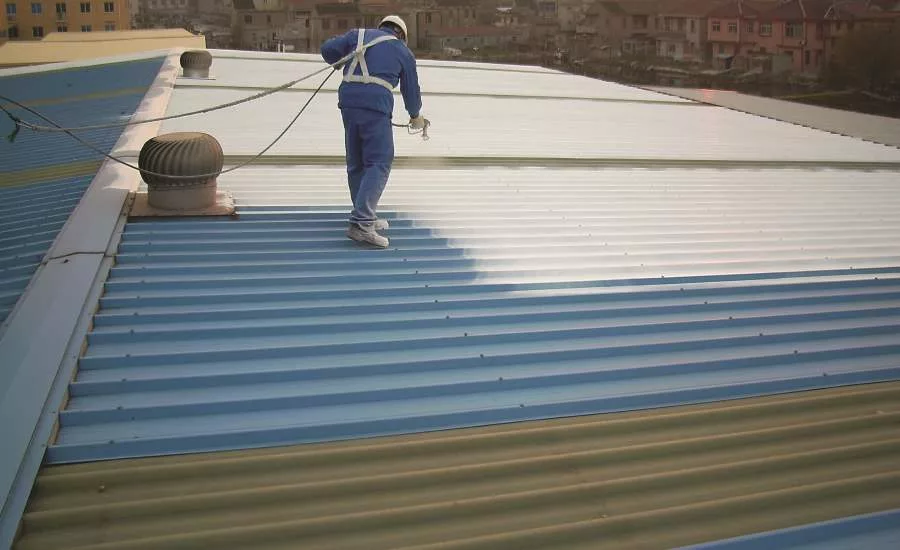
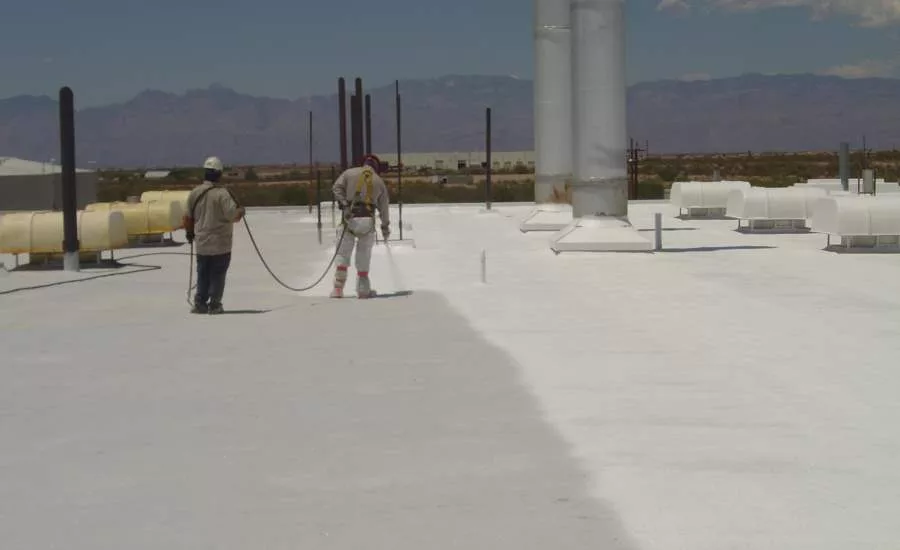
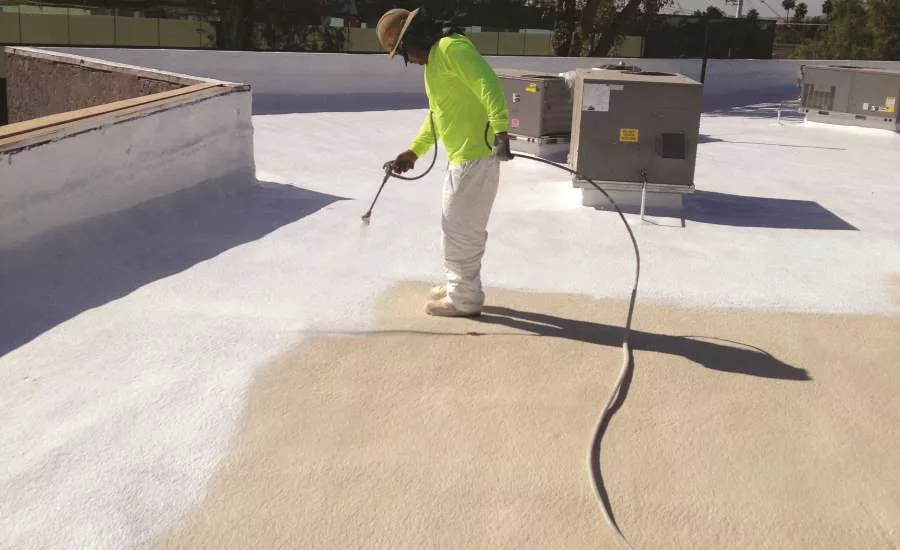
Roof coatings are designed for protecting and extending the service life of roof assemblies for new construction and more commonly, existing roof coverings, such as BUR, metal, modified bitumen, single-ply, and spray polyurethane foam. Roof coatings are formulated to provide protection for many years against the damaging effects of weather and the environment, such as UV light, and excessive water and wind. The most common types of roof coatings are acrylic coatings, asphalt coatings, polyurethane coatings and silicone coatings.
For existing buildings, every building owner will eventually be faced with the decision to completely tear-off an existing roof, to recover it or to repair it. About 3,000,000,000 square-feet of roofs are either replaced or re-coated each year. Given that roofing materials are the third greatest contributor to waste in landfills, roof coatings are an ideal solution to extend the service life of an existing roof and prevent tear-off and waste. Roof coatings extend roof service life because they reduce rooftop temperatures by reflecting radiation from the sun, protect the membrane below the coating from further degradation, and provide an additional weather resistive layer for long term performance. Reflective roof coatings also help to reduce the urban heat island effect.
Application and Maintenance
Two keys to the successful performance of a roof coating are proper application and regular maintenance. Some of the items to watch for during and after a roof coating application include spray-application problems, storage concerns, environmental conditions, lack of maintenance and foot traffic.
Spray-Application Problems
The vast majority of spray-application failures are the result of an applicator’s lack of experience and equipment-related issues. Spray application equipment must always be within spray manufacturer specifications. There are different brands, different pumps, different pressures, and different hoses and tips. One must be vigilant in their efforts to keep all of their equipment within the parameters set forth in the specification. Even when all of these requirements are met, several factors can affect application such as roof height, length of hose, coating and ambient temperature, and worn spray-tips. This can lead to over-spray, clogging, lack of pressure, improper spray fan pattern, etc.
Improper storage or maintenance of spray application equipment can cause problems on the job. Using the wrong lubricating oils and flushing liquids in a spray rig can cause failure in a coating system. Failing to replace a worn tip when spraying can lead to overspray issues and coverage rate problems.
It is paramount to have an experienced spray applicator. For example, an inexperienced applicator can ruin a batch of moisture-cured or solvent-based coating on a hot day simply by dripping sweat into the coating while mixing it. A crew that fails to check the ambient temperature, surface temperature, relative humidity and dew point prior to application can cause widespread installation problems. Proper training and quality control oversight can avoid many costly mistakes.
Storage Concerns
Roof coatings are formulated to react a certain way under certain conditions. For example, improper storage of moisture-cured coatings can lead to a moisture-triggered reaction taking place in the container before it is applied. Roof coatings should normally be stored in a climate controlled space, where the coating will not reach freezing temperatures, and generally never exceed 110 degrees Fahrenheit. Roof coatings should be kept in the shade, covered from the elements, and kept on raised platforms or pallets. The shelf life of each package/pail should be observed, and materials should be properly disposed of when expired. Failure to follow proper storage guidelines from a manufacturer can result in costly failures in the applied system.
Environmental Conditions
Sometimes coatings are best applied in very hot weather, and other coatings in more temperate conditions. A building owner should consult with the coating manufacturer to make sure that ambient conditions are taken into account. Projects close to the ocean have special considerations due to salt contamination and pop-up thunderstorms. Also, surrounding businesses or manufacturing operations might expel contaminants onto the project.
Lack of Maintenance
Coatings are barriers to the elements, and they eventually degrade in effectiveness. A proactive approach to inspections can solve problems while they are small. Waiting until there is a leak results in more costly repairs. When the life of a coating nears its end, plans should be made to renew it. This keeps costs down, and prevents the coating from failure. Many property owners will protect their roofing investment by formalizing an ongoing roof maintenance and inspection program and addressing all issues before they become big issues.
Foot Traffic
Many facilities require foot traffic on the roof. For example, HVAC units must be maintained, pipes must be inspected, and satellite dishes adjusted. With each visit to the roof there is potential for damage, whether it is a heavy tool that is dropped or just the slow wear of foot traffic in the same area. Prevent unnecessary roof damage by requiring maintenance personnel to wear shoes that will not damage the roof and use protective pads on which to place their tools and equipment.
Potential Issues with Installed Roof Coatings
During the application of a roof coating, problems can occur. If there are problems with a roof coating application, it is prudent to work with the coating manufacturer to determine proper corrective measures. The following is a brief discussion of potential problems.
Craters
Cratering is when a coating has small “bowl” shaped irregularities in the surface. Craters are often small, about the diameter of a pencil or less. The coating is very thin at the bottom of the “bowl” shape, and may be slightly thicker around the rim of the crater.
Craters are created when blistering occurs early in the application of the coating, and as the coating cures, the blister pops, leaving a “crater” in the surface. In addition, cratering can be the result of rain on a coating that is freshly applied, where the droplets push aside the uncured coating. When the water evaporates, a crater is left behind. Cratering is detrimental to a coating because the base of the crater is very thin, which can allow UV light to pass and degrade the roof that is being coated. It can also lead to premature failure due to a reduction in the coating’s tensile strength in those areas.
Fish Eyes
Fish eyes are very small blisters on the surface of the coating that have not popped. These small blisters have a small recessed area around the outside with a bubble in the middle. The tops of the blisters are often so thin that they appear transparent, and a small void to the substrate may occur below it. Fish eyes are almost always the result of contaminants, or more rarely, manufacturing defects. These contaminants can be introduced in such a large number of ways that it can be difficult to diagnose.
Blisters
Blistering is distinctive from fisheyes in that blisters are much larger and usually thicker at the top. The most common cause of blisters is the application of coatings over a wet substrate. Blisters can form immediately, or they may form during warmer weather when the trapped moisture heats up and water vapor pressure exerts force on the underside of the coating.
Pinholes
Pinholes are tiny holes that perforate an entire layer of coating. When air or solvent is trapped and then escapes, a pinhole may be created. This phenomenon can develop when air is mixed into the product before application or if the substrate being coated is textured and air pockets are formed under the film. Surfactants in the coating help with this by allowing air to escape quickly before the film cures. Pinholes are most commonly an issue with thin coatings, but can still occur in thicker products. Two or more coats of the product will take care of most risks associated with pinholes.
Mud Cracking
Mud cracking is the result of applying a coating too thick. The surface of the film cures and shrinks at a faster rate than the coating below it, causing it to split.
Amine Blush
If an epoxy base coating or primer has been utilized, especially amine-cured epoxies, one should monitor for potential amine blush. Amine blush happens when the ambient temperature drops after application and the carbon dioxide in the air along with any moisture that is present combines with the amine curing agent and forms a carbamate on the surface of the coating. This is a tacky, waxy substance that will cause other coatings to disbond from its surface. It can be removed with detergent and water using a scrub brush or abrasive pad. Solvents like acetone or mineral spirits will not remove it.
Delamination
When a roof coating delaminates, its adhesive or cohesive properties are lost. This normally happens when water penetrates the film, either because of a puncture or tear, or from water penetration at ponding locations. An increase in water generally results in continued delamination. Regular inspections can prevent a progressive failure. Correcting ponding conditions will help prevent delamination. Some roof coatings, however, are free from delamination issues due to their particular resin technology.
In summary, roof coatings can be extremely beneficial to the service life of a roof and to the energy efficiency of the building it protects. Following proper application means and methods, performing regular maintenance, and correcting problems are paramount to a successful roof coating application.
Looking for a reprint of this article?
From high-res PDFs to custom plaques, order your copy today!
.webp?height=740&t=1767036885&width=auto "Header - BE 1170x658 (002).png")

.webp?height=740&t=1755781744&width=auto "KEE(2).png")