Installing Spray Foam
Optimizing Performance in Spray Foam
A high performance insulation material, spray polyurethane foam, has become widely utilized in both residential and commercial structures. SPF boasts numerous benefits when applied in the ceiling, walls and floor, including durability, energy efficiency and soundproofing, in addition to dramatic improvements in indoor air quality and comfort.
SPF’s effectiveness is confirmed by the product’s growth as an industry. But with SPF’s increasing market share comes a growing need for proper installation education and professional certifications to ensure product effectiveness, installer safety and industry best practices.
Benefits of Utilizing Spray Foam Insulation
Insulation effectiveness and performance is not measured by one factor alone, but rather by the assessment of combined considerations for air leakage, moisture control, health, safety, durability, comfort and energy efficiency. Spray polyurethane foam scores high marks in all categories.
SPF provides a single-step thermal, air and moisture control. These qualities protect the structure against mold and water damage, maintain indoor temperatures and reduce energy costs. They also dramatically minimize the volume of allergens and pollutants able to enter the structure. Combined, these qualities create greater indoor comfort.
SPF also boasts both versatility and durability. As a lightweight solution, it provides ease of installation and bolsters the strength of the structure. The material is optimal for use across all geographic regions and climates and requires little maintenance post installation.
Proper Foam Installation
The benefits of SPF are optimized with safe and proper installation. Because SPF is essentially formed onsite during installation, specific guidelines, techniques and measures must be followed to maximize the product’s lifetime performance and to ensure safety for the installer and structure end user. These measures are outlined below.
Safety Precautions and Attire
SPF is formed on the jobsite by mixing equal volumes of two liquid components: the “A-side” and “B-side.” The
“A-side” contains polymeric isocyanates (pMDI), while the “B-side” consists of proprietary blends of polyols, blowing agents, catalysts, fire retardants and surfactants.
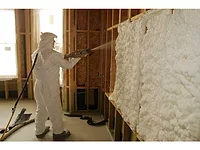
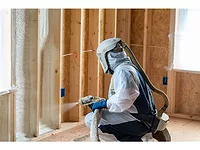
It is imperative to protect against contact with chemical vapors and aerosols from SPF developed during and shortly after application. Appropriate protective measures minimize the risks associated with exposure through inhalation, skin, and eye contact and include spray zone containment, coupled with adequate ventilation during installation, safety training for all those involved, personal protective equipment for the full duration of the install, and a medical surveillance program for field crews.
PPE for chemical protection includes a full body suit and headsock covering skin, along with chemically-resistant gloves and eye protection. Respiratory protection for interior insulation requires use of a supplied air respirator. In accordance with Occupational Safety and Health Administration, all insulation contractors, like any other construction trade, must employ proper fall protection as well as safety programs that include using ladders, scaffolding and working in confined spaces like attics and crawlspaces.
Additionally, overspray from SPF insulation applications must be controlled to prevent it getting on unintended surfaces. Finished surfaces, as well as window glass, must be properly covered and masked to prevent damage from overspray.
Selecting the Appropriate Products
A wide range of polyurethane foam products is available in various densities and open-cell content, each exhibiting different performance characteristics such as moisture resistance, R-value and compressive strength. Foam selection also affects installation characteristics, including the maximum lift thickness per pass and allowable substrate temperatures that in turn affect foam coverage.
Surface and Weather Evaluation
SPF adheres to various construction materials including metal, wood and concrete. However, applicators must ensure that surfaces are completely dry, and free of oils, grease, dirt and debris.
It is also important to assess weather conditions when applying spray foam. The product may be applied in various climatic conditions; however it is important to follow the manufacturer’s recommendations. The spray foam and related coatings should not be installed when there is ice, frost, surface moisture, or visible dampness present on the surface to be covered. Surface moisture can react with SPF chemicals resulting in poor-quality foam and/or lack of adhesion.¹
Preparation and Priming
In some SPF insulation installations, priming of the substrate surface may be required, especially when applying foam to large metal surfaces. Primers can greatly enhance adhesion between the SPF and existing substrates. Primers can help seal porous substrates and improve adhesion to metal substrates.
Installation of Protective Coatings and Coverings
SPF insulation must be separated from the interior space using a qualified 15-minute thermal barrier. While 1/2-inch gypsum and 3/4-inch plywood, meet this building code requirement, other applications of foam may require application of an approved thermal barrier covering or coating. In limited access attics, an ignition barrier covering or coating over the foam may also be required.
Equipment Care and Proper Material Storage
Professional SPF installation equipment must be cared for properly to ensure safety, effective installation, and the optimum performance of SPF. This essential care includes regular inspection, cleaning and repair. Additionally, proper storage and maintenance of the equipment is critical to ensuring it works properly and effectively.
Contractors must have on hand a supply of spare parts in each vehicle to minimize downtime should equipment failure occur during foam insulation installation. A spare parts inventory should include spray gun parts or a back-up spray gun, extra hoses, second set of drum pumps, and key wear-parts for the proportioner, compressor and generator.
Manufacturers provide suggested temperature ranges for the storage of spray foam chemicals, and these guidelines must be adhered to as a means to maximize their shelf life and to ensure they may be applied correctly and without difficulty. During installation, proportioner controls should be set to the manufacturer-recommended temperatures and pressures to produce ideal SPF. Properly stored SPF chemicals typically have a six-month shelf life.
Importance of Industry-Wide Professional Certifications
The spray polyurethane foam industry is continually evolving and growing. Members of the industry share the responsibility to ensure industry best practices, safety and the superb performance of the product. As such, professional installer certifications have become a critical designation for all involved in the installation of SPF. The Spray Polyurethane Foam Alliance offers a Professional Certification Program, giving all installers the opportunity to prove their knowledge and adherence to best practices. The program has gained significant traction across the country and is quickly on its way to becoming an industry standard.
The assured way to ensure all proper procedures, safety measures, material and equipment considerations, and industry best practices are followed is to use an experienced SPF contractor. Like all construction trades, a quality contractor will be financially stable, work with trained crews, and possess a positive reputation among customers and suppliers. It is also becoming more important for an installer to be professionally certified.
Notes
1 For more information on surface evaluation for insulation applications, see SPFA’s AY-112 Spray Polyurethane Foam for Residential Building Envelope Insulation and Air Seal available at www.sprayfoam.org.
Looking for a reprint of this article?
From high-res PDFs to custom plaques, order your copy today!

.webp?height=740&t=1767036885&width=auto "Header - BE 1170x658 (002).png")

.webp?height=740&t=1755781744&width=auto "KEE(2).png")