Building Enclosure logo
search
cart
facebook twitter linkedin youtube instagram Spotify Podcasts Apple Podcasts Spotify Podcasts Apple Podcasts
  • Sign In
  • Create Account
  • Sign Out
  • My Account
Building Enclosure logo
  • NEWS
    • Breaking News
  • SECTIONS
    • Columns
    • Project Profiles
    • Trade Shows
    • Sponsor Insights
  • SYSTEM DESIGNS
    • Low-Slope Roofs
    • Pitched Roofs
    • Metal Roofing Materials
    • Waterproofing
    • Sustainability
    • Insulation
    • Exterior Claddings
    • Wall Systems
    • Building Envelope
  • BLOG
    • The BE Blog
  • MEDIA
    • Podcasts
    • Webinars
    • Quiz
    • Videos
    • Polls
    • Interactive Spotlights
    • Newsletter
    • Photo Galleries
  • DIRECTORIES
    • Directory: Blue Book
    • Directory: Roofing Resource
  • PRODUCTS
  • TECHNICAL
    • Codes
      • Waterproofing
      • Roofing
    • Details
      • Waterproofing
      • Roofing
  • CONTINUING ED
  • ABOUT
    • Advertise
      • Editorial Calendar
    • Contact
    • eMag Archive Issues
  • SIGN UP!

Case Study: Badger State Fruit Processing

Cold Storage Facility Project Poses Tough Challenges

January 22, 2013

As Butch Gardner hauls cranberries between two cold storage facilities on the Badger State Fruit Processing property in Pittsville, Wis., he gives the “thumbs-up” to plant manager Mark Konrardy for a job well done. Konrardy met three tough challenges for the construction of a new cold storage facility, which was built to house Badger’s 200 million pounds of cranberries with room to grow.

Gardner, owner of Badger State Fruit Processing, is getting ready for the new cranberry harvest, which happens in just a few short weeks. Badger State’s 200 million pounds of cranberries represents about 45 percent of Wisconsin’s enormous crop. With Wisconsin’s claim to the largest cranberry-producing state in the union, that’s no small potatoes. According to Gardner, Wisconsin harvests about 52 percent of the world’s cranberries.

“Right now I grow, sell, and process cranberries for all of the buyers in the states — including the very biggest.” With 1100 acres of cranberries, Gardner is Wisconsin’s largest independent grower. “Right now our cranberries are stored in our combined two cold storage buildings. With the new facility we’ll go past that as new acres are planned to meet world demand for cranberry products.”

The new cold storage facility had to be built to withstand many years of operation. Gardner issued a directive to Konrardy. “The owner challenged me to find a way to keep our operating costs on the new cold storage facility low while achieving demanding temperature control requirements,” explained Konrardy. “Our choice to use Foam-Control and Foam-Control Plus architectural grade EPS insulation evolved out of my research into materials that would meet performance, cost, constructability and environmental criteria. We wanted to make sure it wouldn’t break down underground. It has to hold up for years of operation and not become damaged by moisture.”

Nearly 2 million board feet of ACH Foam Technologies’ Foam-Control flat EPS roof insulation and over half a million board feet of the manufacturer’s new Foam- Control Plus+ architectural grade perimeter and underslab insulation were used in the construction of the new cold storage facility this summer.

Konrardy has had a long-term interest in environmental stewardship. “I set up a list of quantifiable parameters grouped into three categories: performance, cost and environmental stewardship. Within those categories I researched various materials available and when all was said and done, Foam Control EPS insulation came out the clear winner for several reasons,” Konrardy added.

When researching the long-term warranted R-value of rigid foam insulations Konrardy found that both Foam-Control and Foam-Control Plus+ provide a 100 percent R-value warranty for 20 years. In contrast, other rigid foam insulations only warrant a percentage of their stated R-value because their materials off-gas and progressively lose R-value over time. This is true of extruded (XPS) insulations. EPS insulations such as Foam-Control and Foam-Control Plus+ do not lose R-value over time.

Compressive strength concerns were addressed by using Foam-Control Plus+ 400 (40 psi) for the freezer area and Foam-Control Plus+ 250 (25 psi) for the remainder of the perimeter and underslab areas. “I also researched the performance of rigid insulations when exposed to moisture,” stated Konrardy, “and found that EPS has a higher permeability than XPS. That extra permeability allows trapped moisture to escape. This is a good thing, because it maintains its R-value better.”

Because Konrardy was very interested in environmental considerations, he wanted to find an insulation that contained recycled content and didn’t leach toxic chemicals into the ground water. “This was a great find for me: that Foam-Control insulations contain up to 15 percent recycled content in the code-approved labeled EPS. This is the highest percentage of recycled content of all the rigid foam insulations on the market,” explained Konrardy. “I also know that EPS is easy to recycle and doesn’t contain leachates.”

The tipping point, according to Konrardy, was cost savings. R-value to R-value, EPS is 10 to 20 percent less expensive than other rigid foam insulations. “My decision wasn’t that difficult,” Konrardy added. “I was able to find a material that satisfied the criteria Mr. Gardner set out for me and satisfy my desire to make our plant greener.”


 For more information about ACH Foam Technologies, call 800-525-8697 or visit www.achfoam.com.


Badger State Fruit Processing

Performance criteria:

• Warranted, long-term in-service R-value

• Compressive strength

• Water absorption and impact on R-value

• Water permeability

Environmental Criteria:

• Recycled content

• Recyclability

• Leachates

Cost and constructability criteria:

• Cost of product per R-Value

• Availability of sizes

KEYWORDS: environmental impacts polystyrene

Share This Story

Looking for a reprint of this article?
From high-res PDFs to custom plaques, order your copy today!


Recommended Content

JOIN TODAY
to unlock your recommendations.

Already have an account? Sign In

  • bar graph shows LEED v4/LEED v5/LEED v6 in various colors

    When Will LEED v4 / v4.1 and LEED v5 Expire?

    The latest version of the LEED rating system, LEED v5, is...
    Sustainability
    By: Daniel Overbey
  • Celebrating Women In AEC-2026

    Celebrating Women in The AEC Industry Part 1

    A round-up of women in the design, engineering and...
    Sustainability
    By: Lindsay Lewis
  • KEE membrane application on a roof

    A Beginner’s Guide to Single-Ply Roofing Membranes

    While PVC and TPO appear extremely similar, the chemistry...
    Low-Slope Roofs
    By: Peter Gross
Manage My Account
  • Sign up for the Newsletter
  • Online Registration
  • Manage My Preferences
  • Registration Customer Service

More Videos

Sponsored Content

Sponsored Content is a special paid section where industry companies provide high quality, objective, non-commercial content around topics of interest to the Building Enclosure audience. All Sponsored Content is supplied by the advertising company and any opinions expressed in this article are those of the author and not necessarily reflect the views of Building Enclosure or its parent company, BNP Media. Interested in participating in our Sponsored Content section? Contact your local rep!

close
  • HITT Construction headquarters
    Sponsored byBuilding Composites® LLC

    Pushing the Envelope

  • 2 construction workers and a DEXcell panel
    Sponsored byDEXcell Roof Boards

    Designing Low-Slope Roofs for Resilience

  • Bell Bank headquarters in Fargo, North Dakota
    Sponsored bySto Corp.

    Drained and Back-Ventilated Rainscreens vs Pressurized-Equalized Rainscreens

Popular Stories

graphic shows white arrows pointing to the right on a light green background

A Breakdown of Air Leakage Testing in LEED v5 BD+C

Open vs. closed cell foam in an attic

Open-Cell vs. Closed-Cell Spray Foam

skyscraper

NYC Tower Failure Offers Warning for Contractors

Building Enclosure Newsletter

BE Poll

Events

April 9, 2026

Strategies for High-Performance Below-Grade Waterproofing

Credits: 1 AIA LU/HSW ; 1 IIBEC CEH; 0.1 IACET CEU

On-Demand Designing a high-performance building enclosure requires more than just surface-level protection; it demands a rigorous, performance-based mastery of below-grade water and gas mitigation. This discussion will provide an expert-level analysis of below-grade waterproofing within the comprehensive framework of the high-performance building enclosure.

April 28, 2026

Roof Design Considerations That Prevent Installation Failures and Change Orders

Credit: 1 AIA LU/HSW; 1 IIBEC CEH; 0.1 ICC CEU

On-Demand This course provides visual examples of actual field conditions. Some good, some not so good; along with design suggestions that can cut installation costs and reduce construction change orders. Upon completion of this course, you will have a better understanding of the requirements the roofing contractor must meet to provide the specified roofing system warranty, and long-term value to the owner.

View All Submit An Event

Products

Plaster and Drywall Assemblies Manual

Plaster and Drywall Assemblies Manual

This is a comprehensive manual that goes beyond codes and standards, providing expert guidance in design, detailing, material selection and troubleshooting for plaster and drywall.

See More Products

Related Articles

  • Vitro Glass project gallery image

    Vitro Architectural Glass Debuts Enhanced Project and Case Study Gallery

    See More
  • CDA and GreenCE Offer Video Case Study for Continuing Education Credit

    See More
  • Case Study: Harris County Jury Assembly Facility: Extreme Waterproofing Measures Keep Underground Building Dry

    See More

Related Products

See More Products
  • bni book

    2026 BNi Square Foot Costbook

  • 9780128207918.jpg

    Eco-efficient Materials for Reducing Cooling Needs in Buildings and Construction 1st Edition

  • bim-3e.jpg

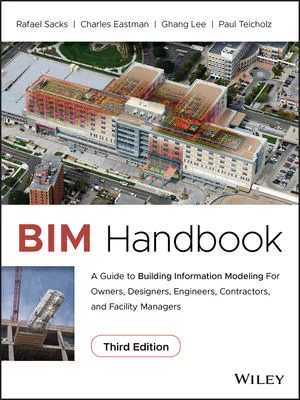
    BIM Handbook: A Guide to Building Information Modeling for Owners, Designers, Engineers, Contractors, and Facility Managers, 3rd Edition

See More Products

Events

View AllSubmit An Event
  • January 27, 2026

    Lessons Learned from Electronic Leak Detection Testing and Continuous Monitoring

    Credits: AIA 1 LU/HSW; 0.1 ICC CEU; 1 IIBEC CEH On-Demand This one-hour course will cover the lessons learned from over 20 case studies regarding Electronic Leak Detection (ELD) quality control testing as part of new construction, forensic testing in existing buildings with active leaks, and continuous moisture monitoring for conventional roofing. Participants will learn about the principles outlined in the ASTM Standard Guide D7877 and ASTM Standard Practice D8231 and will be able to identify common causes for moisture intrusion.
View AllSubmit An Event
×

Enhance your expertise with unparalleled insights.

Join thousands of building professionals today. Shouldn’t you know what they know?

SUBSCRIBE TODAY!
  • RESOURCES
    • Advertise
    • Contact Us
    • Store
    • Want More
  • SIGN UP TODAY
    • Create Account
    • Newsletter
    • Customer Service
    • Manage Preferences
  • SERVICES
    • Marketing Services
    • Reprints
    • Market Research
    • List Rental
    • Survey/Respondent Access
  • STAY CONNECTED
    • LinkedIn
    • Facebook
    • Instagram
    • YouTube
    • X
  • PRIVACY
    • PRIVACY POLICY
    • TERMS & CONDITIONS
    • DO NOT SELL MY PERSONAL INFORMATION
    • PRIVACY REQUEST
    • ACCESSIBILITY

Copyright ©2026. All Rights Reserved BNP Media, Inc. and BNP Media II, LLC.

Design, CMS, Hosting & Web Development :: ePublishing