Drawing Board
The initial cost of a roof system is typically 10 percent of the total building cost. However, over the life span the building the roof could account for nearly 60 percent of the building’s total maintenance costs.

The initial cost of a roof system is typically 10 percent of the total building cost. However, over the life span the building the roof could account for nearly 60 percent of the building’s total maintenance costs. This provides roofing contractors with an opportunity to become one of the building owner’s most valuable allies. In today’s economic environment, it has become more critical that the roofing contractor provide maintenance services beyond repairing leaks. The roof maintenance program must now also extend the service life of the existing roof system to provide the owner with an extended period in which proper finances for replacement can be obtained.
Roofing contractors that are able to provide these services will be able to help their owner clients get the maximum value out of existing roofs. It will also put them in the perfect position to handle the roof replacement project when the time comes.

Minor problems can be detected at their initial stages and corrected before they become severe, extensive problems. The building owner should view roof maintenance operations they way they view mortgage insurance. A manageable yearly expense could provide the dividends of a roof system that meets or exceeds its anticipated service life. For instance, a properly maintained 20-year roof system should protect the interior operations of the building for the full twenty years; any service life beyond this time could be considered free money to the owner.
Similar to preventive maintenance on manufacturing equipment, once the roof system has extended its depreciated service life, the owner receives a return on expenditures. Every year that the roof system is extended is an additional year that the owner does not have to expand a substantial expense for remedial roof construction.
Roof maintenance, though perhaps the most significant expenditure in maintaining buildings, is seldom approached systematically and logically. Too often, roof maintenance expenditures are made by individuals lacking the tools and information necessary to arrive at appropriate and cost-effective decisions. Without proper guidelines, information, and assurances, a significant percentage of roof dollars can be wasted.
A proper roof maintenance program will provide the building owner with a systematic approach to controlling and budgeting roof maintenance dollars. The primary goal of the program should be to direct the owners roofing dollars where they will do the most good. The owner should realize both short-term and long-term returns. The owner should also have a clear and verifiable system of allocating the money that they are currently spending on their roofs and have a practical understanding of what they are getting for their money.
All warranties provided by roof material manufacturers expressly state that the building owner is required to complete maintenance of the roof system throughout its service life. The absence of proper maintenance may be grounds for warranty nullification. Read the fine print of the warranty and clarify with the manufacturer what they consider to be maintenance items. Removal of the existing roofing due to poor workmanship or material failure should not be construed as maintenance and should be covered under the manufacturer’s warranty. In addition to maintenance, the building owner is required to contact the manufacturer when any alterations or additions are completed in the warranted roof areas.
The following five broad recommendations encompass the fundamental elements of an effective approach in the maintenance of roofing assemblies:
1. Maintain an adequate level of in-house expertise to diagnose maintenance and corrective action requirements, or develop an administrative process for obtaining adequate expert support.
2. Keep a suitable inventory of the roof’s material and system information to ensure proper materials and procedures are used in roof maintenance.
3. Take advantage of new maintenance materials. Many have more universal applications than conventional materials. Also, new moisture detection systems, including handheld moisture meters and infrared cameras, can be used to assist in the analysis of problems.
4. Be proactive to keep the roof functioning and prevent damage to structural or mechanical systems.
5. Set up a monitoring system that verifies repairs are being properly completed. Document and maintain a record of all work done on the roof with photographs.
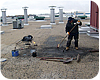
A proactive approach to roof maintenance prevents minor problems from becoming major headaches. Photo courtesy of Tecta America Corp.
The initial cost of a roof system is typically 10 percent of the total building cost. However, over the life span the building the roof could account for nearly 60 percent of the building’s total maintenance costs. This provides roofing contractors with an opportunity to become one of the building owner’s most valuable allies. In today’s economic environment, it has become more critical that the roofing contractor provide maintenance services beyond repairing leaks. The roof maintenance program must now also extend the service life of the existing roof system to provide the owner with an extended period in which proper finances for replacement can be obtained.
Roofing contractors that are able to provide these services will be able to help their owner clients get the maximum value out of existing roofs. It will also put them in the perfect position to handle the roof replacement project when the time comes.
Extending Service Life
The most important reason to conduct roof maintenance is to extend the service life of the existing roof system. Comprehensive repairs extend the service life of the roof system and provide cost savings to the owner. The maintenance program provides the establishment of a proactive posture in the detection and avoidance of leaks and other roofing problems instead of just reacting when a problem occurs. Problems are addressed at their initial stages, minimizing and preventing damage from leaks to interior furnishings, equipment, building materials and finishes. In this way, the owner avoids expenditures for such items as deck damage repair and associated costs resulting from reactive maintenance. Specific maintenance guidelines are developed based on the profile of the roof systems in place.Minor problems can be detected at their initial stages and corrected before they become severe, extensive problems. The building owner should view roof maintenance operations they way they view mortgage insurance. A manageable yearly expense could provide the dividends of a roof system that meets or exceeds its anticipated service life. For instance, a properly maintained 20-year roof system should protect the interior operations of the building for the full twenty years; any service life beyond this time could be considered free money to the owner.
Similar to preventive maintenance on manufacturing equipment, once the roof system has extended its depreciated service life, the owner receives a return on expenditures. Every year that the roof system is extended is an additional year that the owner does not have to expand a substantial expense for remedial roof construction.
Roof maintenance programs provides the building owner with a systematic approach to controlling and budgeting roof maintenance dollars. Photo courtesy of Tecta America Corp.
Long-Term Savings
Building owners often lack sufficient in-house expertise for optimizing the service life of their roofs. Their main concern, quite naturally, is in conducting their primary business to which the buildings are ancillary. More often than not, roof maintenance is fragmented, decentralized, reactive, and it consists of doing too much too early, or too little, too late. The theory of “don’t fix it unless it’s broken” results in missed opportunities to add years of useful service life to roofs.Roof maintenance, though perhaps the most significant expenditure in maintaining buildings, is seldom approached systematically and logically. Too often, roof maintenance expenditures are made by individuals lacking the tools and information necessary to arrive at appropriate and cost-effective decisions. Without proper guidelines, information, and assurances, a significant percentage of roof dollars can be wasted.
A proper roof maintenance program will provide the building owner with a systematic approach to controlling and budgeting roof maintenance dollars. The primary goal of the program should be to direct the owners roofing dollars where they will do the most good. The owner should realize both short-term and long-term returns. The owner should also have a clear and verifiable system of allocating the money that they are currently spending on their roofs and have a practical understanding of what they are getting for their money.
All warranties provided by roof material manufacturers expressly state that the building owner is required to complete maintenance of the roof system throughout its service life. The absence of proper maintenance may be grounds for warranty nullification. Read the fine print of the warranty and clarify with the manufacturer what they consider to be maintenance items. Removal of the existing roofing due to poor workmanship or material failure should not be construed as maintenance and should be covered under the manufacturer’s warranty. In addition to maintenance, the building owner is required to contact the manufacturer when any alterations or additions are completed in the warranted roof areas.
Recommendations
While the weathering process of roof systems cannot be arrested, certain administrative actions, combined with technological advancements in roof maintenance, can amount to a major step in controlling roofing dollars. Achieving controlled maintenance of the building’s major protective system - the roof - can lead to savings in energy expenditures and increased success in the maintenance of structural components of the facility.The following five broad recommendations encompass the fundamental elements of an effective approach in the maintenance of roofing assemblies:
1. Maintain an adequate level of in-house expertise to diagnose maintenance and corrective action requirements, or develop an administrative process for obtaining adequate expert support.
2. Keep a suitable inventory of the roof’s material and system information to ensure proper materials and procedures are used in roof maintenance.
3. Take advantage of new maintenance materials. Many have more universal applications than conventional materials. Also, new moisture detection systems, including handheld moisture meters and infrared cameras, can be used to assist in the analysis of problems.
4. Be proactive to keep the roof functioning and prevent damage to structural or mechanical systems.
5. Set up a monitoring system that verifies repairs are being properly completed. Document and maintain a record of all work done on the roof with photographs.
Looking for a reprint of this article?
From high-res PDFs to custom plaques, order your copy today!
.webp?height=740&t=1767036885&width=auto "Header - BE 1170x658 (002).png")

.webp?height=740&t=1755781744&width=auto "KEE(2).png")

