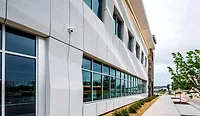
Game-Changing Design Freedom: 3D Printing Technology
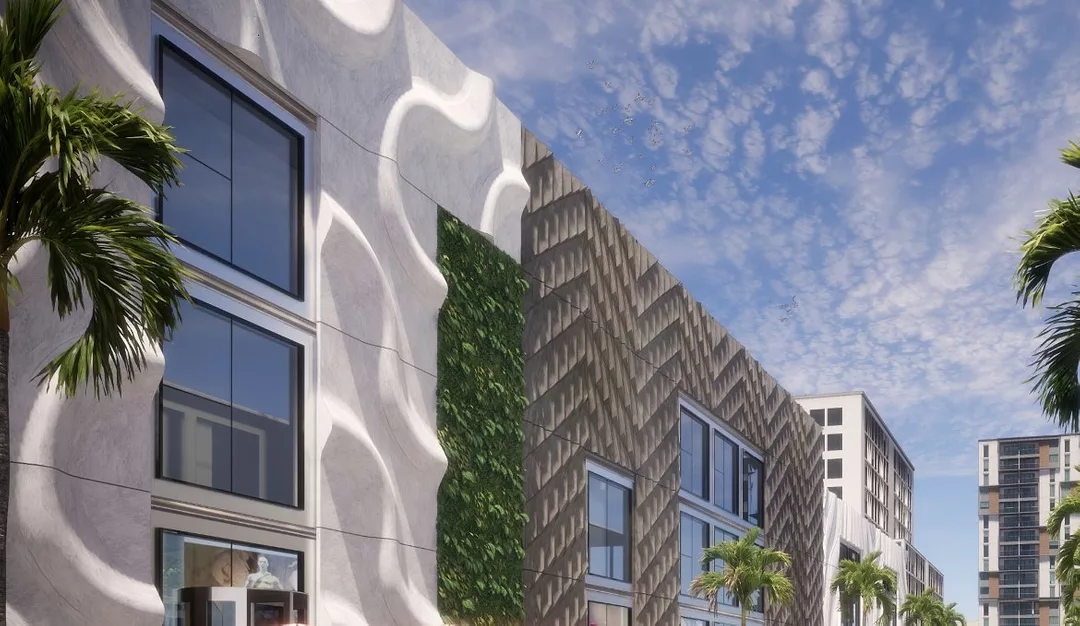
StoPanel® 3DP delivers 3-dimensional design freedom for exterior walls. A revolutionary prefabricated panel system that offers fully customizable 3D printed composite shapes that are lightweight, structurally robust, and easy to install.
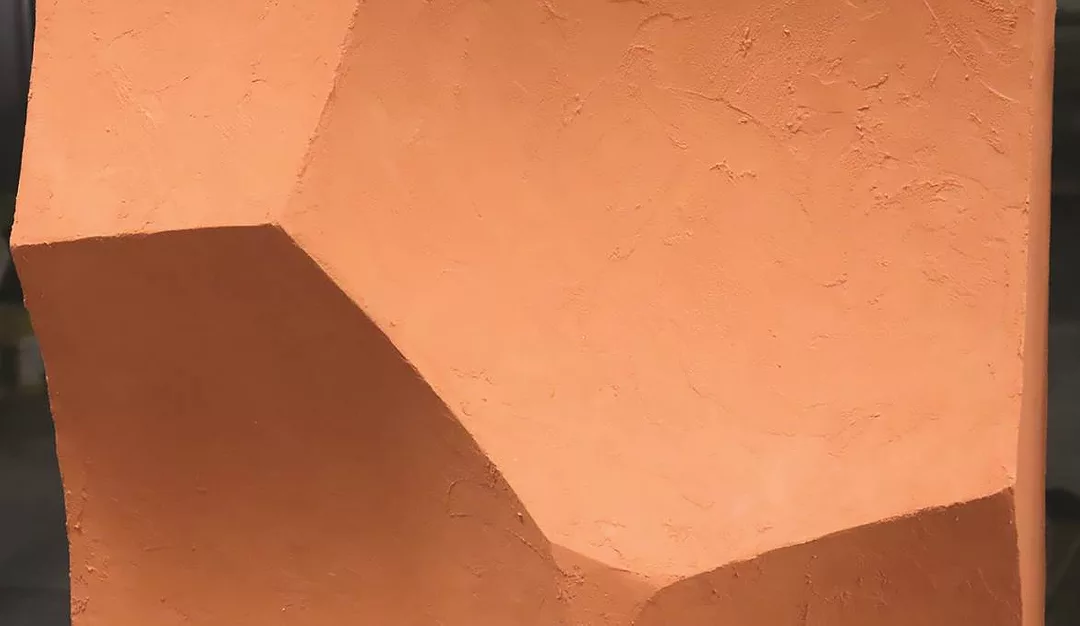
Using Robotics, the StoPanel® 3DP panels are manufactured using a lightweight polymer matrix, filled with a 2-lb density insulating foam, and robotically milled to exact dimensions. Shapes are produced directly from digital files so the result is extremely accurate to the original design
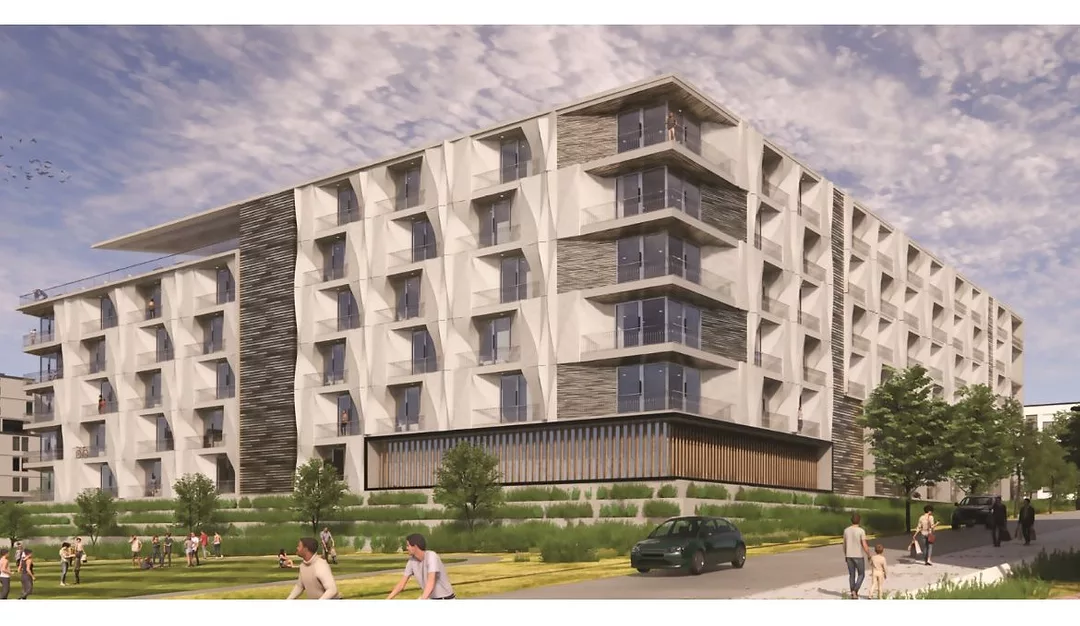
Sto Panel Technology and Branch Technology have partnered to create prefabricated wall panels using C-Fab® (Branch’s unique Cellular Fabrication), allowing for unprecedented creativity as virtually any shape or form can be created and finished with Sto’s high-performing products. All images courtesy of Sto Corp.
For architects seeking to deliver their own signature on their next project, aesthetics plays a critical role. Their design—particularly of the building’s exterior—creates first impressions for everyone who passes by, lives, or works there. Architects can reach for many tools when designing the building envelope—a multitude of materials, a wide variety of colors, and a growing array of surfaces with different types of finished textures. Each choice they make impacts aesthetics, durability, and energy efficiency in the long run. In effect, their palette is broad in today’s modern construction environment.
Yet there exists a limiting factor in this paradigm: it has traditionally been a two-dimensional model involving flat walls. The introduction of large, construction-scale 3D printing promises to alter this design environment, resulting in game-changing aesthetics for the building envelope in shapes and sizes not previously contemplated.
Utilizing computerized design and robotic fabrication, 3D printing is precise and predictable, eliminating the challenging, wasteful, labor-intensive methods of the past. It becomes a liberating force for construction professionals across a project team. The architect or designer attains full design freedom, increasing the possibility of having their creativity recognized with awards. Developers set themselves apart in the market with a unique structure. General contractors that can install 3D-printed building exteriors put themselves at a competitive advantage.
To put it concisely, technology has caught up to the mind’s eye with far-reaching implications for design possibilities.
Leading the Way with Prefabrication
3D printing in conjunction with prefabrication means architects face fewer design constraints than ever before. In the past, custom-designed panels were prohibitively expensive, limiting an architect’s design approach. A concept that existed in a designer’s mind or on paper was not always translatable to a real-world structure. With 3D prefabrication, facade panels are manufactured in a controlled environment where the panels are robotically milled to exact shapes and sizes. This differs from traditional construction methods, which consisted of craftspeople carving shapes on site, after cladding products had been installed on the building. An approach that was time-consuming, required highly skilled labor, and was often imprecise. Prefabrication allows for panel designs to be easily and quickly produced, enabling mass customization of facades for large-scale structures.
With prefabrication, walls are manufactured, fully assembled, loaded, and wrapped within a climate-controlled facility before being transported to the jobsite. This method delivers much higher precision and far less material waste. Additionally, architects can deliver greater energy efficiency through prefabricated systems by choosing panels that possess industry-leading insulation values.
The installation process involves a delivery truck, a crane to hoist the panels, and installers to fasten the panels onto the building’s framing elements. There is no on-site storage of materials or waste from excess materials. In fact, certain manufacturers have reduced the amount of waste by as much as 95 percent when constructing a building facade.
Construction projects that utilize traditional construction methods frequently go over budget and are not completed on time. Prefabrication helps to solve this by compressing timelines and adhering closely to the planned budget through the removal of variables that cause delays and rework. Timeline improvement is achieved by constructing panels earlier in the process while other site work is taking place. They then arrive on site precisely when they are ready to be installed. While this method requires investing additional time during the early project phases to ensure every detail is planned out and logistics are thought through and it results in significant time and cost savings overall.
Prefabricated panel systems are tested as a complete system for code compliance, durability, wind load, fire resistance, and more from the sheathing layer all the way to the finish. No longer is it necessary to rely on individual part performance without understanding how they interact and perform as a unit. Prefabrication ensures that the whole system will endure and meets safety and performance requirements.
Ultimately, prefabrication manufacturing methods result in project benefits for everyone. The community around the jobsite benefits from fewer disruptions and a shorter construction schedule. Contractors and installers benefit from having the job done on time and on budget by meeting deadlines, reducing waste and rework, and by creating a safer working environment for crews.
Combining Technologies
Without a prefabricated system approach, designers can get 3D shapes on a building exterior, but not as a fully completed wall cladding system. Rather, it is simply decorative. Choosing a prefabricated wall system ensures peace of mind, continuity of the building enclosure, and high-quality panels. The system delivers protection from the elements plus modern, high-end aesthetics.
Take an existing tested panel system that has framing and sheathing, an air and moisture barrier, a drainage plane, and insulation, and pair it with a high performing, eye-catching 3D facade, and a truly unique system takes shape. You create a one-of-a-kind building envelope that performs to the highest standards, can be installed quickly, and can be precisely manufactured and scaled for an entire large-scale facade.
Prefabrication eases the finishing process, too. Finishes for panels are often acrylic based and applied by trowel, roller, or spray. Even on a flat wall, applying these finishes on a scaffold in the wind or sun can be a challenge, let alone on a curved or 3D-printed wall. In a prefabricated environment where applicators are not affected by exterior conditions such as sun exposure, humidity, and temperature, which can affect the aesthetic and performance of the material, you get a higher-quality finish. This delivers a final product with superior performance characteristics compared to on site construction.
Proven Performance, Stunning Possibilities
3D-printed prefabricated building facades alter the equation when it comes to design flexibility without sacrificing performance.
Leading manufacturers in the industry are 3D printing facades in unique shapes or patterns that express an architect’s vision. Once the design is finalized and printed, the panels are filled with high-performance insulating foam. This foam features an R-value of up to R-7 per inch and is integrated to a 3D-printed shape at up to 12 inches thick. At this thickness, R-84 is achieved for an exterior wall, far surpassing any current commercial energy code mandate, including ones in the coldest climate zones.
Buildings that boast high R-values ease the burden on HVAC systems by successfully maintaining comfortable interior environments regardless of season or the outside temperature. This saves on energy bills and reduces the overall energy consumption and carbon footprint of a structure throughout its lifecycle. It becomes an increasingly important component as LEED certification and sustainability goals become increasingly important for building projects.
Changing the Conversation
Prefabrication pays for itself repeatedly. Any added, up-front expenses are offset by savings further downstream. For instance, prefabricated facades that incorporate insulating, fireproof foam can reduce insurance rates for owners by delivering a safer structure with noncombustible construction. These tested, quality panel systems can deliver protection that endures throughout the life cycle of a structure.
Add in a streamlined construction process that drives on-time project completion with up to 80 percent faster installation, and you allow building owners to generate revenue far quicker on commercial, institutional, or multi-family projects. Consider a college campus that has commissioned the construction of a new residence hall. When fall arrives and students are ready to move in, there is little room for error. Prefabrication helps to resolve this time crunch by keeping everything on schedule.
The combination of prefabrication with 3D-printed exterior wall panels introduces an entirely different level of aesthetics to buildings of all kinds. 3D printing removes obstacles that were once considered insurmountable, translating to more compelling designs that capture the imagination and spark curiosity and interest.
Greater efficiency in construction. A higher probability of meeting or exceeding timelines. An achievable sustainability quotient. Compelling designs that were once thought to be out of the realm of possibility. In essence, 3D printing with prefabrication provides superior capabilities and timeline reduction, changing the conversation about building envelope design.
Looking for a reprint of this article?
From high-res PDFs to custom plaques, order your copy today!


.webp?height=740&t=1767036885&width=auto "Header - BE 1170x658 (002).png")

.webp?height=740&t=1755781744&width=auto "KEE(2).png")