Building Enclosure logo
search
cart
facebook twitter linkedin youtube instagram Spotify Podcasts Apple Podcasts Spotify Podcasts Apple Podcasts
  • Sign In
  • Create Account
  • Sign Out
  • My Account
Building Enclosure logo
  • NEWS
    • Breaking News
  • SECTIONS
    • Columns
    • Project Profiles
    • Trade Shows
    • Sponsor Insights
  • SYSTEM DESIGNS
    • Low-Slope Roofs
    • Pitched Roofs
    • Metal Roofing Materials
    • Waterproofing
    • Sustainability
    • Insulation
    • Exterior Claddings
    • Wall Systems
    • Building Envelope
  • BLOG
    • The BE Blog
  • MEDIA
    • Podcasts
    • Webinars
    • Quiz
    • Videos
    • Polls
    • Interactive Spotlights
    • Newsletter
    • Photo Galleries
  • DIRECTORIES
    • Directory: Blue Book
    • Directory: Roofing Resource
  • PRODUCTS
  • TECHNICAL
    • Codes
      • Waterproofing
      • Roofing
    • Details
      • Waterproofing
      • Roofing
  • CONTINUING ED
  • ABOUT
    • Advertise
      • Editorial Calendar
    • Contact
    • eMag Archive Issues
  • SIGN UP!
Breaking News

Federal Spending Bill Advances Multiple ICC Priorities

1.jpg
March 22, 2022

On March 15, the President signed into law the Fiscal Year 2022 Consolidated Appropriations Act, bipartisan legislation to fund the U.S. federal government through September 30, 2022. The bill includes several measures that the International Code Council championed to support building safety professionals, including:

  • The Nicholas and Zachary Burt Memorial Carbon Monoxide Poisoning Prevention Act of 2022. Carbon monoxide (CO) poisoning claims at least 430 lives and sends 50,000 Americans to emergency rooms annually. The Act provides grants to state, tribal and territorial governments that adopt building safety codes—including the International Fire Code and the International Residential Code—that require CO poisoning prevention measures. Funding provided may be used for education, training and the purchase and installation of CO alarms. The Code Council joined construction industry associations and national fire and life safety organizations in support of the legislation’s passage and ensured that the legislation supports communities that have adopted the I-Codes.
  • Prioritization of Building Resilience and Infrastructure Communities (BRIC) program funding for the adoption and implementation of hazard-resistant codes. The bill includes language – advocated for by the Code Council – requiring that FEMA develop a plan addressing how the Agency and BRIC can better assist state, local, tribal and territorial (SLTT) governments in adopting and implementing building codes that advance community resilience. The legislation also increases BRIC funding for code activities and other capability and capacity-building measures by 50 percent.
  • A 20 percent increase in funding for the U.S. Department of Energy’s Building Energy Codes Program (BECP), which funds the development, adoption and implementation of energy conservation codes, including the International Energy Conservation Code. The Code Council spearheaded a coalition of state and industry organizations and sustainability advocates in support of an increase in funding to meet growing demand from state and local governments for updated, locally tailored energy codes.

“The Code Council applauds Congress and the Administration for their commitment to greater investments in building safety, resilience and efficiency for communities across the United States. We look forward to collaborating with departments and agencies, all levels of government, as well as our building safety colleagues, to advance these shared goals,” said Code Council Chief Executive Officer Dominic Sims, CBO.

KEYWORDS: building codes energy codes

Share This Story

Looking for a reprint of this article?
From high-res PDFs to custom plaques, order your copy today!


Recommended Content

JOIN TODAY
to unlock your recommendations.

Already have an account? Sign In

  • bar graph shows LEED v4/LEED v5/LEED v6 in various colors

    When Will LEED v4 / v4.1 and LEED v5 Expire?

    The latest version of the LEED rating system, LEED v5, is...
    Sustainability
    By: Daniel Overbey
  • Celebrating Women In AEC-2026

    Celebrating Women in The AEC Industry Part 1

    A round-up of women in the design, engineering and...
    Building Envelope
    By: Lindsay Lewis
  • KEE membrane application on a roof

    A Beginner’s Guide to Single-Ply Roofing Membranes

    While PVC and TPO appear extremely similar, the chemistry...
    Low-Slope Roofs
    By: Peter Gross
Manage My Account
  • Sign up for the Newsletter
  • Online Registration
  • Manage My Preferences
  • Registration Customer Service

More Videos

Sponsored Content

Sponsored Content is a special paid section where industry companies provide high quality, objective, non-commercial content around topics of interest to the Building Enclosure audience. All Sponsored Content is supplied by the advertising company and any opinions expressed in this article are those of the author and not necessarily reflect the views of Building Enclosure or its parent company, BNP Media. Interested in participating in our Sponsored Content section? Contact your local rep!

close
  • HITT Construction headquarters
    Sponsored byBuilding Composites® LLC

    Pushing the Envelope

  • 2 construction workers and a DEXcell panel
    Sponsored byDEXcell Roof Boards

    Designing Low-Slope Roofs for Resilience

  • Bell Bank headquarters in Fargo, North Dakota
    Sponsored bySto Corp.

    Drained and Back-Ventilated Rainscreens vs Pressurized-Equalized Rainscreens

Popular Stories

graphic shows white arrows pointing to the right on a light green background

A Breakdown of Air Leakage Testing in LEED v5 BD+C

Open vs. closed cell foam in an attic

Open-Cell vs. Closed-Cell Spray Foam

skyscraper

NYC Tower Failure Offers Warning for Contractors

Building Enclosure Newsletter

BE Poll

Events

April 9, 2026

Strategies for High-Performance Below-Grade Waterproofing

Credits: 1 AIA LU/HSW ; 1 IIBEC CEH; 0.1 IACET CEU

On-Demand Designing a high-performance building enclosure requires more than just surface-level protection; it demands a rigorous, performance-based mastery of below-grade water and gas mitigation. This discussion will provide an expert-level analysis of below-grade waterproofing within the comprehensive framework of the high-performance building enclosure.

April 28, 2026

Roof Design Considerations That Prevent Installation Failures and Change Orders

Credit: 1 AIA LU/HSW; 1 IIBEC CEH; 0.1 ICC CEU

On-Demand This course provides visual examples of actual field conditions. Some good, some not so good; along with design suggestions that can cut installation costs and reduce construction change orders. Upon completion of this course, you will have a better understanding of the requirements the roofing contractor must meet to provide the specified roofing system warranty, and long-term value to the owner.

View All Submit An Event

Products

Plaster and Drywall Assemblies Manual

Plaster and Drywall Assemblies Manual

This is a comprehensive manual that goes beyond codes and standards, providing expert guidance in design, detailing, material selection and troubleshooting for plaster and drywall.

See More Products

Related Articles

  • DBIA.png

    Defense Authorization Bill Advances Progressive Design-Build for Military Construction

    See More
  • Gabe Maser

    ICC Names Gabe Maser VP of Federal Relations

    See More
  • Breaking News Image #1

    ICC Celebrates Passage of Federal Cost Share Reform Incentive

    See More

Related Products

See More Products
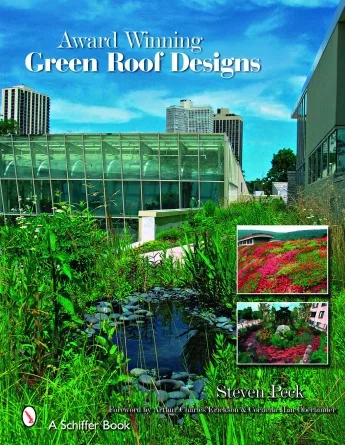
  • 978-0-7643-3022-3.jpg

    Award-winning Green Roof Designs: Green Roofs for Healthy Cities

See More Products

Events

View AllSubmit An Event
  • June 30, 2026

    Next-Generation Firestopping for Building Joints

    Credits 1 AIA LU/HSW; 1 IIBEC CEH; 0.1 ICC CEUOn-Demand This course will detail the progression of early building joint firestop methods to today's best practices, such as preformed firestopping and fire rated drywall accessories. Architects, engineers and specifiers will gain new perspective from this presentation, discovering more modern approaches to joint firestop methodology.
  • January 27, 2026

    Lessons Learned from Electronic Leak Detection Testing and Continuous Monitoring

    Credits: AIA 1 LU/HSW; 0.1 ICC CEU; 1 IIBEC CEH On-Demand This one-hour course will cover the lessons learned from over 20 case studies regarding Electronic Leak Detection (ELD) quality control testing as part of new construction, forensic testing in existing buildings with active leaks, and continuous moisture monitoring for conventional roofing. Participants will learn about the principles outlined in the ASTM Standard Guide D7877 and ASTM Standard Practice D8231 and will be able to identify common causes for moisture intrusion.
View AllSubmit An Event
×

Enhance your expertise with unparalleled insights.

Join thousands of building professionals today. Shouldn’t you know what they know?

SUBSCRIBE TODAY!
  • RESOURCES
    • Advertise
    • Contact Us
    • Store
    • Want More
  • SIGN UP TODAY
    • Create Account
    • Newsletter
    • Customer Service
    • Manage Preferences
  • SERVICES
    • Marketing Services
    • Reprints
    • Market Research
    • List Rental
    • Survey/Respondent Access
  • STAY CONNECTED
    • LinkedIn
    • Facebook
    • Instagram
    • YouTube
    • X
  • PRIVACY
    • PRIVACY POLICY
    • TERMS & CONDITIONS
    • DO NOT SELL MY PERSONAL INFORMATION
    • PRIVACY REQUEST
    • ACCESSIBILITY

Copyright ©2026. All Rights Reserved BNP Media, Inc. and BNP Media II, LLC.

Design, CMS, Hosting & Web Development :: ePublishing