Building Enclosure logo
search
cart
facebook twitter linkedin youtube instagram Spotify Podcasts Apple Podcasts Spotify Podcasts Apple Podcasts
  • Sign In
  • Create Account
  • Sign Out
  • My Account
Building Enclosure logo
  • NEWS
    • Breaking News
  • SECTIONS
    • Columns
    • Project Profiles
    • Trade Shows
    • Sponsor Insights
  • SYSTEM DESIGNS
    • Low-Slope Roofs
    • Pitched Roofs
    • Metal Roofing Materials
    • Waterproofing
    • Sustainability
    • Insulation
    • Exterior Claddings
    • Wall Systems
    • Building Envelope
  • BLOG
    • The BE Blog
  • MEDIA
    • Podcasts
    • Webinars
    • Quiz
    • Videos
    • Polls
    • Interactive Spotlights
    • Newsletter
    • Photo Galleries
  • DIRECTORIES
    • Directory: Blue Book
    • Directory: Roofing Resource
  • PRODUCTS
  • TECHNICAL
    • Codes
      • Waterproofing
      • Roofing
    • Details
      • Waterproofing
      • Roofing
  • CONTINUING ED
  • ABOUT
    • Advertise
      • Editorial Calendar
    • Contact
    • eMag Archive Issues
  • SIGN UP!
Insulation

Building High-End Luxury Homes with High-Energy Efficiency Products
ATLAS
All photos courtesy of Atlas Roofing Corporation.
ATLAS
ATLAS
ATLAS
March 15, 2021

Project Challenge

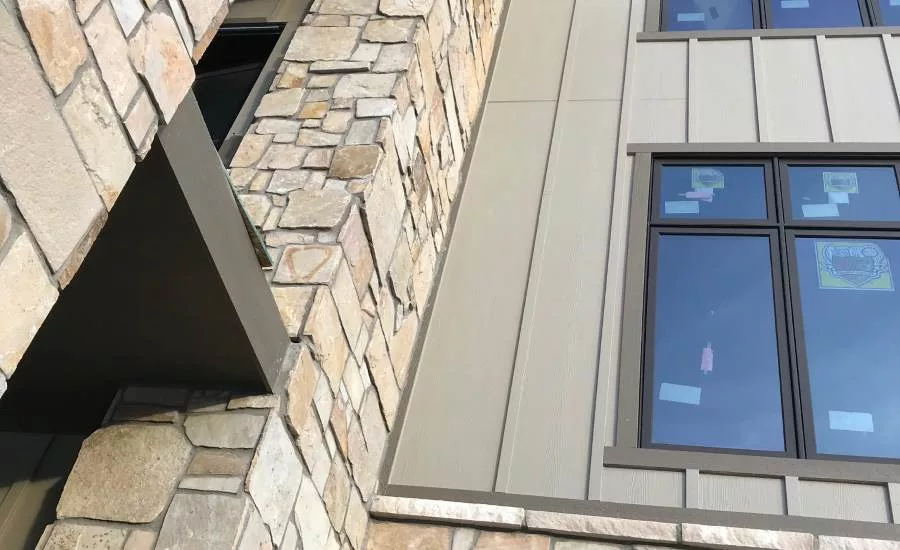
The designer of the Residences at Blackstone, a community of high-end multifamily townhomes and condos, wanted to provide energy-efficient housing that also met the standards set by the State of Utah and the U.S. Department of Energy.

In July 2016, Utah adopted the 2015 International Energy Conservation Codes (IECC) to meet federal requirements and help households and businesses save money and improve the environment. The new codes require significant increases in the thermal efficiency of the building envelope. The adoption of these codes will result in an estimated $170 million in annual savings by 2030 in Utah alone.

For the first-class buildings located at the base of the Utah Canyons, the Blackstone team needed to find a product that met the demands of the local climate and building codes, as well as the rigorous quality standards of the residential community. That meant finding a continuous insulation solution. Positioned as affordable luxury homes, the Blackstone community also required cost-efficient building materials. The Blackstone team turned to Atlas and their industry leading EnergyShield product for a high quality and cost-efficient solution.

Approach

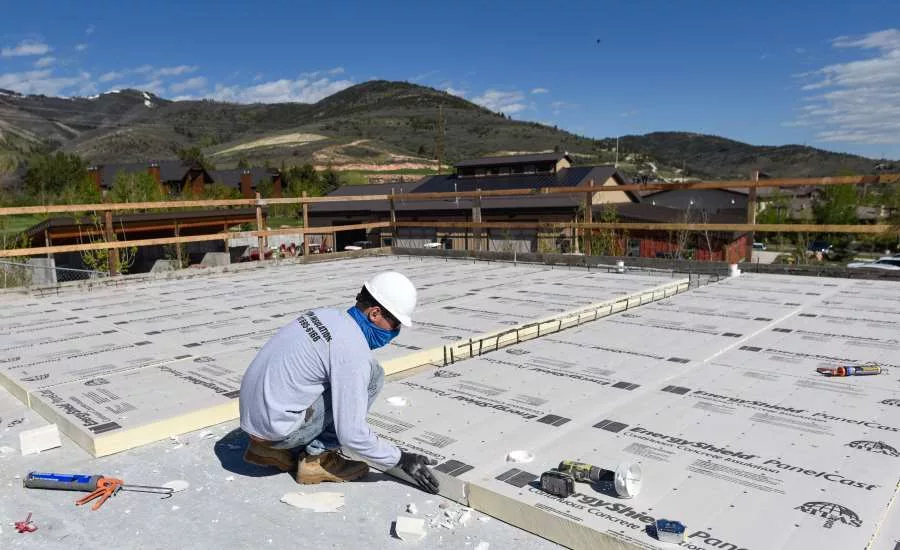
A critical part of increased energy efficiency for residential and commercial buildings is the improvement of the thermal performance of the building envelope, which includes the roof, walls and slab floors. Selecting a rigid foam insulation to provide a continuous layer of insulation can be a challenge. The Blackstone design and build team selected Atlas products, including EnergyShield® CGF Pro for the walls and EnergyShield® PanelCast™ in the slab floors to meet the strict new building codes without sacrificing quality for cost. These polyiso panels provide higher R-value than other foam insulation products such as XPS.

With Atlas EnergyShield® CGF Pro, Blackstone will achieve higher effectiveR-values with minimal material thickness, which can allow for more usable floor space. The sturdiness of the product, high quality and cost-efficiency, plus Atlas’ long history of outstanding customer service, made the company an easy choice for the housing development.

“Initially we chose Atlas because of the high R-value and the ability to use the products in different applications,” said Byron Nelson, owner of Nelson Insulation. “With the geography demands of this particular build, we needed a product that was truly exceptional, and it became apparent that the Atlas EnergyShield® polyiso product was the best choice for us. We are also continuously impressed with the technical knowledge of our Atlas team”, continued Nelson.

The Atlas EnergyShield® CGF Pro wall insulation combines high R-value, durability and water resistive barrier attributes in a high-performance continuous insulation solution. It’s composed of a Class A fire-rated, closed cell polyiso rigid foam core faced with a high performance coated glass facer on the front and back. Polyiso rigid foam has been a standard in roofing systems for many years, but its superior fire resistance and ease of installation has made the product even more popular in wall assemblies.

EnergyShield® CGF Pro is available in various thicknesses and R-values. Blackstone used a 1-inch thickness with an R-value of 6. With these high R-values, the building will be more energy efficient and provide a higher resistance to energy transfer.

The popular elevated “podium” slabs in the multi-family construction project utilized EnergyShield® PanelCast™. The PanelCast™ product is composed of a closed cell polyisocyanurate (polyiso) foam core, faced with a non-reflective coated glass-mat facer on both sides. The blowing agent used to produce the polyiso foam core in both PanelCast™ and EnergyShield® CGF Pro does not contain any CFCs, HCFCs or HFCs, has zero Ozone Depletion Potential (ODP), negligible Global Warming Potential (GWP) and is Green Guard Gold certified. It combines high R-value, enhanced durability from two coated glass-mat facers, and water resistive attributes in a high performance rigid wall insulation.
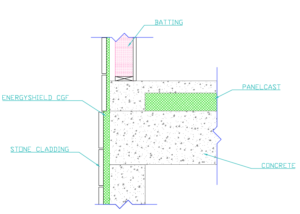
The garage can be seen at the foundation level, with the first floor
shown at the top of the diagram. The EnergyShield® PanelCast™ product is being used in the ceiling of the garage floor of the home to keep the inside warm and energy efficient, despite a cold garage that would allow the air to escape.

Atlas provided a 4-inch layer of continuous concrete insulation with an R-value of 25 over a 6-inch concrete slab with a high-performance radiant heating system on the first floor of the luxury condos. Not only does EnergyShield® PanelCast™ offer a higher R-Value over other products—like EPS and XPS—it’s also a higher quality product. Other materials are often less durable and have the potential to melt at lower temperatures. But the EnergyShield® PanelCast™ alkali-resistant coated glass stands up to issues like harsh casting.

Blackstone didn’t just use EnergyShield® PanelCast™ for condo flooring. They also incorporated EnergyShield® PanelCast™ into the garage flooring. The underground parking garages were built using 15-inches of poured cement slab, 4-inches of EnergyShield® PanelCast™ and then an additional 4-inches of poured cement. The Atlas EnergyShield® PanelCast™ product is available for all concrete wall systems and many above grade slab applications.

Impact

By using EnergyShield® CGF Pro and EnergyShield® PanelCast, Blackstone was able to meet the strict energy-efficient standards set by Utah, while maintaining the elegant design of their residential buildings. The Atlas products provide an uninterrupted thermal barrier that will keep the residences energy-efficient for years to come. At this point, sixty percent of the residential project is complete with Atlas products being installed as the insulation solution to meet the stringent new codes and provide a higher performing building envelope.

KEYWORDS: energy efficiency insulation systems multi-family buildings

Share This Story

Looking for a reprint of this article?
From high-res PDFs to custom plaques, order your copy today!


Recommended Content

JOIN TODAY
to unlock your recommendations.

Already have an account? Sign In

  • bar graph shows LEED v4/LEED v5/LEED v6 in various colors

    When Will LEED v4 / v4.1 and LEED v5 Expire?

    The latest version of the LEED rating system, LEED v5, is...
    Sustainability
    By: Daniel Overbey
  • Celebrating Women In AEC-2026

    Celebrating Women in The AEC Industry Part 1

    A round-up of women in the design, engineering and...
    Sustainability
    By: Lindsay Lewis
  • KEE membrane application on a roof

    A Beginner’s Guide to Single-Ply Roofing Membranes

    While PVC and TPO appear extremely similar, the chemistry...
    Low-Slope Roofs
    By: Peter Gross
Manage My Account
  • Sign up for the Newsletter
  • Online Registration
  • Manage My Preferences
  • Registration Customer Service

More Videos

Sponsored Content

Sponsored Content is a special paid section where industry companies provide high quality, objective, non-commercial content around topics of interest to the Building Enclosure audience. All Sponsored Content is supplied by the advertising company and any opinions expressed in this article are those of the author and not necessarily reflect the views of Building Enclosure or its parent company, BNP Media. Interested in participating in our Sponsored Content section? Contact your local rep!

close
  • 2 construction workers and a DEXcell panel
    Sponsored byDEXcell Roof Boards

    Designing Low-Slope Roofs for Resilience

  • Bell Bank headquarters in Fargo, North Dakota
    Sponsored bySto Corp.

    Drained and Back-Ventilated Rainscreens vs Pressurized-Equalized Rainscreens

  • A construction worker using DEXcell roof boards
    Sponsored byDEXcell Roof Boards

    The Hidden Strength of Low-Slope Roof Systems: Why Roof Cover Boards Matter

Popular Stories

construction industry workers in hard hats stand around a city scape

Construction Industry Revolts Over New CSI Licensing Plan

a man wearing a mask installs insulation into a wall system

Quiet Rooms and Healthier Air: A Second Look at What Goes Inside the Wall Cavity

Canalino Elementary School and Canalino Family School exterior

Daylighting Design to Support Rapidly Growing Trend in Modular Building Construction

Building Enclosure Newsletter

BE Poll

Events

June 17, 2025

Addressing Condensation in Low-Slope Roof Assemblies

Credits: 1 AIA LU/HSW; 0.1 ICC CEU; 1 IIBEC CEH; 0.1 IACET CEU

On Demand In modern roofing systems, vapor retarders and air barriers do more than just minimize air leakage—they’re essential to maximizing performance and longevity. This engaging course dives into the next generation of moisture control: permeable vapor retarders and air barriers. Discover how these cutting-edge technologies are transforming low-slope roofing assemblies by improving energy efficiency, managing moisture, and boosting wind uplift resistance.

April 9, 2026

Strategies for High-Performance Below-Grade Waterproofing

Credits: 1 AIA LU/HSW ; 1 IIBEC CEH; 0.1 IACET CEU

On-Demand Designing a high-performance building enclosure requires more than just surface-level protection; it demands a rigorous, performance-based mastery of below-grade water and gas mitigation. This discussion will provide an expert-level analysis of below-grade waterproofing within the comprehensive framework of the high-performance building enclosure.

View All Submit An Event

Products

Plaster and Drywall Assemblies Manual

Plaster and Drywall Assemblies Manual

This is a comprehensive manual that goes beyond codes and standards, providing expert guidance in design, detailing, material selection and troubleshooting for plaster and drywall.

See More Products

Related Articles

  • High-Performance Building Envelopes: Meeting New Energy Codes with Manufactured Systems

    See More
  • Building ENvelope

    How a High-Performance Building Envelope Increases Heating and Cooling Efficiency

    See More
  • IMG_3337.jpg

    GCP Partners with Florida High School to Build Habitat for Humanity Homes

    See More

Related Products

See More Products
  • 1118458605.jpg

    Sustainable Facades: Design Methods for High-Performance Building Envelopes

  • energy modeling.jpg

    Energy Modeling and Computations in the Building Envelope

  • studentguidebook.jpg

    Integrating Building Performance with Design: An Architecture Student’s Guidebook

See More Products

Events

View AllSubmit An Event
  • December 9, 2025

    Enhancing Building Resiliency with High-Density Fiber Cement Rainscreen Cladding

    On-Demand This course discusses the history and characteristics of high-density cement fiber cladding. It then illustrates how a fully engineered, multi-layered system integrates an air and water-resistive barrier, a robust sub-construction made from aluminum or steel brackets and profiles, mineral wool thermal insulation board, and durable high-density fiber cement. Images illustrate how the fiber cement panels can be custom-fabricated into various shapes, offering design versatility. 
View AllSubmit An Event
×

Enhance your expertise with unparalleled insights.

Join thousands of building professionals today. Shouldn’t you know what they know?

SUBSCRIBE TODAY!
  • RESOURCES
    • Advertise
    • Contact Us
    • Store
    • Want More
  • SIGN UP TODAY
    • Create Account
    • Newsletter
    • Customer Service
    • Manage Preferences
  • SERVICES
    • Marketing Services
    • Reprints
    • Market Research
    • List Rental
    • Survey/Respondent Access
  • STAY CONNECTED
    • LinkedIn
    • Facebook
    • Instagram
    • YouTube
    • X
  • PRIVACY
    • PRIVACY POLICY
    • TERMS & CONDITIONS
    • DO NOT SELL MY PERSONAL INFORMATION
    • PRIVACY REQUEST
    • ACCESSIBILITY

Copyright ©2026. All Rights Reserved BNP Media, Inc. and BNP Media II, LLC.

Design, CMS, Hosting & Web Development :: ePublishing