Building Enclosure logo
search
cart
facebook twitter linkedin youtube instagram Spotify Podcasts Apple Podcasts Spotify Podcasts Apple Podcasts
  • Sign In
  • Create Account
  • Sign Out
  • My Account
Building Enclosure logo
  • NEWS
    • Breaking News
  • SECTIONS
    • Columns
    • Project Profiles
    • Trade Shows
    • Sponsor Insights
  • SYSTEM DESIGNS
    • Low-Slope Roofs
    • Pitched Roofs
    • Metal Roofing Materials
    • Waterproofing
    • Sustainability
    • Insulation
    • Exterior Claddings
    • Wall Systems
    • Building Envelope
  • BLOG
    • The BE Blog
  • MEDIA
    • Podcasts
    • Webinars
    • Quiz
    • Videos
    • Polls
    • Interactive Spotlights
    • Newsletter
    • Photo Galleries
  • DIRECTORIES
    • Directory: Blue Book
    • Directory: Roofing Resource
  • PRODUCTS
  • TECHNICAL
    • Codes
      • Waterproofing
      • Roofing
    • Details
      • Waterproofing
      • Roofing
  • CONTINUING ED
  • ABOUT
    • Advertise
      • Editorial Calendar
    • Contact
    • eMag Archive Issues
  • SIGN UP!
Building EnvelopeSustainability

How Global Gatherings are Changing the Built Environment

Innovation is a Sport
By Lindsay Lewis
Rio 2016
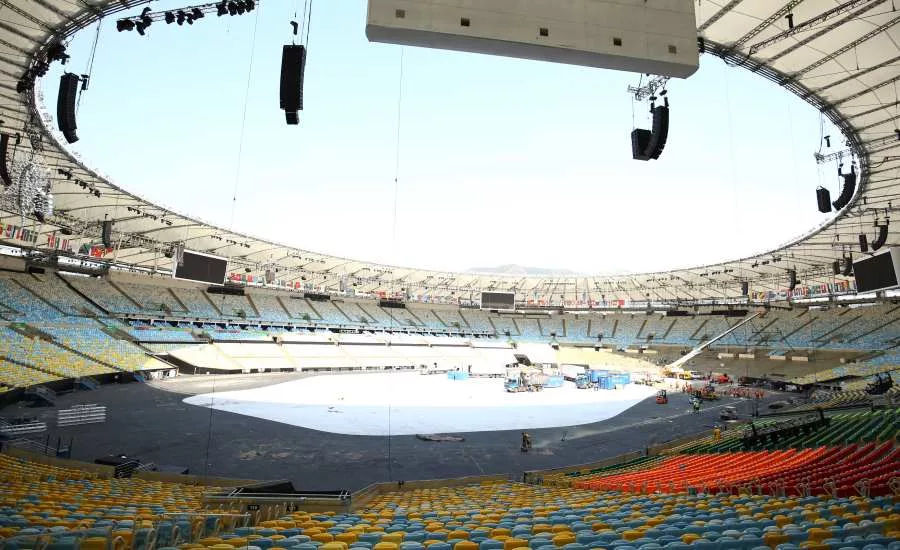
A stadium built for the Games in Rio. Photo courtesy of Dow.
Rio 2016
A stadium built for the Games in Rio. Photo courtesy of Dow.
Rio 2016
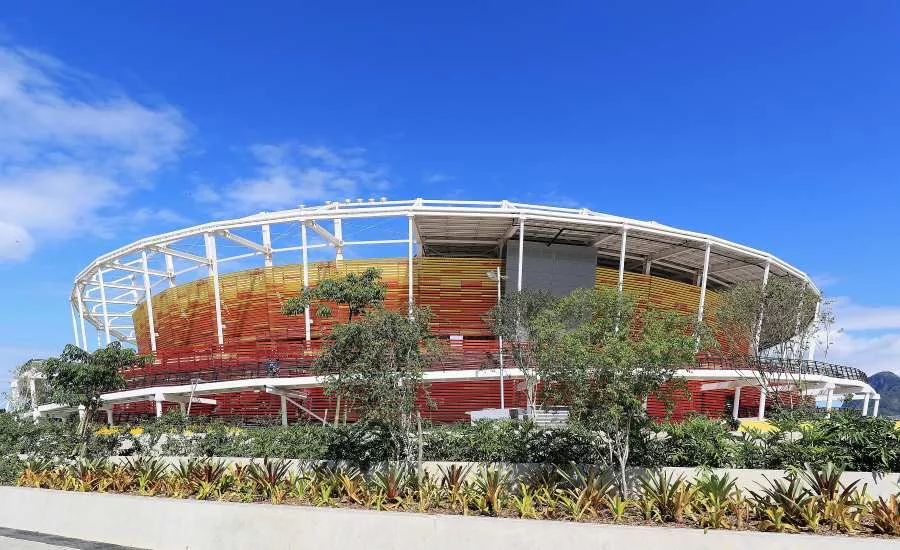
Olympic Games in Rio 2016. Photo courtesy of Dow.
Rio 2016
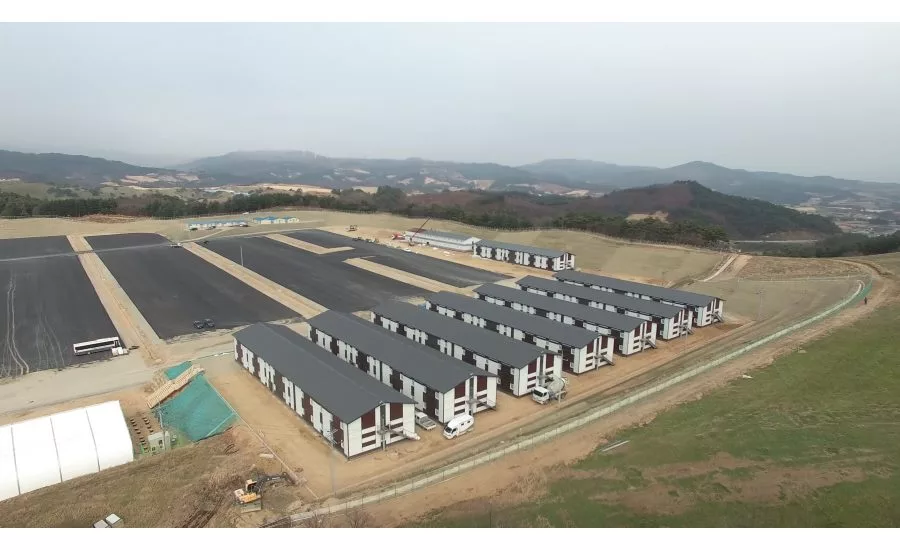
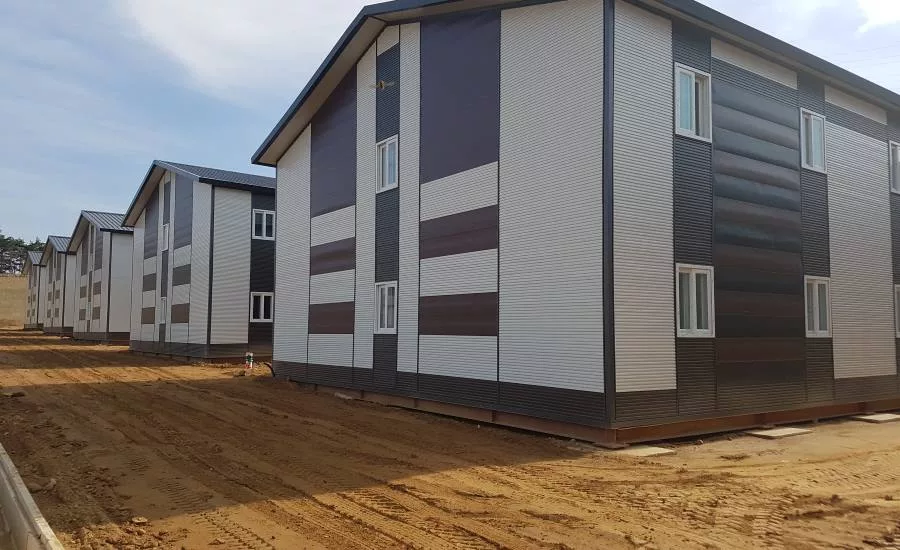
Modular houses at this year's Olympic Winter Games PyeongChang 2018. Photo courtesy of Dow.
Rio 2016
Modular houses at this year's Olympic WinterGames PyeongChang 2018. Photo courtesy of Dow.
Rio 2016
Rio 2016
Rio 2016
Rio 2016
Rio 2016
October 31, 2018

Events that draw in thousands of people from around the globe can be seen as significant sources of greenhouse gas (GHG) emissions. Global events such as the Olympics accumulate spectators, operations and construction—all in one general area. Through the promotion of low-carbon technologies and sustainable practices, emissions from events such as these can not only be lowered, but become a catalyst for change in the built environment as well.

This idea exists to incorporate best practices, and recognize mitigation programs and how they should be implemented in conjunction with efforts to minimize the event’s footprint, such as increasing energy efficiency of venues. Some companies are already leading the way with initiatives like these.

“When Dow started to become a sponsor of the Olympic Games in 2010 we were very much focused on delivering solutions for the infrastructure of the games for the stadium,” said Nicoletta Piccolrovazzi, the Global Technology and Sustainability Director for Dow Olympic and Sports Solutions. “And then we very quickly realized that we could do more. That's really where we started our sustainability journey and became a big part of the Sochi and the Rio games. And now the official carbon partner of the IOC.”

The International Olympic Committee (IOC) and Dow Chemical Company are looking to help the transition to a more sustainable society. To help achieve this goal, Dow will develop and implement up to 10 projects in various countries in areas such as infrastructure, transportation, packaging and industrial efficiency. They’re looking to engage with leading companies such as façade manufacturers and insulation producers, as well as architects and engineers to define where the best locations are for these projects.

“We collaborated with Dow to combine their expertise with the power of the Olympic brand to develop carbon reduction projects in different sectors,” said Michelle Lemaitre, Head of Sustainability for the IOC. “Rather than just buying carbon offset on the market. In the building sector projects to be developed include better insulation of buildings. This answers a growing demand for highly energy-efficient building from cities and municipalities around the world.”

According to the manufacturer, this includes insulation solutions that reduce energy for heating and cooling, and facilitate a lower embedded carbon footprint and higher durability of structures, preserving food and facilitating safe goods transportation while advancing a circular economy, engineering solutions for more lightweight, fuel-efficient vehicles and creating innovative smart chemistry solutions.

“We also worked with the value chain to increase understanding and dialogue in a number of events and sessions, but we also put a program in place where we looked at educating children on science and climate change,” Piccolrovazzi said. “In Russia we did a program around spray foam insulation and we distributed 100,000 cans of polyurethane-based insulating sealant to window installers to increase energy efficiency in the installation process.”

At the same time, companies must also accompany this technology with some information for installers as well. Sustainability efforts aren’t universal yet. Properly educating homeowners around energy efficiency to make them understand how science and this effort together could reduce emissions is an important component in getting more countries on board. Behavioral change along with building knowledge in the market place is also very important for the success of programs such as these.

It’s a well-known fact that nearly 40 percent of GHG emissions are contributed by buildings. Implementing energy-efficiency measures in the construction sector alone could reduce society’s energy consumption as a whole. Our biggest challenge is time. Early action will benefit the construction sector in the long-run. Delaying action will only create bigger challenges. Yet it’s still an uphill battle for some countries to get on board with these sustainability initiatives and ideas.

“When we first went to Russia to talk about reducing CO2 emissions in industries and infrastructure for the Sochi games, this was a very new concept,” said Piccolrovazzi. “We have this requirement for the projects to be beyond ‘business as usual.’ And so in this case it meant adopting these knowledges in advance of regulation. This was new and we worked with our customers to reformulate a spray foam polyurethane-based product to make sure that it had a lower embodied carbon impact going to the market.”


Adopting a New Way of Thinking

Of course, in some cases, it's technologies that exist in the markets, but they have a very low adoption rate. What manufacturers and companies want to do is increase adoption of that type of technology to get overall better performance.

And the results are already in. For the first time ever, the Sochi 2014 Olympic Winter Games mitigated the direct carbon footprint of the Games—including emissions associated with the travel and accommodation of athletes, staff and volunteers, and the operation of the sports venues during the times of the games. This innovative approach contributed to the reduction of 3.1 million tons of CO2 from Olympic Games Sochi 2014 and Rio 2016.

The program is set to run through 2020, but climate benefits will be monitored through 2026 and verified by third-party experts. For architects, engineers or builders, investing and participating in programs such as these is a great opportunity to contribute to the fight against climate change and to join the effort of the Olympic Movement to build a better and more sustainable world with a construction project that goes beyond standard construction codes.

“This is just the start,” Piccolrovazzi said. “We are in the process of engaging with leaders in the value chain and various architects. We realize that this is, of course, just one program, a lot more needs to happen in terms of CO2 emission reductions in the built environment. However, the built environment does offer a lot of opportunities for economically valuable CO2 reductions, and so I think it's a great first step and we look forward to seeing the results once we have finished the implementation of this program.”

KEYWORDS: carbon reduction environmental impacts stadiums and arenas sustainable design

Share This Story

Looking for a reprint of this article?
From high-res PDFs to custom plaques, order your copy today!


Lindsaylewis

Lindsay Lewis is the Editor for Building Enclosure magazine. She has been with the publication since 2013 and is a graduate of Central Michigan University. She can be reached at lewisl@bnpmedia.com.

Recommended Content

JOIN TODAY
to unlock your recommendations.

Already have an account? Sign In

  • bar graph shows LEED v4/LEED v5/LEED v6 in various colors

    When Will LEED v4 / v4.1 and LEED v5 Expire?

    The latest version of the LEED rating system, LEED v5, is...
    Sustainability
    By: Daniel Overbey
  • Celebrating Women In AEC-2026

    Celebrating Women in The AEC Industry Part 1

    A round-up of women in the design, engineering and...
    Building Envelope
    By: Lindsay Lewis
  • KEE membrane application on a roof

    A Beginner’s Guide to Single-Ply Roofing Membranes

    While PVC and TPO appear extremely similar, the chemistry...
    Low-Slope Roofs
    By: Peter Gross
Manage My Account
  • Sign up for the Newsletter
  • Online Registration
  • Manage My Preferences
  • Registration Customer Service

More Videos

Sponsored Content

Sponsored Content is a special paid section where industry companies provide high quality, objective, non-commercial content around topics of interest to the Building Enclosure audience. All Sponsored Content is supplied by the advertising company and any opinions expressed in this article are those of the author and not necessarily reflect the views of Building Enclosure or its parent company, BNP Media. Interested in participating in our Sponsored Content section? Contact your local rep!

close
  • 2 construction workers and a DEXcell panel
    Sponsored byDEXcell Roof Boards

    Designing Low-Slope Roofs for Resilience

  • Bell Bank headquarters in Fargo, North Dakota
    Sponsored bySto Corp.

    Drained and Back-Ventilated Rainscreens vs Pressurized-Equalized Rainscreens

  • A construction worker using DEXcell roof boards
    Sponsored byDEXcell Roof Boards

    The Hidden Strength of Low-Slope Roof Systems: Why Roof Cover Boards Matter

Popular Stories

construction industry workers in hard hats stand around a city scape

Construction Industry Revolts Over New CSI Licensing Plan

a man wearing a mask installs insulation into a wall system

Quiet Rooms and Healthier Air: A Second Look at What Goes Inside the Wall Cavity

Canalino Elementary School and Canalino Family School exterior

Daylighting Design to Support Rapidly Growing Trend in Modular Building Construction

Building Enclosure Newsletter

BE Poll

Events

June 17, 2025

Addressing Condensation in Low-Slope Roof Assemblies

Credits: 1 AIA LU/HSW; 0.1 ICC CEU; 1 IIBEC CEH; 0.1 IACET CEU

On Demand In modern roofing systems, vapor retarders and air barriers do more than just minimize air leakage—they’re essential to maximizing performance and longevity. This engaging course dives into the next generation of moisture control: permeable vapor retarders and air barriers. Discover how these cutting-edge technologies are transforming low-slope roofing assemblies by improving energy efficiency, managing moisture, and boosting wind uplift resistance.

April 9, 2026

Strategies for High-Performance Below-Grade Waterproofing

Credits: 1 AIA LU/HSW ; 1 IIBEC CEH; 0.1 IACET CEU

On-Demand Designing a high-performance building enclosure requires more than just surface-level protection; it demands a rigorous, performance-based mastery of below-grade water and gas mitigation. This discussion will provide an expert-level analysis of below-grade waterproofing within the comprehensive framework of the high-performance building enclosure.

View All Submit An Event

Products

Plaster and Drywall Assemblies Manual

Plaster and Drywall Assemblies Manual

This is a comprehensive manual that goes beyond codes and standards, providing expert guidance in design, detailing, material selection and troubleshooting for plaster and drywall.

See More Products

Related Articles

  • 3.jpg

    Building Innovation 2021 to Highlight the Changing Workplace in the Built Environment

    See More
  • building-ge25a6852a_1280.jpg

    New Report Shows Building Retrofits are Lagging in the Effort to Decarbonizing the Built Environment

    See More
  • Nandar Goday-Dinneen

    How Sustainability and the Built Environment Impact our Health

    See More

Related Products

See More Products
  • business.png

    How to Succeed With Your Own Construction Business

  • 41G-JcZWT+L._SX342_SY445_.jpg

    The Architect's Studio Companion: Rules of Thumb for Preliminary Design, 7th Edition

See More Products
×

Enhance your expertise with unparalleled insights.

Join thousands of building professionals today. Shouldn’t you know what they know?

SUBSCRIBE TODAY!
  • RESOURCES
    • Advertise
    • Contact Us
    • Store
    • Want More
  • SIGN UP TODAY
    • Create Account
    • Newsletter
    • Customer Service
    • Manage Preferences
  • SERVICES
    • Marketing Services
    • Reprints
    • Market Research
    • List Rental
    • Survey/Respondent Access
  • STAY CONNECTED
    • LinkedIn
    • Facebook
    • Instagram
    • YouTube
    • X
  • PRIVACY
    • PRIVACY POLICY
    • TERMS & CONDITIONS
    • DO NOT SELL MY PERSONAL INFORMATION
    • PRIVACY REQUEST
    • ACCESSIBILITY

Copyright ©2026. All Rights Reserved BNP Media, Inc. and BNP Media II, LLC.

Design, CMS, Hosting & Web Development :: ePublishing