Building with Numbers
Because industry players perceive it as increasing risk, the construction industry is notoriously resistant to change through technology adoption. The idea of following tried and tested solutions is almost universal because ‘if it worked before it will work again.’
This attitude has restricted industry progress producing waste of up to 50 percent on many projects. And, negative environmental impacts, caused by easily correctable inefficiencies persist as long as the building stands.
Riskier Business?
Industry players and stakeholders are mistaken in the belief that new methods and technologies present increased risk. In fact, the opposite is true because by using technology it is possible to reduce risk while creating more imaginatively conceived buildings at lower cost that use less energy, are more durable, look better and are interesting to inhabit. They also take less time to make and on completion appear effortless. This seemingly impossible list of advantages has been proven across the world where, in partnerships with developers, architects and engineers, collaboration over data reveals absolute truths about buildings.
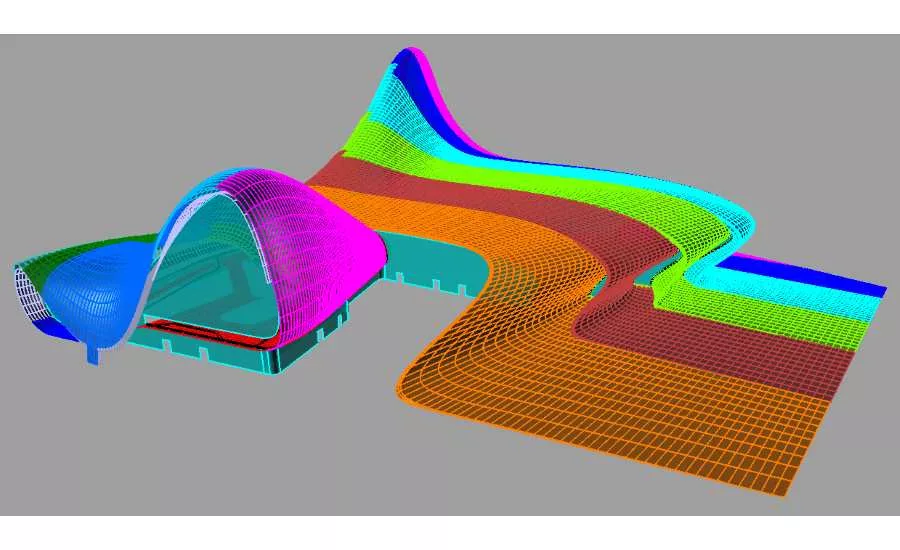
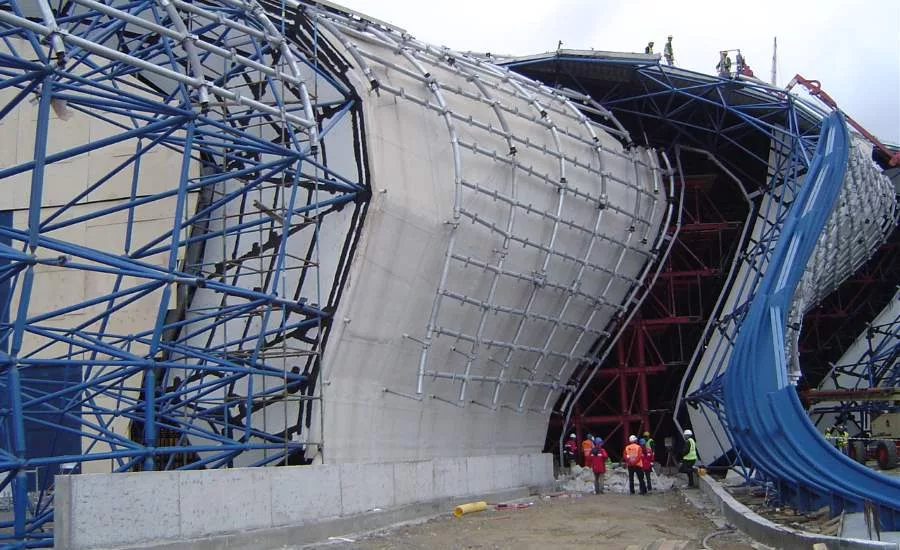
Much of this technology was developed to facilitate the highly complex structures of Zaha Hadid Architects and others who bravely defy convention. Such audacious geometry comprising curves and sweeping planes cannot be built using traditional methods. And by engineering these structures, new technology and practices have been devised that have revolutionized the construction of many buildings.
In practice, architects and developers use their local knowledge to imagine culturally appropriate buildings. The universal truth of mathematics is then applied to minutely examine myriad details because, in buildings a lack of understanding of those details adds cost and complexity at every stage of construction and operation.
Joist Division
Traditionally rigid steel joists (RSJs) are used to support structures. They often dominate the building even though they are inevitably concealed behind panels. They make their presence felt at the design stage because the design must be worked around them. This restricts designers to using straight lines when curves could deliver a better realization of the original intention. In finished buildings joists take up space, adding bulk, weight and as their name implies, inflexibility. This becomes problematic when other elements of the structure are more flexible.
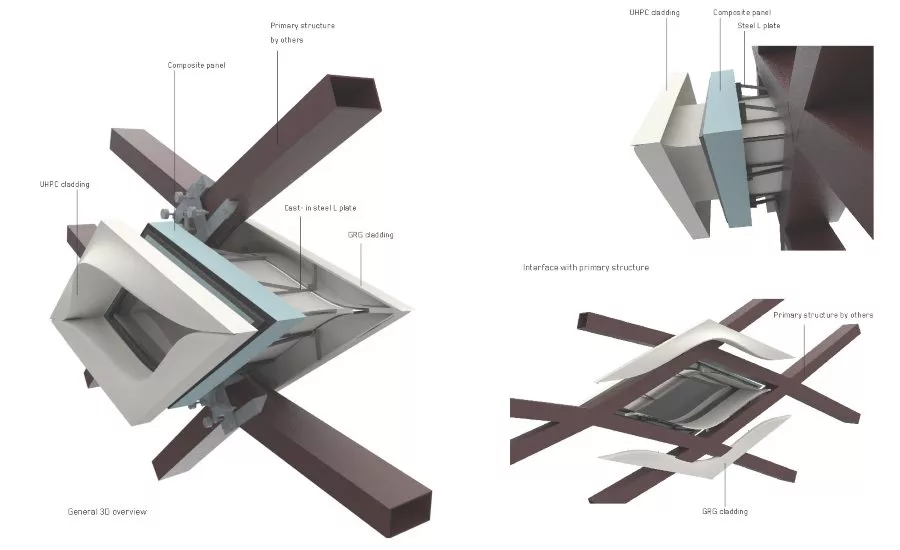
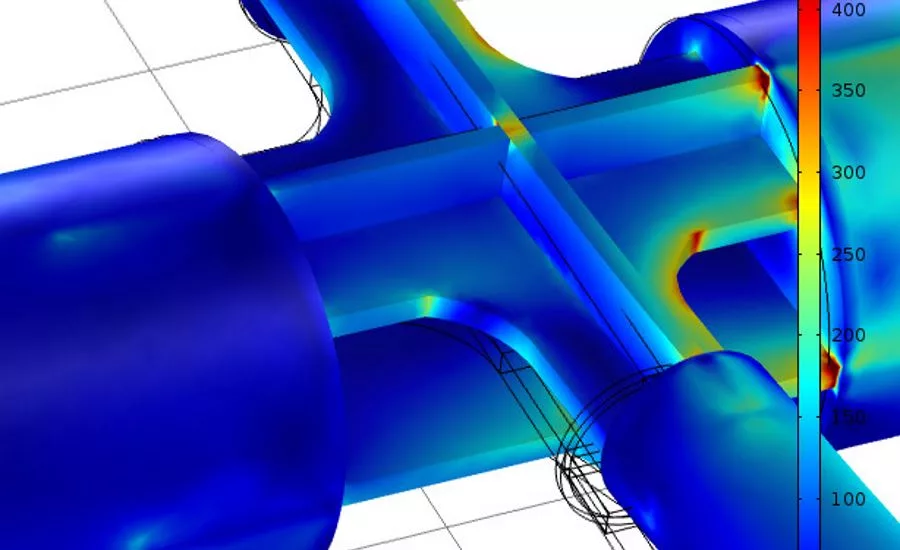
At a technical level the junctions between components must be understood to ensure predicable building performance. The physical properties and capabilities of structural components is well documented but often contractors over specify “to reduce risk.” Technology and methods now exist to precisely simulate not just the performance of these components themselves but also the interfaces between them and other components. This spells the end of considerable waste of materials, resources, and space design options when components are over specified.
Arcs in curved buildings are inherently strong. Their flexibly can, when properly understood, bring many advantages to structures and the commercial ecosystem that produces them. Arcs can be made from thin, light material that enhances structural integrity and sparks creativity from the endless possibilities that their profiles offer. That means completely new shapes can be developed and their behaviors precisely known before they have been physically made. The whole building can then be optimised to accord with any other functional parameters.
When design is freed from traditional industry practices shapes and components can be based on the interpretation of physics and mathematics. And, they can be ‘generatively’ created. In other words, rather than being designed by a person geometry is created automatically based purely on its function. In many cases the shapes have never been seen before, yet they are perfectly suited to purpose. Generative designs are often the starting point for human designers to adapt these shapes and to be inspired to develop new types of façade and detailing.
Safety in Numbers
Many landmark commercial and cultural buildings represent the aspirations and dreams of developers, architects, governments and owners. They want to build ideal structures with the confidence that projects will deliver in terms of design, performance and cost. They also want to fully understand risk. It is therefore crucial to find explore and solve potential problems at the earliest stage. This is achieved when newly developed algorithms and methods are deployed. Based on sound engineering principles these examine the physics of components and junctions allowing a realistic examination of potential problems, their resolutions and outcomes.
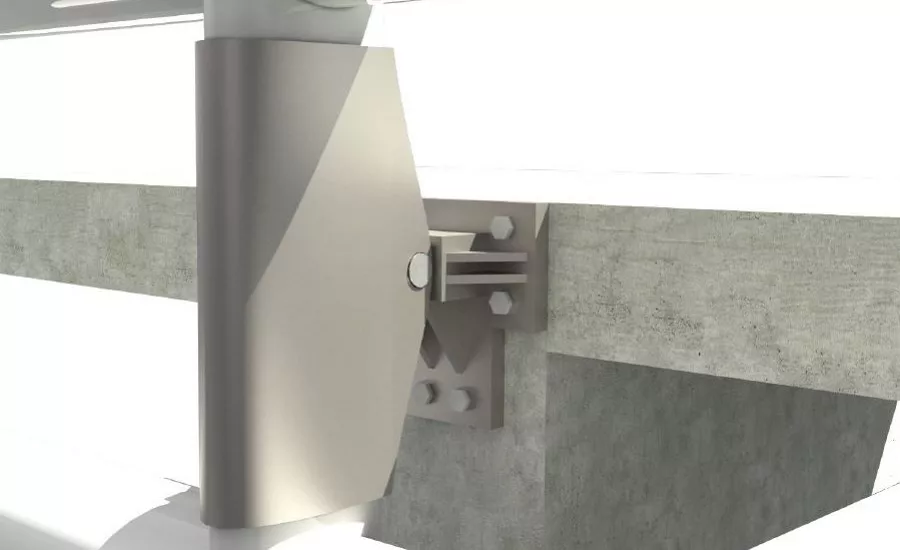
One example of this is the analysis of the relationship between concrete and steel building components. Because these behave differently under load and stress, and it is often at the junctions of these two materials that problems such as leaking, or fractures arise, mathematical methods have been devised to understand the real-life consequences of different design options. Using algorithms removes guess work from the construction of complex buildings. These risk-reducing solutions have a parallel with financial analysis models which find the ‘gaps’ inside data to solve problems and create new solutions to problems that have not yet been fully defined.
In a building, the forces of compression, tension, sheer and buckling must be understood and controlled. And it is by solving these interrelated energies that unexpectedly elegant solutions arise.
When these aspects of the building are explained to architects, developers, clients and city partners, creative possibilities expand, and risks reduce because there will be no surprises. Also, because these revelations are made available to all stakeholders, including building component manufactures, they more fully understand their role and the levels of risk that they are undertaking. This increases confidence throughout the supply chain by removing the uncertainly that so often leads to disputes between stakeholders. It also has the positive advantage of showing regulators, planners and the public exactly how the building will perform far in to the future. This is possible by simulating, wind load, weather events and energy consumption for decades ahead.
Seeing the Light
Around 40 percent of the world’s energy is consumed by buildings. It is therefore important to understand how to reduce consumption. This can be done by modeling climate in relation to the building and analyzing the structure’s thermal conductivity, weather tightness and airflow. Glazing is also a significant factor in controlling the inside temperature. By taking these considerations into account a balance can be achieved that reduces energy consumption and makes the building a better place to be. While it may be thought that more glass equals more light, it is possible to reduce the amount of glazing without affecting interior light levels to create interesting illumination, shadow and consequent cooling effects as a result.
In the hot climate construction projects that we work on, airflow and cooling are key priorities. In many cities, urban pollution levels mean that windows cannot be opened so the ‘standard solution’ is often to install air-conditioning with all its inherent commissioning, maintenance and long term operating costs. However, buildings can and do successfully operate as their own cooling systems by allowing filtered air to naturally circulate throughout the interior. This possibility stems from designing the building and its façade to maximize airflow. When algorithms automatically generate designs based on air-flow the outcomes are genuinely unique and often very beautiful as well as being literally cool.
An Appealing Future
It might be imagined that this way of conceiving, designing, making and operating buildings is exotic and therefore more expensive. It has been proven on many of our partnerships that the opposite is the case. A significant contributing factor to cost reduction is that quality assured and validated building components can be made in factories for onsite assembly.
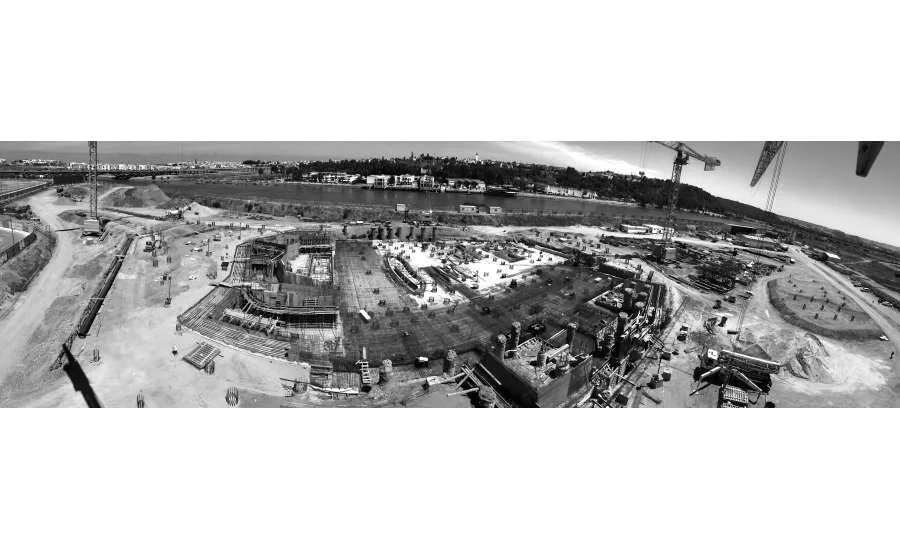
It has been said that the worst place to make a building is on a building site because the human, financial and waste costs of this way of working, often in hazardous conditions, is high. Quality suffers, and previously unseen problems are revealed during—or worse, after the construction phase. Re-thinking the construction process along industrial lines so that as much of the building as possible is fabricated under controlled conditions is the surest way to guarantee a successful outcome.
The global construction industry is growing fast, and we are proud to be contributing to America’s export success in this sector. Some truly innovative buildings have been constructed in recent years and cities are clamoring for more. In this time of huge opportunity, it the responsibility of the construction industry to examine first principles and consider how today’s buildings, developers and owners, may be judged a century from now.
Looking for a reprint of this article?
From high-res PDFs to custom plaques, order your copy today!

.webp?height=740&t=1767036885&width=auto "Header - BE 1170x658 (002).png")

.webp?height=740&t=1755781744&width=auto "KEE(2).png")