Building Enclosure logo
search
cart
facebook twitter linkedin youtube instagram Spotify Podcasts Apple Podcasts Spotify Podcasts Apple Podcasts
  • Sign In
  • Create Account
  • Sign Out
  • My Account
Building Enclosure logo
  • NEWS
    • Breaking News
  • SECTIONS
    • Columns
    • Project Profiles
    • Trade Shows
    • Sponsor Insights
  • SYSTEM DESIGNS
    • Low-Slope Roofs
    • Pitched Roofs
    • Metal Roofing Materials
    • Waterproofing
    • Sustainability
    • Insulation
    • Exterior Claddings
    • Wall Systems
    • Building Envelope
  • BLOG
    • The BE Blog
  • MEDIA
    • Podcasts
    • Webinars
    • Quiz
    • Videos
    • Polls
    • Interactive Spotlights
    • Newsletter
    • Photo Galleries
  • DIRECTORIES
    • Directory: Blue Book
    • Directory: Roofing Resource
  • PRODUCTS
  • TECHNICAL
    • Codes
      • Waterproofing
      • Roofing
    • Details
      • Waterproofing
      • Roofing
  • CONTINUING ED
  • ABOUT
    • Advertise
      • Editorial Calendar
    • Contact
    • eMag Archive Issues
  • SIGN UP!
Breaking News

NCARB Streamlines Path to Certification for Architects

February 15, 2017

The National Council of Architectural Registration Boards (NCARB) has launched the first phase of its revised certification path for architects without a degree from a program accredited by the National Architectural Accrediting Board (NAAB). The NCARB Certificate facilitates reciprocal licensure among the 54 U.S. jurisdictions and several countries.

Through this alternative, architects licensed in a U.S. jurisdiction who hold an architecture-related degree can satisfy the Certificate’s education requirement by documenting two times the Architectural Experience Program’s (AXP) requirements (7,480 hours). A separate certification option for U.S. architects without an architecture-related degree will launch in spring.

These education alternatives replace a previous option known as the Broadly Experienced Architect (BEA) Program, which cost $5,000 plus transcript review fees. Additionally, these revised paths will lead to a shorter evaluation process, and will be offered at no additional charge to active NCARB Record holders. The changes were adopted by a vote of the NCARB membership in June 2016 at its Annual Business Meeting.

“This revised path recognizes the value of the initial license and practical experience while maintaining a rigorous, yet inclusive, option for architects seeking NCARB certification,” said NCARB President Kristine A. Harding, NCARB, AIA.

U.S. architects interested in earning an NCARB Certificate through this path must meet the following requirements:
• Have at least three years of continuous licensure in any U.S. jurisdiction without disciplinary action.
• Hold a bachelor’s degree in an architecture-related program.

To learn more about the benefits of NCARB certification, visit www.ncarb.org/certification.

KEYWORDS: architects certification

Share This Story

Looking for a reprint of this article?
From high-res PDFs to custom plaques, order your copy today!


Recommended Content

JOIN TODAY
to unlock your recommendations.

Already have an account? Sign In

  • bar graph shows LEED v4/LEED v5/LEED v6 in various colors

    When Will LEED v4 / v4.1 and LEED v5 Expire?

    The latest version of the LEED rating system, LEED v5, is...
    Sustainability
    By: Daniel Overbey
  • Celebrating Women In AEC-2026

    Celebrating Women in The AEC Industry Part 1

    A round-up of women in the design, engineering and...
    Building Envelope
    By: Lindsay Lewis
  • KEE membrane application on a roof

    A Beginner’s Guide to Single-Ply Roofing Membranes

    While PVC and TPO appear extremely similar, the chemistry...
    Low-Slope Roofs
    By: Peter Gross
Manage My Account
  • Sign up for the Newsletter
  • Online Registration
  • Manage My Preferences
  • Registration Customer Service

More Videos

Sponsored Content

Sponsored Content is a special paid section where industry companies provide high quality, objective, non-commercial content around topics of interest to the Building Enclosure audience. All Sponsored Content is supplied by the advertising company and any opinions expressed in this article are those of the author and not necessarily reflect the views of Building Enclosure or its parent company, BNP Media. Interested in participating in our Sponsored Content section? Contact your local rep!

close
  • 2 construction workers and a DEXcell panel
    Sponsored byDEXcell Roof Boards

    Designing Low-Slope Roofs for Resilience

  • Bell Bank headquarters in Fargo, North Dakota
    Sponsored bySto Corp.

    Drained and Back-Ventilated Rainscreens vs Pressurized-Equalized Rainscreens

  • A construction worker using DEXcell roof boards
    Sponsored byDEXcell Roof Boards

    The Hidden Strength of Low-Slope Roof Systems: Why Roof Cover Boards Matter

Popular Stories

construction industry workers in hard hats stand around a city scape

Construction Industry Revolts Over New CSI Licensing Plan

a man wearing a mask installs insulation into a wall system

Quiet Rooms and Healthier Air: A Second Look at What Goes Inside the Wall Cavity

Canalino Elementary School and Canalino Family School exterior

Daylighting Design to Support Rapidly Growing Trend in Modular Building Construction

Building Enclosure Newsletter

BE Poll

Events

June 17, 2025

Addressing Condensation in Low-Slope Roof Assemblies

Credits: 1 AIA LU/HSW; 0.1 ICC CEU; 1 IIBEC CEH; 0.1 IACET CEU

On Demand In modern roofing systems, vapor retarders and air barriers do more than just minimize air leakage—they’re essential to maximizing performance and longevity. This engaging course dives into the next generation of moisture control: permeable vapor retarders and air barriers. Discover how these cutting-edge technologies are transforming low-slope roofing assemblies by improving energy efficiency, managing moisture, and boosting wind uplift resistance.

April 9, 2026

Strategies for High-Performance Below-Grade Waterproofing

Credits: 1 AIA LU/HSW ; 1 IIBEC CEH; 0.1 IACET CEU

On-Demand Designing a high-performance building enclosure requires more than just surface-level protection; it demands a rigorous, performance-based mastery of below-grade water and gas mitigation. This discussion will provide an expert-level analysis of below-grade waterproofing within the comprehensive framework of the high-performance building enclosure.

View All Submit An Event

Products

Plaster and Drywall Assemblies Manual

Plaster and Drywall Assemblies Manual

This is a comprehensive manual that goes beyond codes and standards, providing expert guidance in design, detailing, material selection and troubleshooting for plaster and drywall.

See More Products

Related Articles

  • Breaking News

    NCARB Launches Alternative Path to Architect Certification

    See More
  • NCARB Proposes to Drastically Reduce Time to Certification for Broadly Experienced and Foreign Architects

    See More
  • NCARB logo

    NCARB to Expand Access to Reciprocity for Architects Without a Professional Degree

    See More

Related Products

See More Products
  • bim-3e.jpg

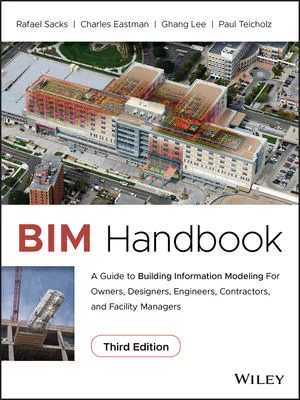
    BIM Handbook: A Guide to Building Information Modeling for Owners, Designers, Engineers, Contractors, and Facility Managers, 3rd Edition

See More Products

Events

View AllSubmit An Event
  • September 9, 2025

    The 60-Minute MBA for Architects

    Credits: 1 AIA LU/Elective; 0.1 ICC CEU; 0.1 IACET CEUOn-Demand In this session, we will learn the fundamentals of all successful AE firms and provide the basis for making well-grounded business decisions. We will learn how firms can transition from being professionals providing services, to highly tuned businesses that can identify the needs of the marketplace and create services and products that are appropriately priced and yield consistent and greater profits.
  • September 11, 2024

    Building Science for Architects

    Credits: 1 AIA LU/HSW; 1 IIBEC CEH; 0.1 IACET CEUOn-Demand The science of buildings and how they perform is not often a focus during school, but can become a specialty in practice. Topics such as vapor movement, a robust thermal envelope and condensation prevention are ones that cause issues in many buildings.
View AllSubmit An Event
×

Enhance your expertise with unparalleled insights.

Join thousands of building professionals today. Shouldn’t you know what they know?

SUBSCRIBE TODAY!
  • RESOURCES
    • Advertise
    • Contact Us
    • Store
    • Want More
  • SIGN UP TODAY
    • Create Account
    • Newsletter
    • Customer Service
    • Manage Preferences
  • SERVICES
    • Marketing Services
    • Reprints
    • Market Research
    • List Rental
    • Survey/Respondent Access
  • STAY CONNECTED
    • LinkedIn
    • Facebook
    • Instagram
    • YouTube
    • X
  • PRIVACY
    • PRIVACY POLICY
    • TERMS & CONDITIONS
    • DO NOT SELL MY PERSONAL INFORMATION
    • PRIVACY REQUEST
    • ACCESSIBILITY

Copyright ©2026. All Rights Reserved BNP Media, Inc. and BNP Media II, LLC.

Design, CMS, Hosting & Web Development :: ePublishing