Minimizing Heat Flow: Using Air Barriers and Continuous Insulation to Meet Passive Design Standards
As building codes continue to become more complex—especially as they relate to energy efficiency, insulation, air movement and moisture—designers and builders need economical solutions that are quick and easy to implement while still providing excellent performance over the useful life of a building. Ease of installation and superior protection should and can be part of that equation.
Passive House building standards have advanced these concepts in recent years, setting firm standards and targets for heating and cooling efficiency, total energy consumption and air leakage—for residential as well as commercial structures. The goal is to cut carbon emissions and energy demand while still providing high-caliber living comfort, superior indoor air quality and structural resilience. “Maximizing gains and minimizing losses” has been the passive design energy-efficiency mantra.
What is Passive House?
A building design philosophy that was first developed in Darmstadt, Germany in the 1990s has evolved into a new standard for green building. The term passive house (Passivhaus in German) refers to a rigorous, voluntary standard for achieving energy efficiency in a building, while reducing its ecological footprint. While the movement began with a residential focus, passive “house” building principles have been adopted in major commercial building projects as well today. A more appropriate nomenclature is “passive design” as it applies to all sectors of construction.
The basic principles for attaining Passive House certification are:
- High-quality insulation and thermal-bridge-free design and construction: a continuous insulation layer all the way around the building shell/envelope with no heat-sapping thermal bridging.
- Airtight construction: an extremely airtight envelope with meticulous attention to all connection details, using appropriate sealing materials to prevent infiltration of outside air and loss of conditioned interior air.
- Energy efficient windows and doors: high performance windows (typically triple-paned) and doors with insulated frames.
- Mechanical ventilation for air quality—a heat recovery system to supply a constant stream of fresh, filtered air that exhausts the stale air without losing heat in the winter or adding heat in the summer.
Passive Design Building Specs:
- Space heating/cooling energy demand cannot exceed 15 kWh per square meter of net living/working space per year.
- Primary energy consumption (energy for heating, hot water and electricity) must not amount to more than 60 kWh per square meter of treated floor area per year.
- Airtightness that ensures no more than 0.6 air changes/leaks per hour (n50 ≤ 0.6 / hour) at 50 Pa (0.0073 psi) as verified by an onsite pressure test.
- Thermal comfort for all living areas in both winter and summer, with not more than 10 percent of the hours in a given year exceeding 77 degrees Fahrenheit or 22 Celsius.
For energy modeling software (WUFI) and more details: Passive House Institute U.S. (PHIUS)
www.phius.org.
The Challenge
It is estimated that commercial and residential buildings account for 73 percent of U.S. electricity consumption and 37 percent of total carbon dioxide emissions¹.
In New York City alone, the existing building infrastructure contributes nearly 75 percent of all the city’s greenhouse gas emissions.
The challenge for architects, builders and product manufacturers has been to develop customized solutions for building envelopes based on climate, building typology and construction requirements. The good news is, this has led to innovative building techniques and revolutionary new products and systems. Building science has reached a state today that appropriately-designed structures can provide year-round comfort and superior air quality while using 50-80 percent less energy than existing, conventionally constructed buildings.
By deploying the right systems and products, compliance with rapidly-changing energy standards and mandates is possible. Passive House standards can be readily met, dramatically reducing energy consumption and the impact on our environment.
Air Barriers & Continuous Insulation to the Rescue
One key way to achieve these rigorous standards is to incorporate state-of-the-art continuous insulation (ci) wall systems and air moisture barriers into the design. These alone can dramatically reduce energy consumption, reducing a building’s carbon footprint compared to that of buildings with non-insulated brick or stucco cladding.
What’s more, continuous insulation that is applied to an entire building structure (connecting roof, walls and foundation) will prevent the passage of air through the building envelope, mitigating thermal bridging in wall assemblies, keeping interior temperatures more uniform and reducing energy demand.
Even greater energy savings can be achieved when the continuous insulation system is combined with an air moisture barrier product. Air moisture barriers reduce air flow and keep moisture out, prevent drafts, enhance indoor air quality and lower energy consumption—all of which is more cost effective than simply adding thick sections of insulation.
Advanced cavity wall design systems can promote drainage and drying even further. The goal is to minimize air leakage and condensation, effectively and economically controlling moisture in wall assemblies – moisture that could cause decay, corrosion, and loss of insulation, value, mold and IAQ issues.
The Benefits
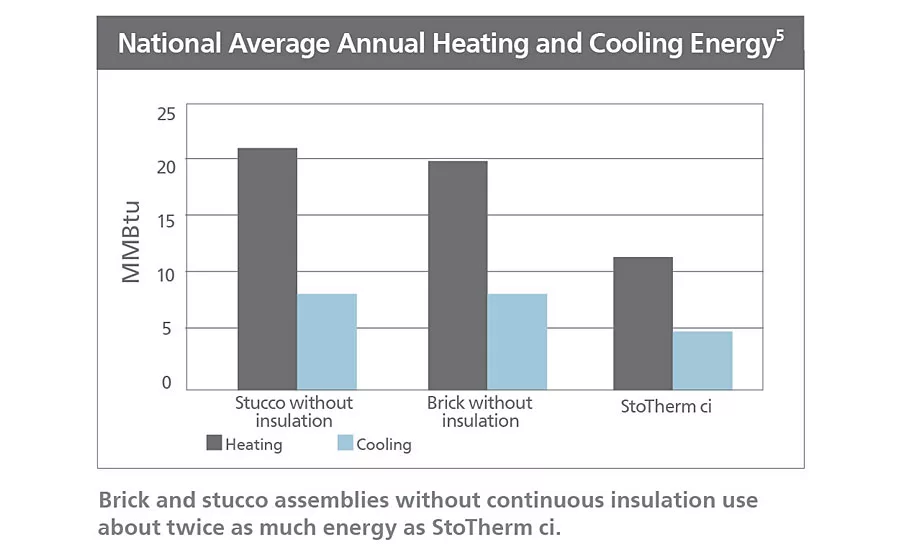
On average, buildings with continuous insulation use 46 percent less energy than brick and stucco assemblies without continuous insulation. Additional energy savings of up to 36 percent can be captured by using a spray-on waterproofing air barrier to protect against air and moisture intrusion. Combine these energy savings with other techniques and you can easily exceed Passive House standards and achieve 75 percent less energy use.
In addition to maximizing energy savings and promoting the peace of mind that moisture protection provides, using continuous insulation and air moisture barrier solutions, can also result in a bigger bang for the buck. These products’ durability and longevity, lower maintenance costs and low life-cycle costs result in an improved return on investment. This alone adds one more incentive to shoot for Passive Design standards.
Additional reasons? It has been proven that EIFS with ci, AMBs and drainage capacity can extend building lifespan providing better than 99.6 percent drainage efficiency and a lower structural weight, and also by minimizing thermal bridging, cutting energy use (with 99 percent thermal efficiency), and protecting framing substrates and cladding with advanced moisture protection and drainage². Adding form to function and engineering, many of today’s products also offer a wide range of aesthetically pleasing design options for additional curb appeal. Passive House has come of age.
Case Studies
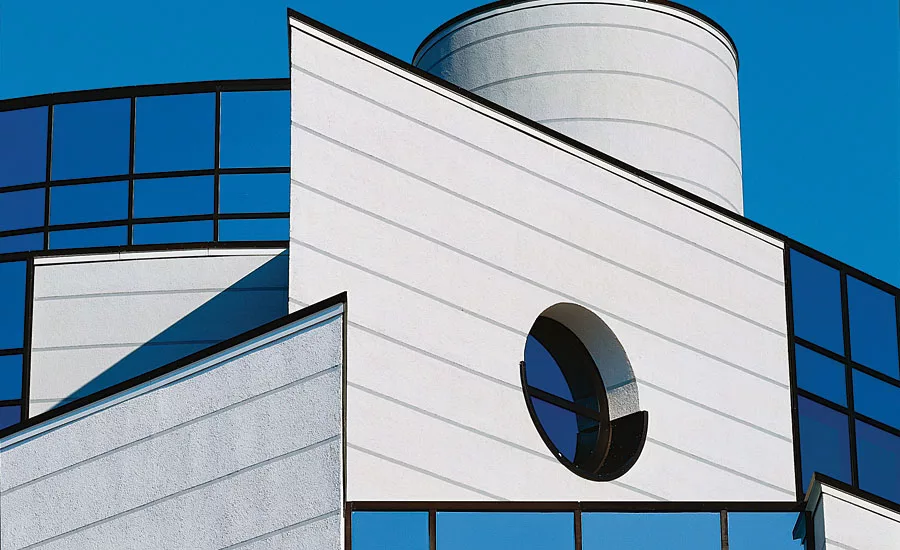
With seamless air and moisture barriers, continuous insulation and advanced drainage capabilities, StoTherm ci is one exterior wall-cladding system that uses new technologies to exceed energy saving standards. Sto products have been effectively deployed in many Passive House projects to meet energy, design and performance standards by incorporating the best of EIFS design flexibility, color range, and energy efficiency.
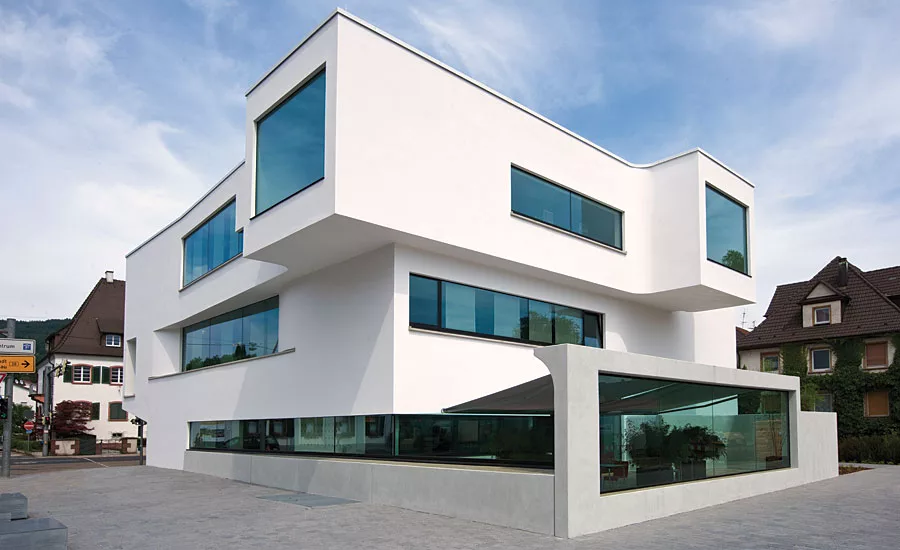
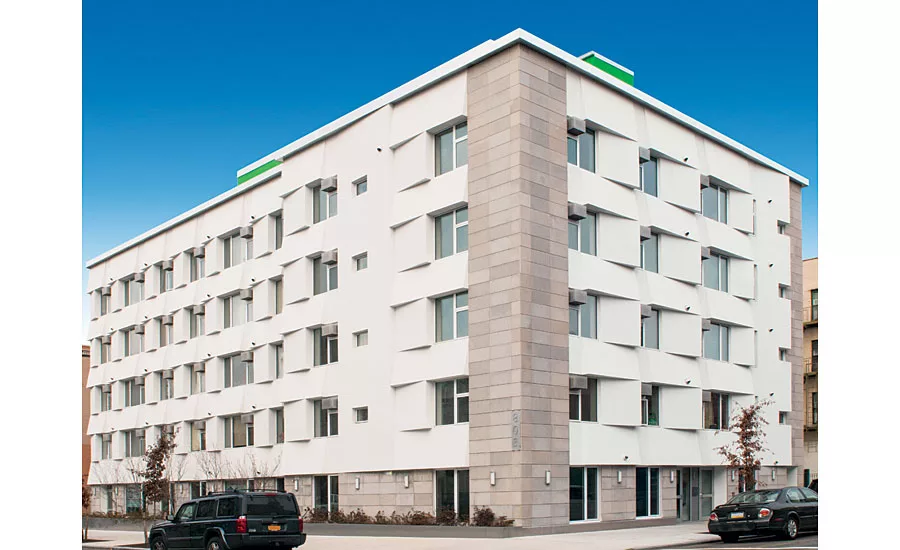
Knickerbocker Commons in Brooklyn, N.Y. was the second affordable housing structure in the country built to “passive house” standards. The six-story, 24-unit, 29,705-square-foot project consumes 90 percent less energy than the typical New York City building of its size and was built for the same cost per square foot as similar housing projects in the area.
In addition to a wedged EIFS façade (using StoTherm ci Lotusan), which shades windows from the sun in the summer and collects rays in the winter, the building has energy recovery ventilators and triple-pane, 700 pound windows, pushing it well past the national Passive House standard for 75 percent energy savings.
Knickerbocker architect Chris Benedict was looking to solve energy leakage in buildings and ways to do so for the same price as typical construction. “We were able to deliver these buildings without additional cost,” says Benedict, and they are use only 10 percent of the energy a similar New York building would require.
Waldsee BioHaus Environmental Living Center in Minnesota
With next-generation building systems and components—exterior insulation, elimination of thermal bridging and complete airtightness—the Biohaus achieved Passive House certification with a 13.7kWh.m² annual space heating energy requirement. According to Architect Stephan Tanner, AIA of Intep LLC : “BioHaus uses 85 percent less energy than dictated by the Minnesota building code” says Tanner. “Six of these buildings would use the same amount of energy as one building built using regular standards.”
Tighthouse, Brooklyn, N.Y.
Originally built in 1899, this row home was certified as a Passive house retrofit in 2010 and won a 2014 International Passive House Design Award. Sto was responsible for a continuous airtightness and insulating layer that ensured the building would retain its heat or cooling demands. The rear façade features a rain screen with exterior mineral wool insulation and the front façade is an EIFS system.
For more information on these case studies and others, visit nypassivehouse.org/new-york-passive-house-2015-the-nyph-flip-book/.
Additional Green Building Benefits of Continuous Insulation & Air Barriers
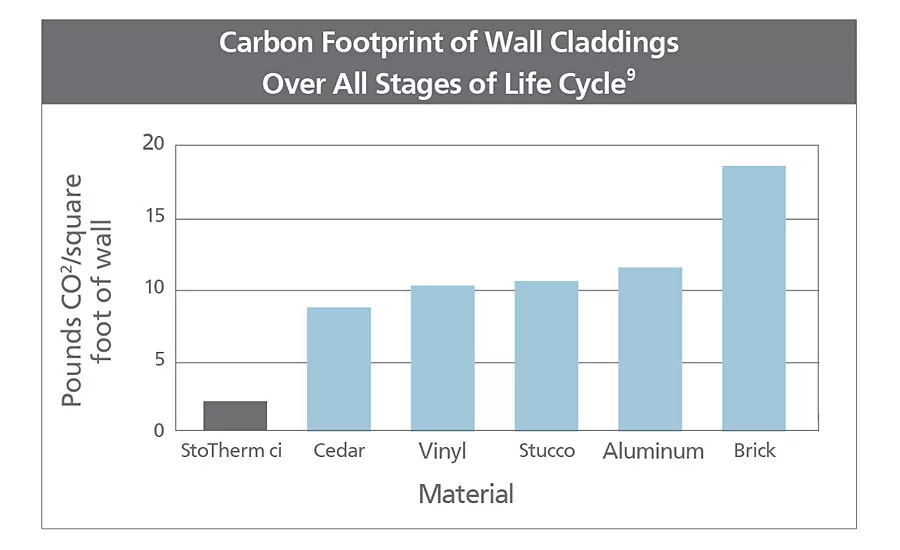
During manufacturing, continuous insulation products produce 80 percent less carbon dioxide emissions than brick, and nearly 70 percent less compared to stucco.³ Continuous insulation uses 81 percent less energy from production to application on a wall and cuts solid waste by 75 percent, reducing the burden on landfills.⁴
Over a 50-year span, one 10-story building with ci will save 505,584 gallons of fuel oil.5
Sources
1 USGBC Green Building Facts: http://www.usgbc.org/Docs/Archive/General/Docs18693.pdf.
2 Sto Technical Report 01-07.1, Sto Guard®: Development of Durability Requirements for Canada and Compliance; Steel Cost Case Study: Sto Corp. Steel Cost Study White Paper.pdf; LEED® Product Assessment Report, Paul R. Bertram, Jr., FCSI, CDT, LEED AP, July 2007; Sto EIFS NExT System with Drainage, Drainage & Drying Study Final Report, University of Waterloo, Building Engineering Group, Civil Engineering Department, August 2005. For details, see Sto Technical Report 01-07.1 on www.stocorp.com
3 Life-Cycle Study of Sto Engineered Cladding Systems vs. Typical Brick and Stucco Cladding by Franklin Associates/ERG, April 2009.
5 Calculated from data from American Chemistry Council and EUMEPS, an association of European manufacturers of EPS.
Looking for a reprint of this article?
From high-res PDFs to custom plaques, order your copy today!
.webp?height=740&t=1767036885&width=auto "Header - BE 1170x658 (002).png")

.webp?height=740&t=1755781744&width=auto "KEE(2).png")

.webp?height=200&t=1782473009&width=200 "insulation(16).png")