Reducing the Carbon Footprint
Dansko, the West Grove, Pa., clog maker, was building a new, environmentally friendly corporate facility and wanted to meet the highest green standards. Owners Peter Kjellerup and Mandy Cabot knew about the benefits of green roofs - they are standard practice in Kjellerup’s native Denmark - but found few American contractors implementing green roofs.

Dansko, the West Grove, Pa., clog maker, was building a new, environmentally friendly corporate facility and wanted to meet the highest green standards. Owners Peter Kjellerup and Mandy Cabot knew about the benefits of green roofs - they are standard practice in Kjellerup’s native Denmark - but found few American contractors implementing green roofs.
 “The technology of marrying gardens and roofs was not common in America a few years ago, when Dansko began construction,” noted Daria Payne, Dansko’s facilities director. “We were interested in storm water management, greater insulation, and ultimately extending the life of the roof, and needed to find a company that could work with our vision.”
After extensive research, Dansko selected Furbish Company, the Baltimore, Md.-based company that designs, installs, and maintains green roofs, vegetated retaining walls, and bio-filters. Dansko was impressed with Furbish’s track record, and asked for green roofs in three different areas: the pedestrian-friendly West Wing, the low-cost, low-visibility East Wing, and the Retail Wing, which required greater height.
The first order of business for Furbish Company was to ensure that Dansko’s building was designed to accommodate the weight of the original roof plus the weight of the green roof system. The three micro-conditions required varied living roof systems, and it was key to ensure each would hold properly.
• The West Wing: The goal of the West Wing roof was to provide an aesthetically pleasing area for Dansko’s employees while implementing green roof standards. The West Wing, an extensive space, was covered in a light layer of vegetation and bears approximately 28-30 pounds per square foot. With 4-inch soil in a proprietary space, Furbish had to keep weight limits in mind for the remaining plantings and hardscapes.
Fourteen native plantings – imported locally from Emory Knoll Farms in Street, Maryland – were planted two feet apart on top of a waterproof membrane and layers of filter fabrics and drainage and growth medias. Sedums consisted of album “Murale,” a hardy, flowering white plant with high drought tolerance, spurium “Roseum,” a pink flower with shade and moisture tolerance, and talinum calycinum, a bright purple flower that sows freely and grows between other ground covers, rather than displacing them.
 “Dansko uses the West Wing for cocktails and birthday celebrations. It’s also the area that group tours want to see first,” said Payne.
• The East Wing: The East Wing at Dansko is not visible to the public. Dansko wanted low maintenance, highly efficient materials to minimize cost. Like the West Wing, the East Wing provided an extensive space layered with 4-inch soil.
Much of the East Wing space was occupied by shale and slate granular media, which frees concern for weather conditions and lowers maintenance. The East Wing had no irrigation, so keeping minimal plantings was essential. The plantings used came from cuttings of sedum on the West Wing. Using cuttings is one of the most popular ways to propagate a plant. While they can be very fragile, cuttings were the best choice for the East Wing; if they were unable to grow, they would not be visible. Fortunately, with proper care and maintenance, the cuttings flourished.
• Retail Wing: Dansko’s Retail Wing provided a unique challenge to Furbish. Portions of the roof could be seen from the building’s clerestory windows and below. A semi-intensive space, the Retail Wing required irrigation, maintenance, and ability to bear heavier soil. A minimum of 6 inches allowed for greater variety of sedums.
Because the Retail Wing would be visible from below, Furbish requested taller plantings. Calamagrotis “Avalanche” blooms early, growing approximately three feet tall. Dianthus carthusianorum adds pink bursts with evergreen foliage. Juniperus scopulorum “Gray Gleam,” a pyramidal evergreen shrub, was planted along the clerestory windows and set off from the other cuttings, growing to 15 feet tall and spreading six feet with silver scale-like leaves. Its clearance is about two feet from the ground, and is easily viewed from below.
The deeper soil and varied plantings on the Retail Wing require automatic irrigation, but the added cost could be offset by the additional insulation and protection provided.
As a part of general service, Furbish provides ongoing maintenance and in-depth reports. In July 2009, Furbish’s report to Dansko noted that the cuttings on the East Wing were flowering lightly. The West Wing’s flower heads were cut back and additional cuttings were spread. On the Retail Wing, Furbish weeded and ensured the irrigation system was properly set.
As a result of implementing living roofs: natural and unnatural habitats blossom. At Dansko, natural habitats flourished, including killdeer nests, praying mantis, skinks, dung beetles, and butterflies, providing additional aesthetic and ecological benefits.
LEED Facility
Dansko’s corporate headquarters - a certified Gold LEED facility - provided a roofing challenge for the Furbish Company, but through careful thought, planning, implementation, and maintenance, the varied living roofs continue to thrive.
The vegetation cover from the roofs will significantly reduce stormwater runoff, extend the life of the roof, reduce energy costs, increase property value, protect from mechanical damage, and buffer from extreme temperatures. By diligently searching for the right company to complete the roofs project, Dansko will continue to be reimbursed from the execution.
Dansko, the West Grove, Pa., clog maker, was building a new, environmentally friendly corporate facility and wanted to meet the highest green standards. Owners Peter Kjellerup and Mandy Cabot knew about the benefits of green roofs - they are standard practice in Kjellerup’s native Denmark - but found few American contractors implementing green roofs.
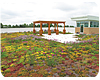
Dansko decided to install extensive and semi-intensive garden roofs atop its corporate headquarters in West Grove, Pa. This photo shows the green roof on the building’s West Wing.
After extensive research, Dansko selected Furbish Company, the Baltimore, Md.-based company that designs, installs, and maintains green roofs, vegetated retaining walls, and bio-filters. Dansko was impressed with Furbish’s track record, and asked for green roofs in three different areas: the pedestrian-friendly West Wing, the low-cost, low-visibility East Wing, and the Retail Wing, which required greater height.
The first order of business for Furbish Company was to ensure that Dansko’s building was designed to accommodate the weight of the original roof plus the weight of the green roof system. The three micro-conditions required varied living roof systems, and it was key to ensure each would hold properly.
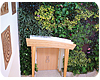
The design also featured vegetated walls. (Photos courtesy of the Furbish Company.)
Solution to Problem
After checking the weight-bearing ability of the roofs, Furbish collaborated with Green Roof Services, LLC to design the environments. Both extensive and semi-intensive living roofs were installed, and the roofs were completed in May 2008.• The West Wing: The goal of the West Wing roof was to provide an aesthetically pleasing area for Dansko’s employees while implementing green roof standards. The West Wing, an extensive space, was covered in a light layer of vegetation and bears approximately 28-30 pounds per square foot. With 4-inch soil in a proprietary space, Furbish had to keep weight limits in mind for the remaining plantings and hardscapes.
Fourteen native plantings – imported locally from Emory Knoll Farms in Street, Maryland – were planted two feet apart on top of a waterproof membrane and layers of filter fabrics and drainage and growth medias. Sedums consisted of album “Murale,” a hardy, flowering white plant with high drought tolerance, spurium “Roseum,” a pink flower with shade and moisture tolerance, and talinum calycinum, a bright purple flower that sows freely and grows between other ground covers, rather than displacing them.
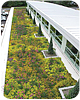
The Retail Wing features a semi-intensive green roof system with larger plants. Portions of the roof are visible from the building’s clerestory windows.
• The East Wing: The East Wing at Dansko is not visible to the public. Dansko wanted low maintenance, highly efficient materials to minimize cost. Like the West Wing, the East Wing provided an extensive space layered with 4-inch soil.
Much of the East Wing space was occupied by shale and slate granular media, which frees concern for weather conditions and lowers maintenance. The East Wing had no irrigation, so keeping minimal plantings was essential. The plantings used came from cuttings of sedum on the West Wing. Using cuttings is one of the most popular ways to propagate a plant. While they can be very fragile, cuttings were the best choice for the East Wing; if they were unable to grow, they would not be visible. Fortunately, with proper care and maintenance, the cuttings flourished.
• Retail Wing: Dansko’s Retail Wing provided a unique challenge to Furbish. Portions of the roof could be seen from the building’s clerestory windows and below. A semi-intensive space, the Retail Wing required irrigation, maintenance, and ability to bear heavier soil. A minimum of 6 inches allowed for greater variety of sedums.
Because the Retail Wing would be visible from below, Furbish requested taller plantings. Calamagrotis “Avalanche” blooms early, growing approximately three feet tall. Dianthus carthusianorum adds pink bursts with evergreen foliage. Juniperus scopulorum “Gray Gleam,” a pyramidal evergreen shrub, was planted along the clerestory windows and set off from the other cuttings, growing to 15 feet tall and spreading six feet with silver scale-like leaves. Its clearance is about two feet from the ground, and is easily viewed from below.
The deeper soil and varied plantings on the Retail Wing require automatic irrigation, but the added cost could be offset by the additional insulation and protection provided.
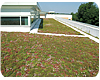
The East Wing of the building is not visible to the public so low-maintenance materials were chosen to minimize cost.
Proper Maintenance
The costs and maintenance required with living green roofs are some of the main reasons that corporations shy away from implementation. Fortunately, Kjellerup and Cabot understood the immediate fee would reap a greater return in value through lowered energy costs.As a part of general service, Furbish provides ongoing maintenance and in-depth reports. In July 2009, Furbish’s report to Dansko noted that the cuttings on the East Wing were flowering lightly. The West Wing’s flower heads were cut back and additional cuttings were spread. On the Retail Wing, Furbish weeded and ensured the irrigation system was properly set.
As a result of implementing living roofs: natural and unnatural habitats blossom. At Dansko, natural habitats flourished, including killdeer nests, praying mantis, skinks, dung beetles, and butterflies, providing additional aesthetic and ecological benefits.
LEED Facility
Dansko’s corporate headquarters - a certified Gold LEED facility - provided a roofing challenge for the Furbish Company, but through careful thought, planning, implementation, and maintenance, the varied living roofs continue to thrive.
The vegetation cover from the roofs will significantly reduce stormwater runoff, extend the life of the roof, reduce energy costs, increase property value, protect from mechanical damage, and buffer from extreme temperatures. By diligently searching for the right company to complete the roofs project, Dansko will continue to be reimbursed from the execution.
Looking for a reprint of this article?
From high-res PDFs to custom plaques, order your copy today!
.webp?height=740&t=1767036885&width=auto "Header - BE 1170x658 (002).png")

.webp?height=740&t=1755781744&width=auto "KEE(2).png")